
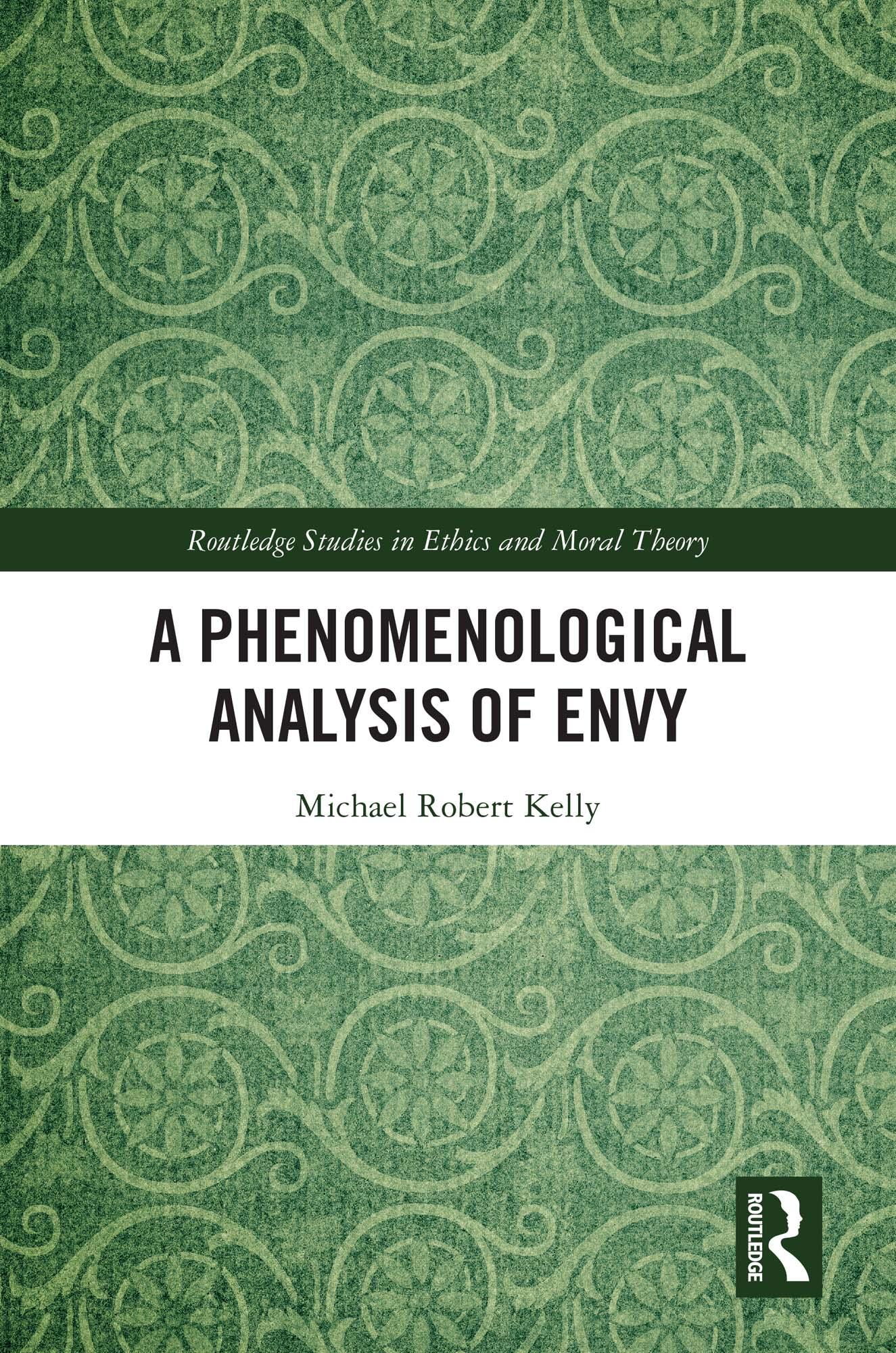
This book provides a phenomenological analysis of envy. The author’s account takes a descriptive look at the whole experience of envy as it pertains to the envier’s sense of self and the envied.
Philosophical work on envy has predominately focused on how the envier perceives, thinks about, or schemes against the person envied. This book proposes a phenomenological analysis of envy that articulates its essentially comparative character according to which we can further incorporate the role of the envier. This approach offers a novel contribution in three ways. First, it develops a notion of two predominant ways in which envy expresses itself: one that is bad for the envied and the other that is bad for the envier. Second, it renews the traditional defense of the view that envy is bad or vicious. Third, it provides original phenomenological descriptions of differences between envy and covetousness, indignation, emulation, ressentiment, and jealousy. By drawing on literary sources and social scientific literature, the author provides concrete examples of the lived experience of an envier.
A Phenomenological Analysis of Envy will appeal to researchers and advanced students working in ethics, moral psychology, phenomenology, and philosophy of emotion.
Betala smidigt med kort, Klarna, Apple Pay eller Google Pay. Är du inte nöjd har du alltid 14 dagars ångerrätt. Läs mer i våra villkor. Har du några frågor, mejla oss på hello@memmo.org.
Memmo gör det enklare att plugga – var du än är i världen. Hos oss samlar du kursböcker och smarta studieverktyg på ett och samma ställe: sammanfattningar, quiz, poddar och flashcards. Och så Ted, din studiekompis som svarar på allt du undrar. Över 50 000 studenter pluggar redan här – byggt för att du ska lära dig snabbare och stressa mindre.