
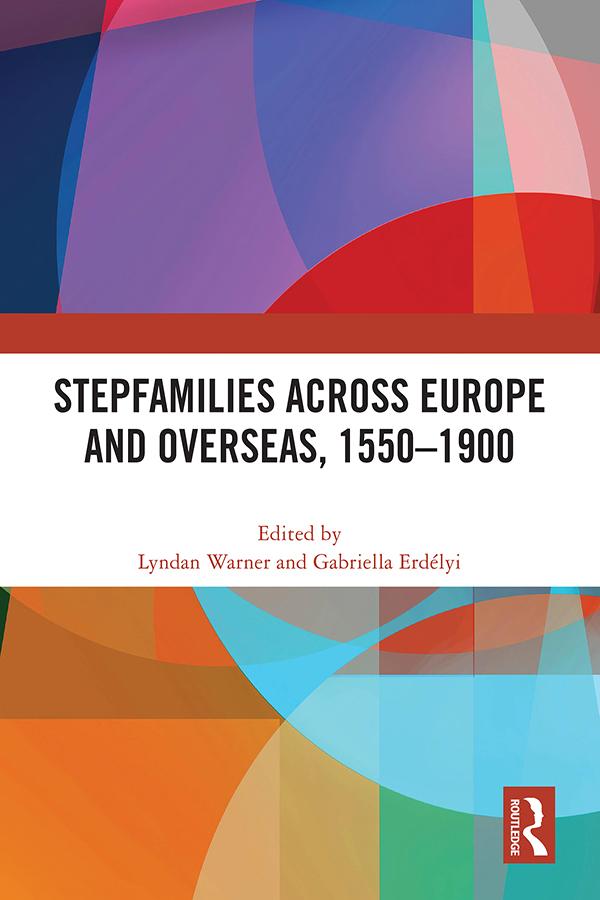
This book emphasizes diverse perspectives on the new and expanding history of stepfamilies in Europe and some of its overseas territories from 1550 to 1900.
The chapters examine the life stages within stepfamilies from the half-orphans and illegitimate children who experienced the introduction of a stepparent to how parent–child and step or half-sibling relationships shifted and changed with living arrangements and mobility within villages or to towns and overseas. Several historical demography chapters establish the frequency and types of stepfamilies in Western and East Central Europe – whether a father-stepmother couple, a mother-stepfather union, a parent with an illegitimate child. Other themes include the effect of parental loss on child survival; how a stepparent influenced a child’s wellbeing with caregiving and contributions to the household economy; emotional bonds through letters and gift-giving; step–relatives who marry their close kin; and how property and inheritance regimes shaped stepfamily patterns.
Stepfamilies across Europe and Overseas, 1550–1900 will appeal to researchers and students interested in the history of family, marriage, and society. The chapters in this book were originally published as a special issue of The History of the Family.
Betala smidigt med kort, Klarna, Apple Pay eller Google Pay. Är du inte nöjd har du alltid 14 dagars ångerrätt. Läs mer i våra villkor. Har du några frågor, mejla oss på hello@memmo.org.
Memmo gör det enklare att plugga – var du än är i världen. Hos oss samlar du kursböcker och smarta studieverktyg på ett och samma ställe: sammanfattningar, quiz, poddar och flashcards. Och så Ted, din studiekompis som svarar på allt du undrar. Över 50 000 studenter pluggar redan här – byggt för att du ska lära dig snabbare och stressa mindre.