
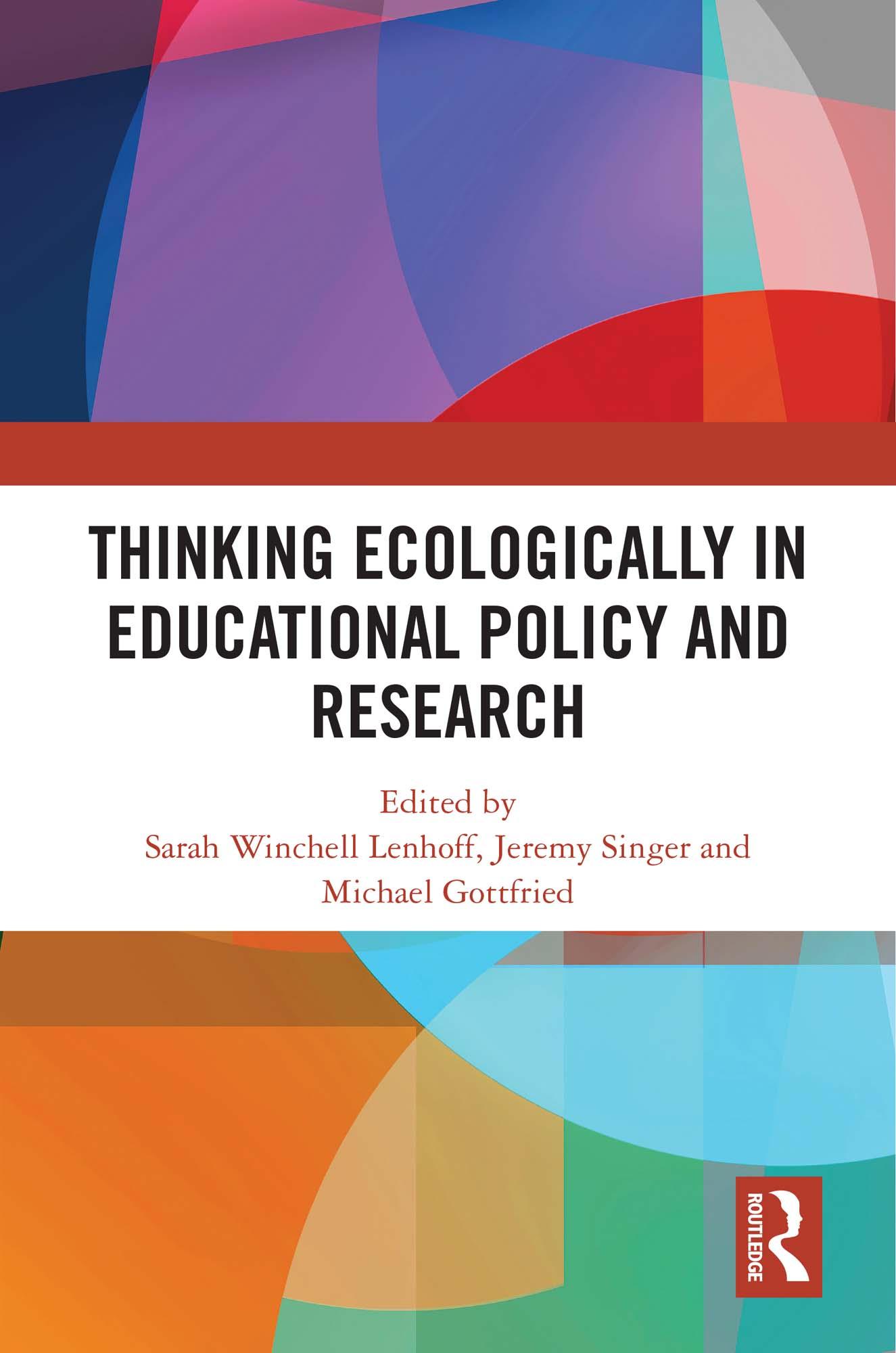
This book places a focus on educational ecosystems – that is, understanding the complex nature of educational experiences and promoting a coordinated set of policy and practice solutions to address interrelated problems that manifest in school and student outcomes.
Educational policy and politics have been dominated by school improvement initiatives that locate educational problems and solutions in schools themselves, rather than in the systemic and structural roots of those problems: segregation, poverty, and histories of compounding inequality. Youth outcomes that we associate with schools (e.g., achievement, attendance, graduation) are the consequences of systemic structural and environmental factors that interact with the lived experiences of students in their communities and schools. This insightful volume provides examples of how to understand and analyse educational issues ecologically and evidence on the opportunities and challenges with forging cross-sector partnerships to address educational issues ecologically.
Thinking Ecologically in Educational Policy and Research will be a key resource for practitioners and researchers of education leadership and policy, educational administration, educational research, educational studies and sociology. This book was originally published as a special issue of the Peabody Journal of Education.
Betala smidigt med kort, Klarna, Apple Pay eller Google Pay. Är du inte nöjd har du alltid 14 dagars ångerrätt. Läs mer i våra villkor. Har du några frågor, mejla oss på hello@memmo.org.
Memmo gör det enklare att plugga – var du än är i världen. Hos oss samlar du kursböcker och smarta studieverktyg på ett och samma ställe: sammanfattningar, quiz, poddar och flashcards. Och så Ted, din studiekompis som svarar på allt du undrar. Över 50 000 studenter pluggar redan här – byggt för att du ska lära dig snabbare och stressa mindre.