
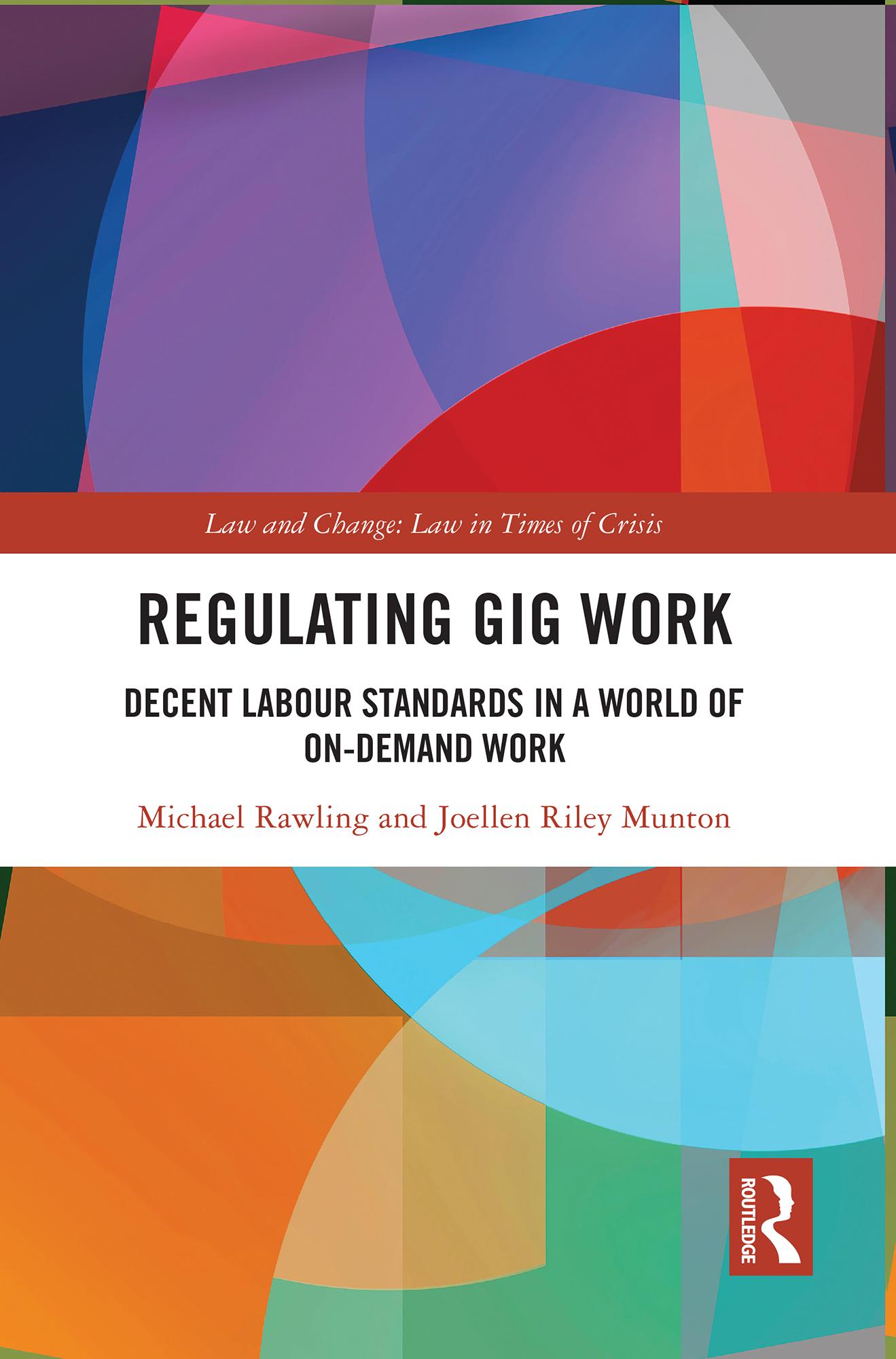
Digital revolution demands new approaches to regulating work. The ‘Uberisation’ of work is not, in reality, a new phenomenon. It reintroduces the practices of ‘on-demand’ engagement of labour, common prior to the development of continuing employment. What is new, however, is the capacity of digital technology to engage labour in ways that avoid characterisation as employment according to the legal tests developed in the 20th century.
This book tackles the challenge of ensuring that the emerging tribes of ‘gig’ workers in labour markets across the globe are afforded decent standards of work. This book discusses how to provide decent conditions and safe working standards for on-demand workers engaged through digital platforms. It interrogates the rise of gig work, and the legal strategies that might be engaged to deal with the risk that on-demand work will fall and remain outside of employment protections. It draws on observations of practices across the globe but focusses particularly on regulatory solutions developed in Australia.
The book will be a useful reference to policy making and legal reforms to address vulnerabilities of gig workers.
Betala smidigt med kort, Klarna, Apple Pay eller Google Pay. Är du inte nöjd har du alltid 14 dagars ångerrätt. Läs mer i våra villkor. Har du några frågor, mejla oss på hello@memmo.org.
Memmo gör det enklare att plugga – var du än är i världen. Hos oss samlar du kursböcker och smarta studieverktyg på ett och samma ställe: sammanfattningar, quiz, poddar och flashcards. Och så Ted, din studiekompis som svarar på allt du undrar. Över 50 000 studenter pluggar redan här – byggt för att du ska lära dig snabbare och stressa mindre.