
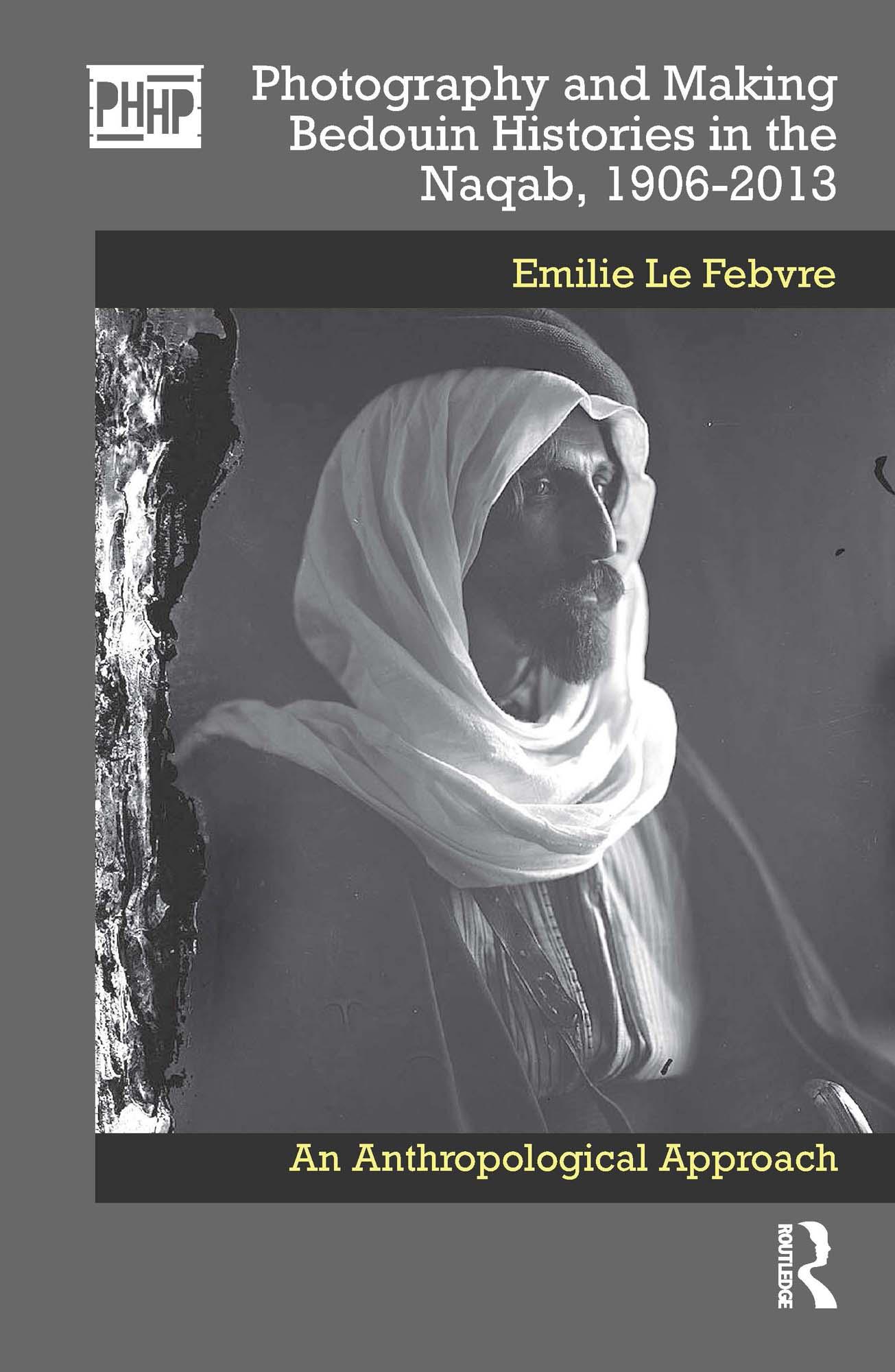
Introducing a novel anthropological study of photography in the Middle East, Emilie Le Febvre takes us to the Naqab Desert where Bedouin use photographs to make, and respond to, their own histories.
She argues Bedouin presentations of the past are selective but increasingly reliant on archival documents such as photographs which spokespersons treat as evidence of their local histories amid escalating tensions in Israel. These practices shape Bedouin visual historicity, that is the diverse ways people produce their pasts in the present with images. This book charts these processes through the afterlives of six photographs (c. 1906–2013) as they circulate between the Naqab’s entangled visual economies – a transregional landscape organised by cultural ideals of proximity and assemblages of Bedouin iconography. Le Febvre illustrates how representational contentions associated with tribal, civic, and Palestinian-Israeli politics influence how images do history work in this society. She concludes Bedouin visual historicity is defined by acts of persuasion during which photographs authenticate alternating history projects. Here, Bedouin value photographs not because they evidence singular narratives of the past. Rather, the knowledges inscribed by photography are multifarious as they support diverse constructions of history and society with which members mediate a wide range of relationships in southern Israel.
This book bridges studies of anthropology, photography, Palestinian-Israeli politics, and Bedouin Middle East history.
Betala smidigt med kort, Klarna, Apple Pay eller Google Pay. Är du inte nöjd har du alltid 14 dagars ångerrätt. Läs mer i våra villkor. Har du några frågor, mejla oss på hello@memmo.org.
Memmo gör det enklare att plugga – var du än är i världen. Hos oss samlar du kursböcker och smarta studieverktyg på ett och samma ställe: sammanfattningar, quiz, poddar och flashcards. Och så Ted, din studiekompis som svarar på allt du undrar. Över 50 000 studenter pluggar redan här – byggt för att du ska lära dig snabbare och stressa mindre.