
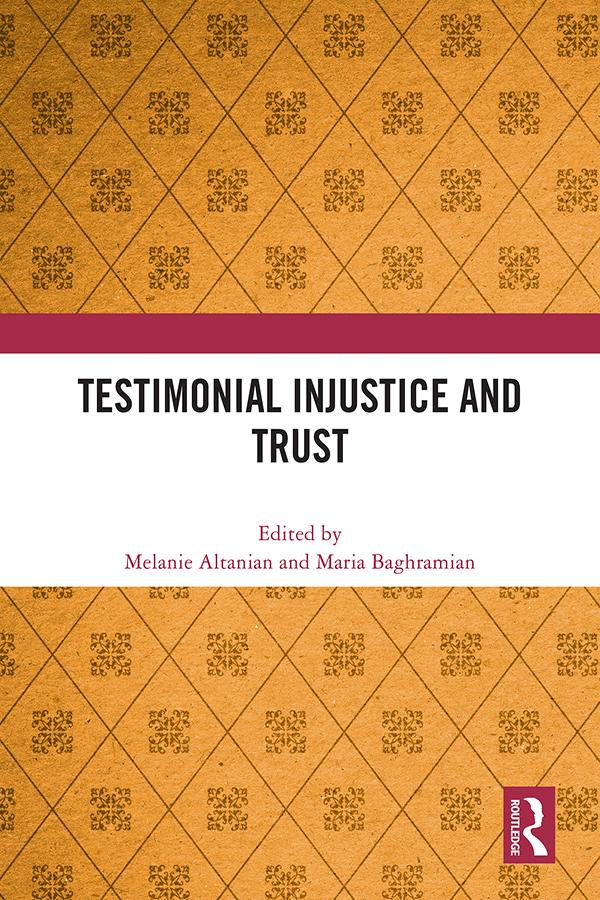
This book presents novel approaches and perspectives to scholarship on epistemic injustice and particularly, testimonial injustice and their connections with public trust.
Drawing from different philosophical schools of thought and approaches, the book provides a comprehensive analysis of the conditions, mechanisms and normative implications of testimonial injustice, a term most prominently introduced by Fricker (2007), and the role that trust can play in fostering testimonial justice. Through the application of theories of epistemic injustice, and testimonial injustice, to new contexts and cases, including gendered violence, disability, indigenous knowledge, genocide, vaccine hesitancy and the COVID-19 pandemic, the book sheds light on the real-world significance of these philosophical concepts.
Testimonial Injustice and Trust introduces new directions for further research and will appeal to scholars and students in (critical) social and political epistemology, normative ethics as well as social and political philosophy more generally. The chapters in this book were originally published in the International Journal of Philosophical Studies, Social Epistemology and Educational Philosophy and Theory.
Betala smidigt med kort, Klarna, Apple Pay eller Google Pay. Är du inte nöjd har du alltid 14 dagars ångerrätt. Läs mer i våra villkor. Har du några frågor, mejla oss på hello@memmo.org.
Memmo gör det enklare att plugga – var du än är i världen. Hos oss samlar du kursböcker och smarta studieverktyg på ett och samma ställe: sammanfattningar, quiz, poddar och flashcards. Och så Ted, din studiekompis som svarar på allt du undrar. Över 50 000 studenter pluggar redan här – byggt för att du ska lära dig snabbare och stressa mindre.