
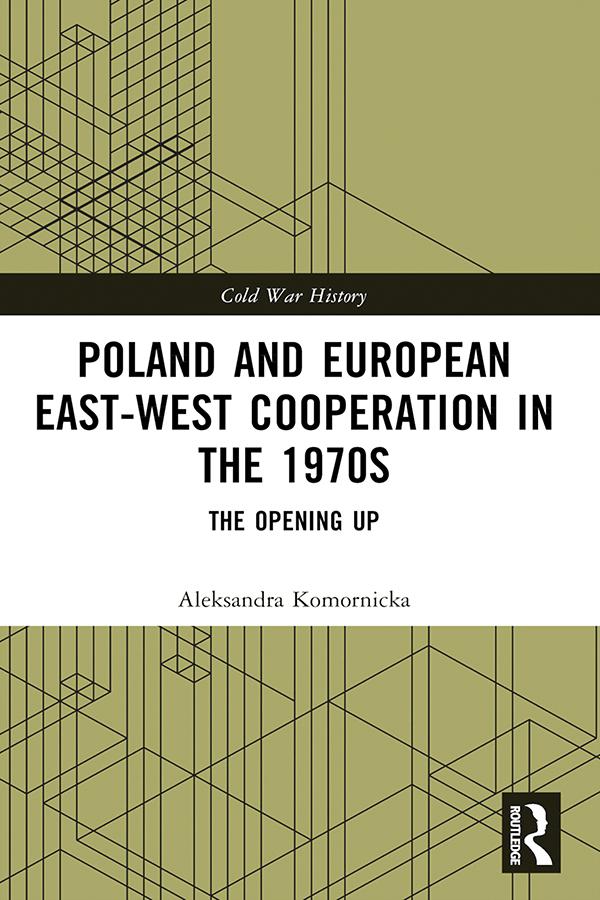
This book offers an international reading of the Polish socialist regime’s history in the 1970s, and its opening up to the West.
It bridges Poland’s socialist domestic history with critical developments of the global and European 1970s, including détente in the Cold War, western European integration, and globalisation. In this period of international transformations, socialist Poland under Edward Gierek's leadership multiplied its economic and political contacts with capitalist countries, especially western Europe, and became a leader of East-West cooperation among Council for Mutual Economic Assistance and Warsaw Pact members. Relying on sources from public and corporate archives in five different European states, the book demonstrates both that the global political and economic transformations of that period were critical for the decision-making process in Poland and, moreover, that the national socialist elites participated in shaping these transformations. By looking at the goals and expectations of the Polish socialist elites and their practices of political and economic exchanges with western Europe, the book explains the logic which drove the socialist regime into entanglement with the West. As is shown here, this entanglement proved inextricable and critical for the socialist regime's failure and Poland’s political and economic future.
This book will be of much interest to students of European history, cold war studies, socialism studies and International Relations.
Betala smidigt med kort, Klarna, Apple Pay eller Google Pay. Är du inte nöjd har du alltid 14 dagars ångerrätt. Läs mer i våra villkor. Har du några frågor, mejla oss på hello@memmo.org.
Memmo gör det enklare att plugga – var du än är i världen. Hos oss samlar du kursböcker och smarta studieverktyg på ett och samma ställe: sammanfattningar, quiz, poddar och flashcards. Och så Ted, din studiekompis som svarar på allt du undrar. Över 50 000 studenter pluggar redan här – byggt för att du ska lära dig snabbare och stressa mindre.