
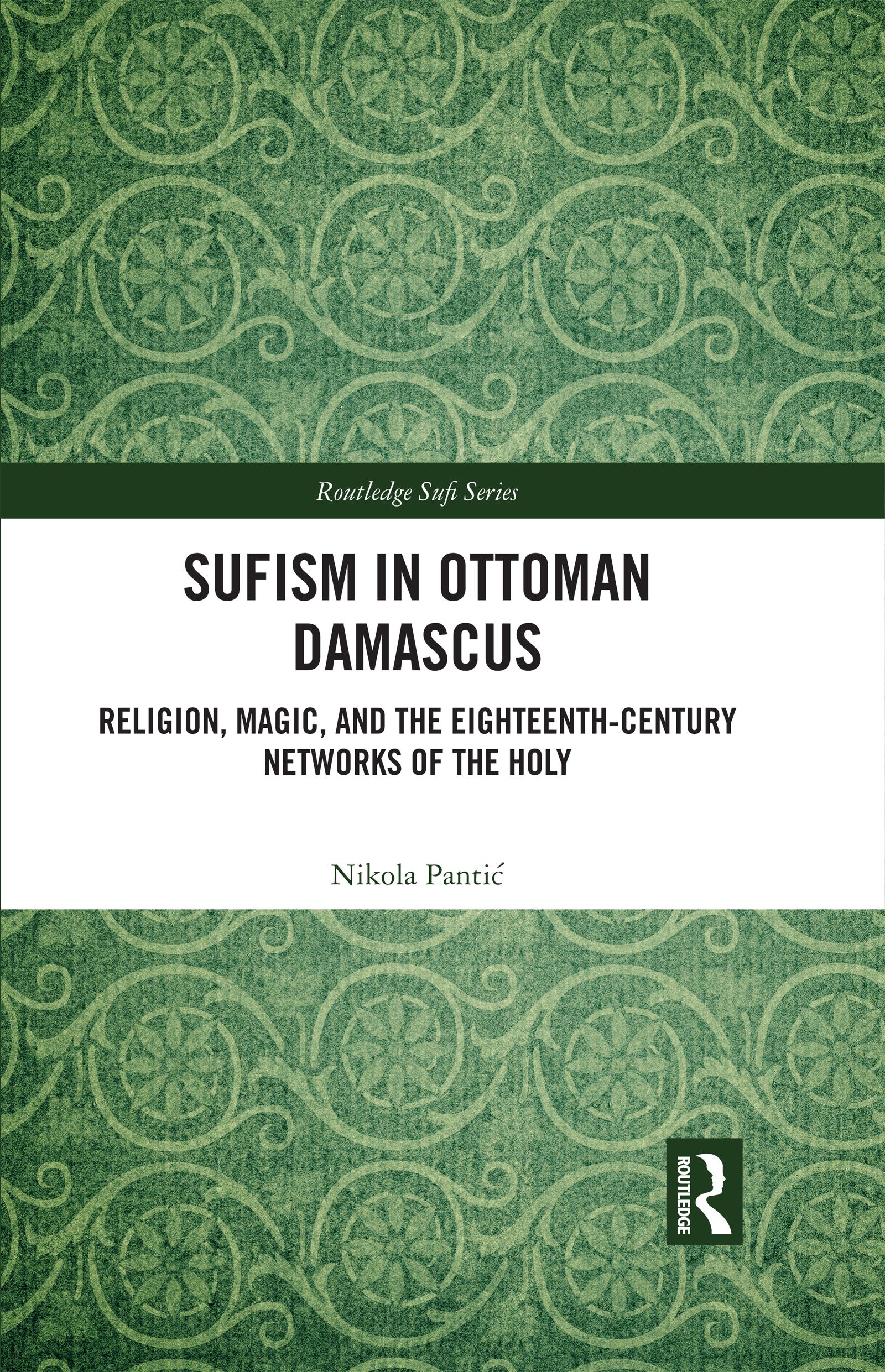
Sufism in Ottoman Damascus analyzes thaumaturgical beliefs and practices prevalent among Muslims in eighteenth-century Ottoman Syria. The study focuses on historical beliefs in baraka, which religious authorities often interpreted as Allah’s grace, and the alleged Sufi-ulamaic role in distributing it to Ottoman subjects.
This book highlights considerable overlaps between Sufis and ʿulamā’ with state appointments in early modern Province of Damascus, arguing for the possibility of sociologically defining a Muslim priestly sodality, a group of religious authorities and wonder-workers responsible for Sunni orthodoxy in the Ottoman Empire. The Sufi-ʿulamā’ were integral to Ottoman networks of the holy, networks of grace that comprised of hallowed individuals, places, and natural objects.
Sufism in Ottoman Damascus sheds new light on the appropriate scholarly approach to historical studies of Sufism in the Ottoman Empire, revising its position in official early modern versions of Ottoman Sunnism. This book further reapproaches early modern Sunni beliefs in wonders and wonder-working, as well as the relationship between religion, thaumaturgy, and magic in Ottoman Sunni Islam, historical themes comparable to other religions and other parts of the world.
Betala smidigt med kort, Klarna, Apple Pay eller Google Pay. Är du inte nöjd har du alltid 14 dagars ångerrätt. Läs mer i våra villkor. Har du några frågor, mejla oss på hello@memmo.org.
Memmo gör det enklare att plugga – var du än är i världen. Hos oss samlar du kursböcker och smarta studieverktyg på ett och samma ställe: sammanfattningar, quiz, poddar och flashcards. Och så Ted, din studiekompis som svarar på allt du undrar. Över 50 000 studenter pluggar redan här – byggt för att du ska lära dig snabbare och stressa mindre.