
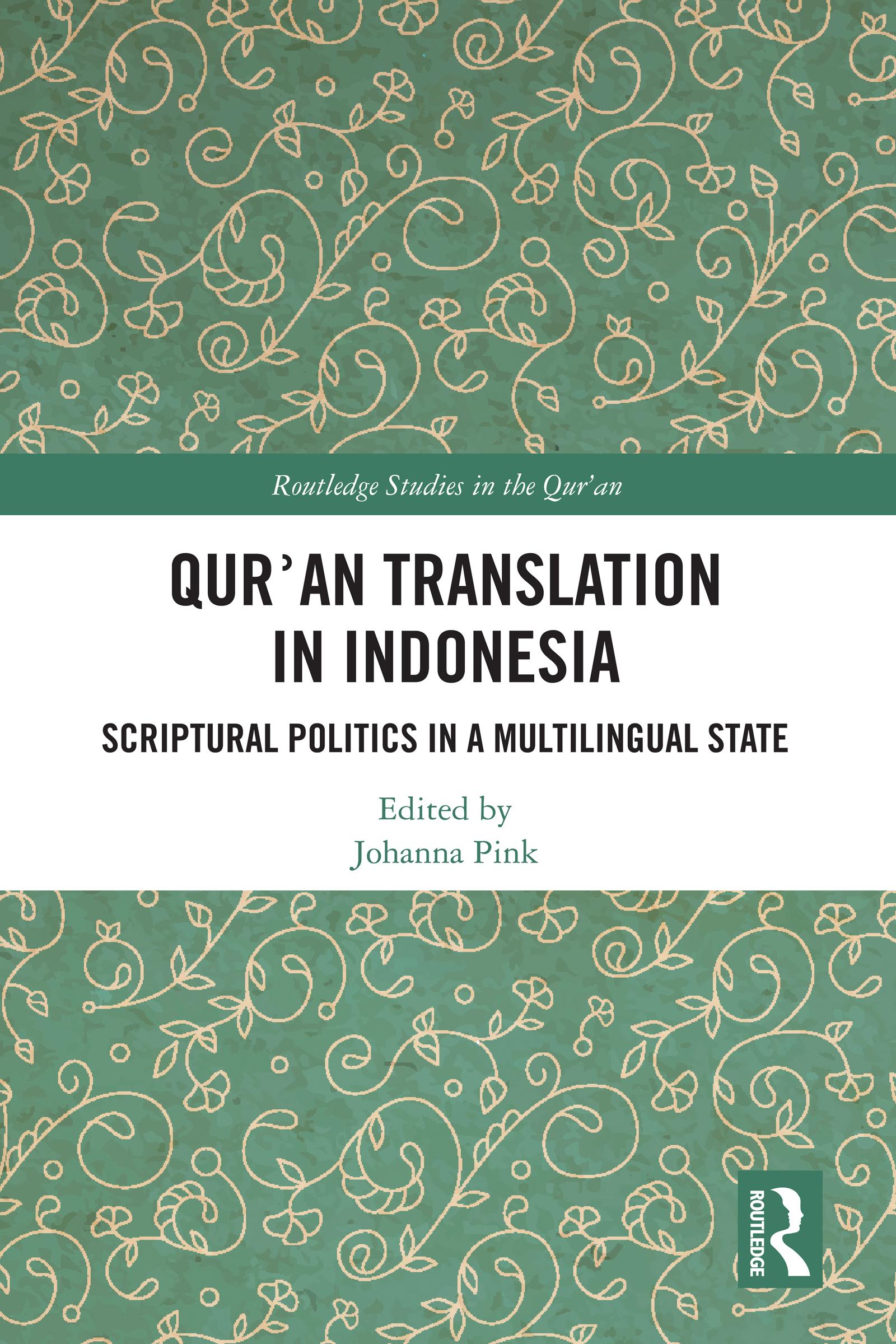
This book provides a comprehensive survey of Qur’an translation in Indonesia – the most populous Muslim-majority country in the world with a highly diverse, multilingual society.
Delving into the linguistic and political dimensions of this field, the contributors – many of whom are Indonesian scholars – employ a wide range of historical, socio-cultural, linguistic and exegetical approaches to offer fresh insights. In their contributions, the negotiation of authority between state and of non-state actors is shown to be a constant theme, from the pre-print era through to the colonial and postcolonial periods. Religious organizations, traditional institutions of scholarship and Wahhabi-Salafi groups struggle over the meaning of the Qur’an while the Ministry of Religious Affairs publishes its own Qur’an translations into many of the country’s languages. The contributors also explore the influential role of the Ahmadiyya movement in shaping Qur’an translation in Indonesia. Moreover, they examine the specific challenges that translators face when rendering the Qur’an in languages with structures, histories and cultural contexts that are vastly different from Arabic.
Opening up the work of Indonesian scholars to a wider audience, this book will appeal to anyone interested in Qur’anic studies and Islam in the Southeast Asia region.
Betala smidigt med kort, Klarna, Apple Pay eller Google Pay. Är du inte nöjd har du alltid 14 dagars ångerrätt. Läs mer i våra villkor. Har du några frågor, mejla oss på hello@memmo.org.
Memmo gör det enklare att plugga – var du än är i världen. Hos oss samlar du kursböcker och smarta studieverktyg på ett och samma ställe: sammanfattningar, quiz, poddar och flashcards. Och så Ted, din studiekompis som svarar på allt du undrar. Över 50 000 studenter pluggar redan här – byggt för att du ska lära dig snabbare och stressa mindre.