
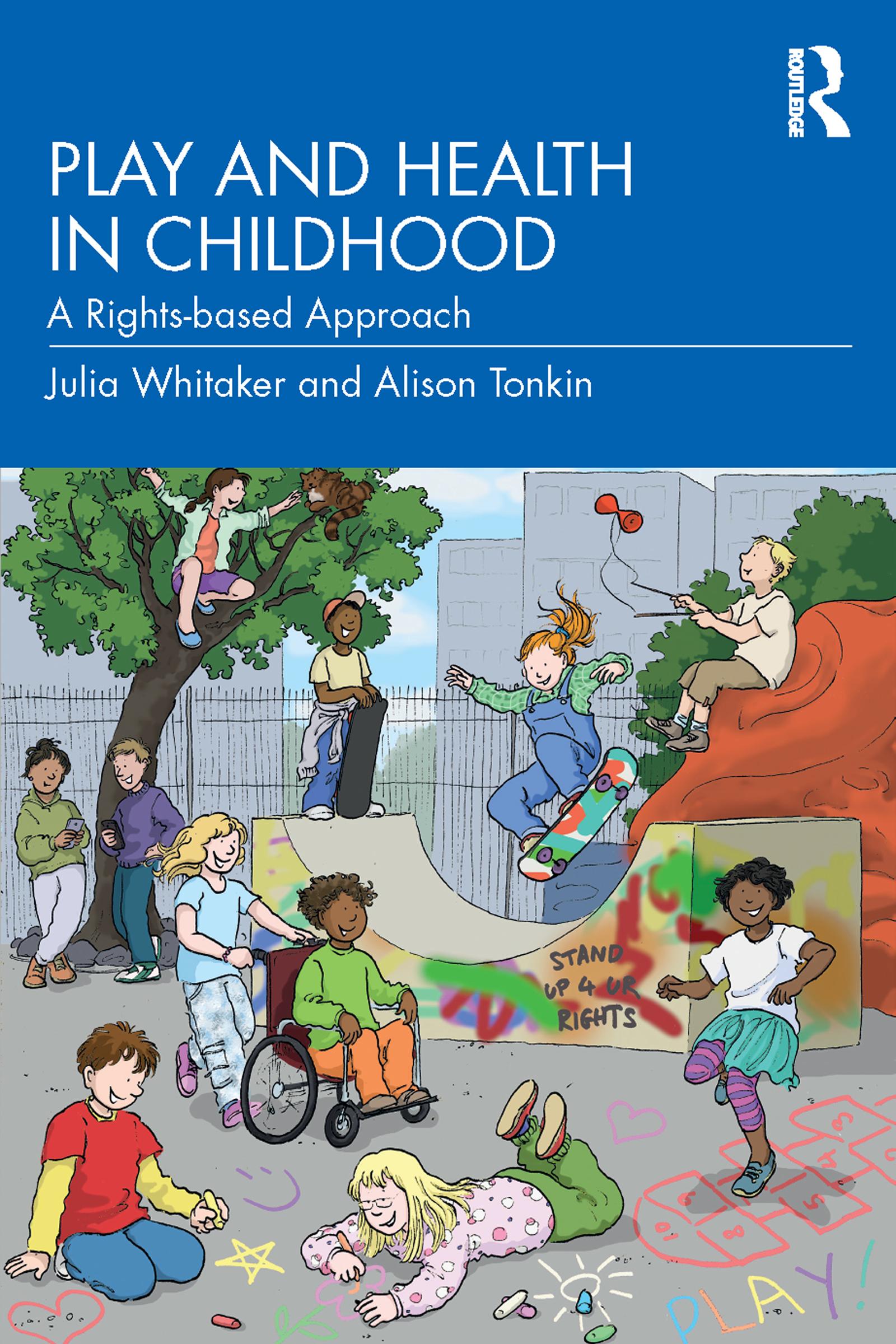
Taking a rights-based approach to the interdependence of play and health in childhood, this text argues that the child’s right to health and development cannot be satisfied without also the fulfillment of their right to play.
Underpinned by theory and real-life ‘case stories’ drawn from practice and family life, Whitaker and Tonkin present what is known about the benefits of play and its potential to address the pressing health needs in the short and long terms of the youngest generation. They define and discuss the concepts of childhood, play, health, and human rights before exploring how play interacts with the four fundamental principles of the UN Convention on the Rights of the Child: non-discrimination; best interests; life, survival, and development; and inclusion and participation. The book then investigates how practitioners can advocate for the child’s right to play to meet all their health and development needs. It presents numerous examples of best practice from a range of settings – including hospitals, schools, community initiatives, charities, families, and more – and incorporates the voices of children as they imagine a future in which play is elevated to a central position in their lives, allowing for the achievement of lifelong health and happiness.
Exploring children’s rights from a practical perspective, this accessible book is essential reading for students and practitioners in healthcare, social work, community work, early years, and education.
Betala smidigt med kort, Klarna, Apple Pay eller Google Pay. Är du inte nöjd har du alltid 14 dagars ångerrätt. Läs mer i våra villkor. Har du några frågor, mejla oss på hello@memmo.org.
Memmo gör det enklare att plugga – var du än är i världen. Hos oss samlar du kursböcker och smarta studieverktyg på ett och samma ställe: sammanfattningar, quiz, poddar och flashcards. Och så Ted, din studiekompis som svarar på allt du undrar. Över 50 000 studenter pluggar redan här – byggt för att du ska lära dig snabbare och stressa mindre.