
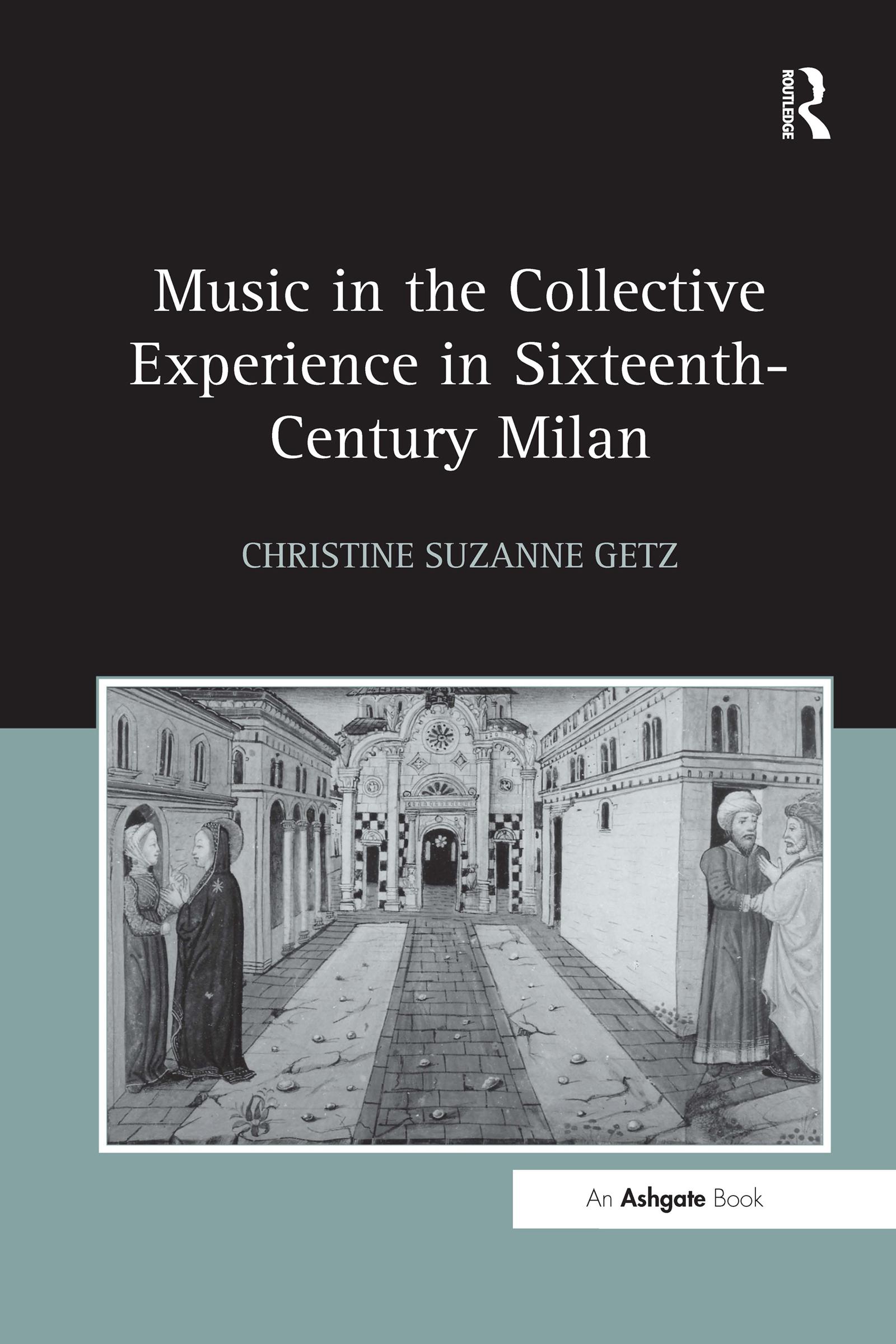
Renaissance music, like its sister arts, was most often experienced collectively. While it was possible to read Renaissance polyphony silently from a music manuscript or print, improvise alone, or perform as a soloist, the very practical nature of Renaissance music defied individualism. The reading and improvisation of polyphony was most frequently achieved through close co-operation, and this mutual endeavour extended beyond the musicians to include the society to which it is addressed. In sixteenth-century Milan, music, an art traditionally associated with the court and cathedral, came to be appropriated by the old nobility and the new aristocracy alike as a means of demonstrating social primacy and newly acquired wealth. As class mobility assumed greater significance in Milan and the size of the city expanded beyond its Medieval borders, music-making became ever more closely associated with public life. With its novel structures and diverse urban spaces, sixteenth-century Milan offered an unlimited variety of public performance arenas. The city's political and ecclesiastical authorities staged grand processions, church services, entertainments, and entries aimed at the propagation of both church and state. Yet the private citizen utilized such displays as well, creating his own miniature spectacle in a visual and an aural imitation of the ecclesiastical and political panoply of the age. Using archival documents, music prints, manuscripts and contemporary writing, Getz examines the musical culture of sixteenth-century Milan via its life within the city's most influential social institutions to show how fifteenth-century courtly traditions were adapted to the public arena. The book considers the relationship of the primary cappella musicale, including those of the Duomo, the court of Milan, Santa Maria della Scala, and Santa Maria presso San Celso, to the sixteenth-century institutions that housed them. In addition, the book investigates the musician's role as an actor and a functionary in the political, religious, and social spectacles produced by the Milanese church, state, and aristocracy within the city's diverse urban spaces. Furthermore, it establishes a context for the numerous motets, madrigals, and lute intabulations composed and printed in sixteenth-century Milan by examining their function within the urban milieu in which they were first performed. Finally, it musically documents Milan's transformation from a ducal state dominated by provincial traditions into a mercantile centre of international acclaim. Such an important study in Italian Renaissance music will therefore appeal to anyone interested in the culture of Renaissance Italy.
Betala smidigt med kort, Klarna, Apple Pay eller Google Pay. Är du inte nöjd har du alltid 14 dagars ångerrätt. Läs mer i våra villkor. Har du några frågor, mejla oss på hello@memmo.org.
Memmo gör det enklare att plugga – var du än är i världen. Hos oss samlar du kursböcker och smarta studieverktyg på ett och samma ställe: sammanfattningar, quiz, poddar och flashcards. Och så Ted, din studiekompis som svarar på allt du undrar. Över 50 000 studenter pluggar redan här – byggt för att du ska lära dig snabbare och stressa mindre.
Du kanske också gillar
Köp boken0