
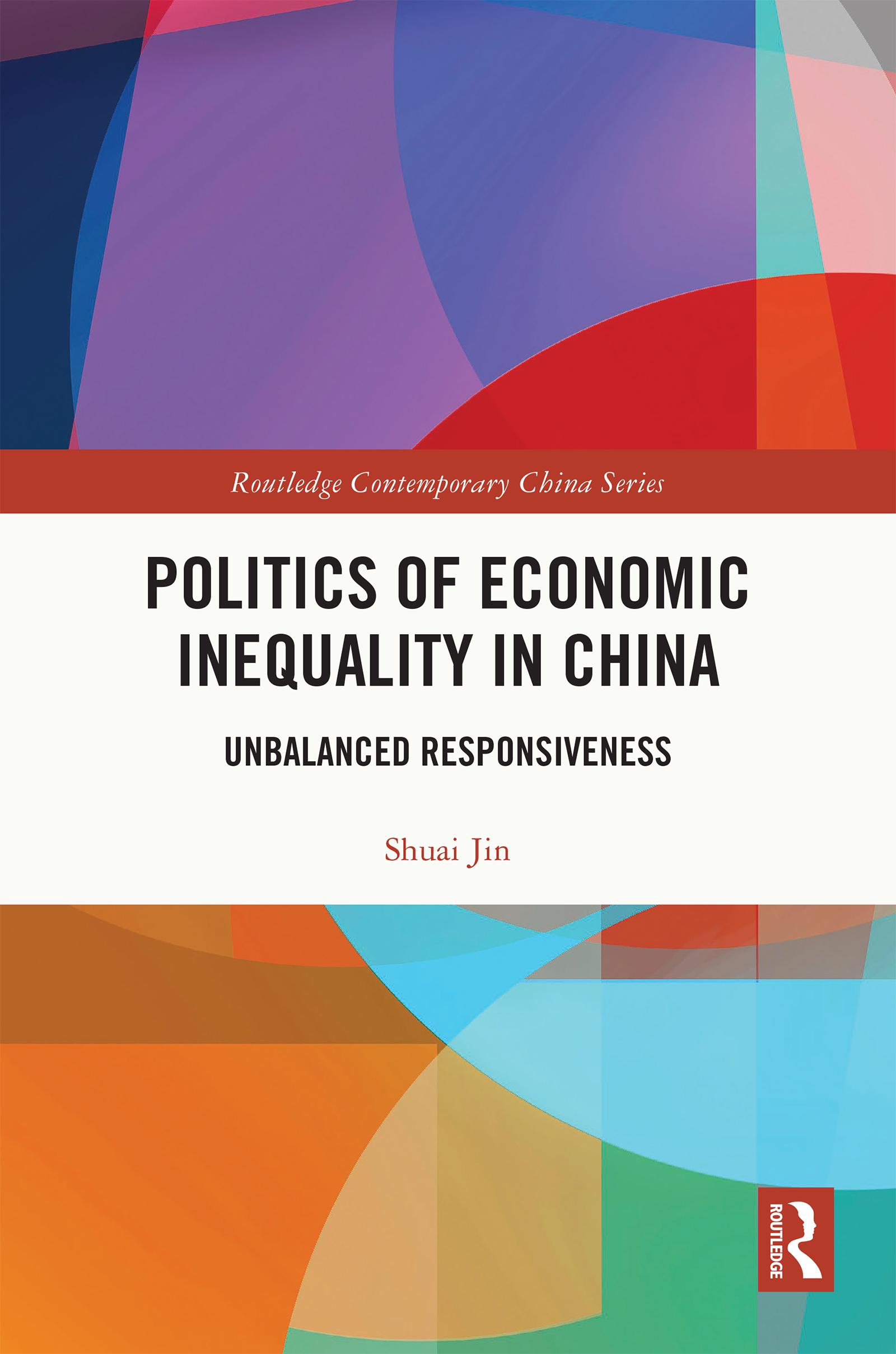
This book applies a novel theory of ‘unbalanced responsiveness’ to the issue of economic inequality in China to better understand the relationship between authoritarian regimes and their citizens.
The book highlights how the Chinese Communist Party (CCP) has responded to dissatisfaction over inequality, with both propaganda and policy, revealing how the responsiveness in these two arenas is unbalanced. Arguing that while CCP propaganda claims to reduce inequality, its welfare programs have been stratified, unfair, and regressive, aggravating instead of alleviating inequalities. By utilizing data from multiple national surveys, the book reveals that the discrepancy between propaganda and policy ultimately generates further dissatisfaction and strong demands for redistribution. The findings of this study indicate how unmitigated and prolonged economic inequality could be a real threat to the sustained rule of the CCP regime.
Providing a new theory, applicable to authoritarian and especially communist regimes, demonstrated through the lens of China, this book will be a valuable resource to students and scholars of Chinese studies, political science, and public policy.
Betala smidigt med kort, Klarna, Apple Pay eller Google Pay. Är du inte nöjd har du alltid 14 dagars ångerrätt. Läs mer i våra villkor. Har du några frågor, mejla oss på hello@memmo.org.
Memmo gör det enklare att plugga – var du än är i världen. Hos oss samlar du kursböcker och smarta studieverktyg på ett och samma ställe: sammanfattningar, quiz, poddar och flashcards. Och så Ted, din studiekompis som svarar på allt du undrar. Över 50 000 studenter pluggar redan här – byggt för att du ska lära dig snabbare och stressa mindre.