
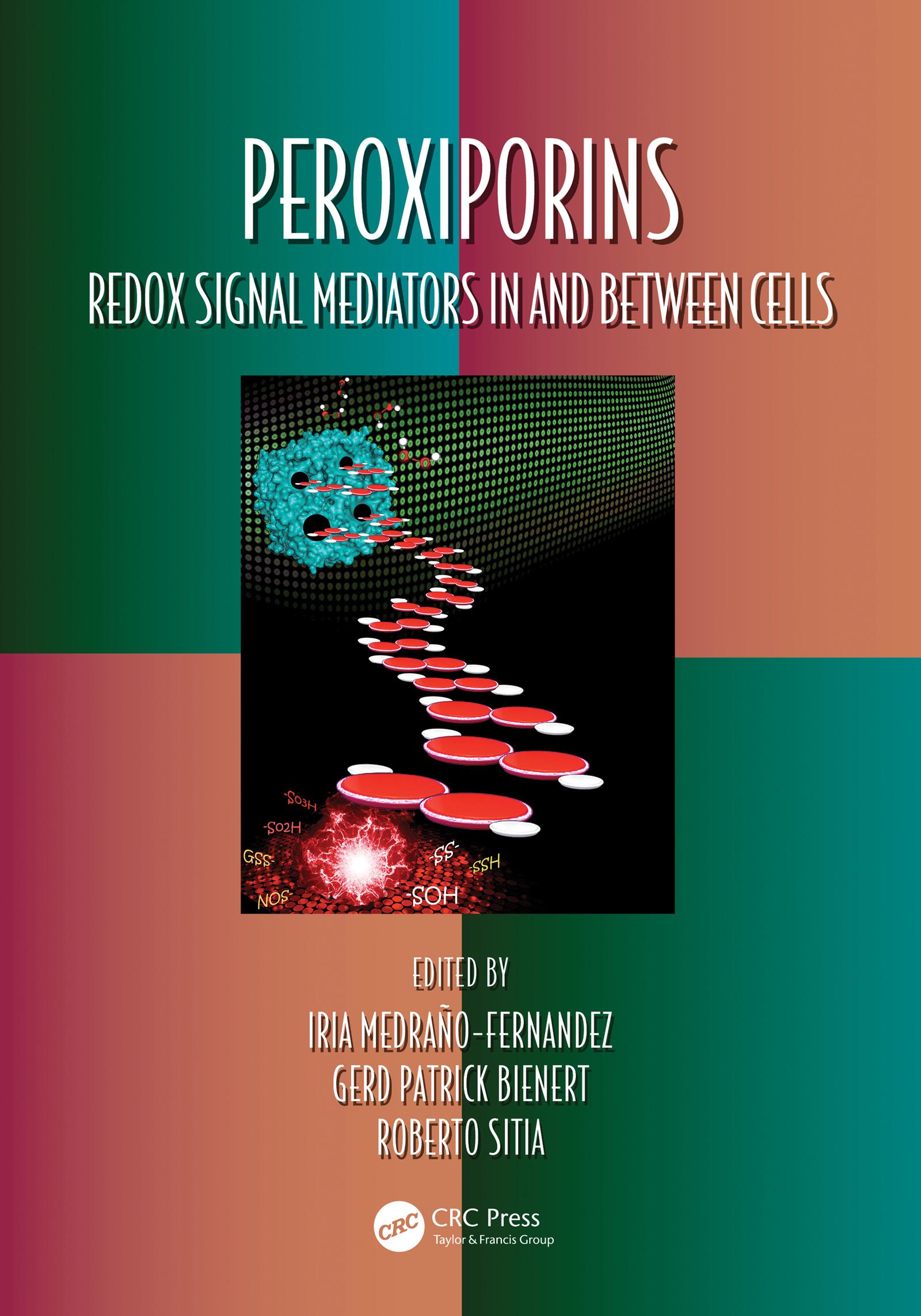
To produce energy, aerobic organisms transform oxygen molecules into water. This reductive mechanism yields toxic radical intermediates, collectively known as reactive oxygen species (ROS). Paradoxically, these physiological processes entail the production of potentially damaging species. Evolution has turned this apparent disadvantage into an opportunity for transmitting information. As a result, redox signaling within the cell is an efficient exquisitely organized process. A key element for its regulation is the physical separation of sources and targets into different cell compartments. Peroxiporins, H2O2 transporting proteins spanning biological membranes, distribute the signal from emitters to receptors. Thus, these channels are strategically situated in the thin line between life and death, guaranteeing adequate but safe signaling.
Key Features:
- Provides a brief history of the discovery and characterization of peroxiporins
- Reviews key findings on hydrogen peroxide transport across biological membranes
- Discusses the cartography of redox signaling in crowded cells
- Includes lavish illustrations and comprehensive images to facilitate teaching
- Highlights recent findings, outstanding controversies and open questions
Betala smidigt med kort, Klarna, Apple Pay eller Google Pay. Är du inte nöjd har du alltid 14 dagars ångerrätt. Läs mer i våra villkor. Har du några frågor, mejla oss på hello@memmo.org.
Memmo gör det enklare att plugga – var du än är i världen. Hos oss samlar du kursböcker och smarta studieverktyg på ett och samma ställe: sammanfattningar, quiz, poddar och flashcards. Och så Ted, din studiekompis som svarar på allt du undrar. Över 50 000 studenter pluggar redan här – byggt för att du ska lära dig snabbare och stressa mindre.