
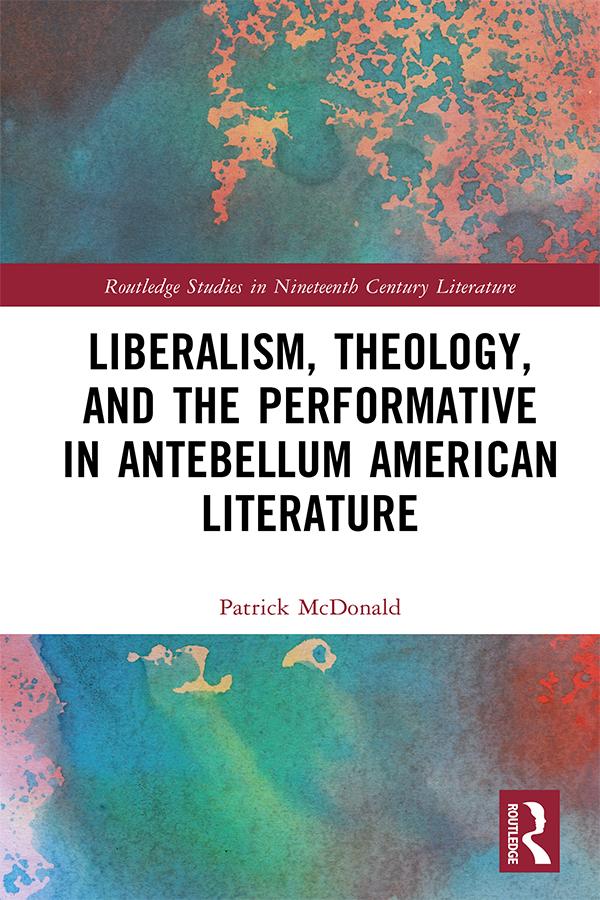
The 1850s United States witnessed a far-reaching political, social, and economic crisis. Symptomatic of this, a wide range of narrative fiction from sentimental novels to sensational drama identifies a foundational link between liberal institutions and performative utterances. Auctions, trials, marriages, and contracts, this fiction contends, all depend on the self-constituting authority of words and performances which anybody and everybody can appropriate and are always subject to misfiring. Rather than viewing this as a liberatory and egalitarian political force, however, writers from Herman Melville and James Fenimore Cooper to Captain Mayne Reid and E.D.E.N. Southworth insist that such naked authority must be supplemented. A broad swath of 1850s literature insists that this supplement ought to come from Christianity. Anticipating thinkers like Carl Schmitt and Giorgio Agamben, these works suggest that legitimate political authority depends upon its ability to represent Christian transcendence and account for revealed truth, something firmly outside of speech acts’ and performance’s purview. In so doing, this diverse body of fiction registers a desire to reconstitute political authority on transcendent and representable ground, augmenting institutional reliance on mere words and assuaging the contemporary crises of confidence and authority.
Betala smidigt med kort, Klarna, Apple Pay eller Google Pay. Är du inte nöjd har du alltid 14 dagars ångerrätt. Läs mer i våra villkor. Har du några frågor, mejla oss på hello@memmo.org.
Memmo gör det enklare att plugga – var du än är i världen. Hos oss samlar du kursböcker och smarta studieverktyg på ett och samma ställe: sammanfattningar, quiz, poddar och flashcards. Och så Ted, din studiekompis som svarar på allt du undrar. Över 50 000 studenter pluggar redan här – byggt för att du ska lära dig snabbare och stressa mindre.