
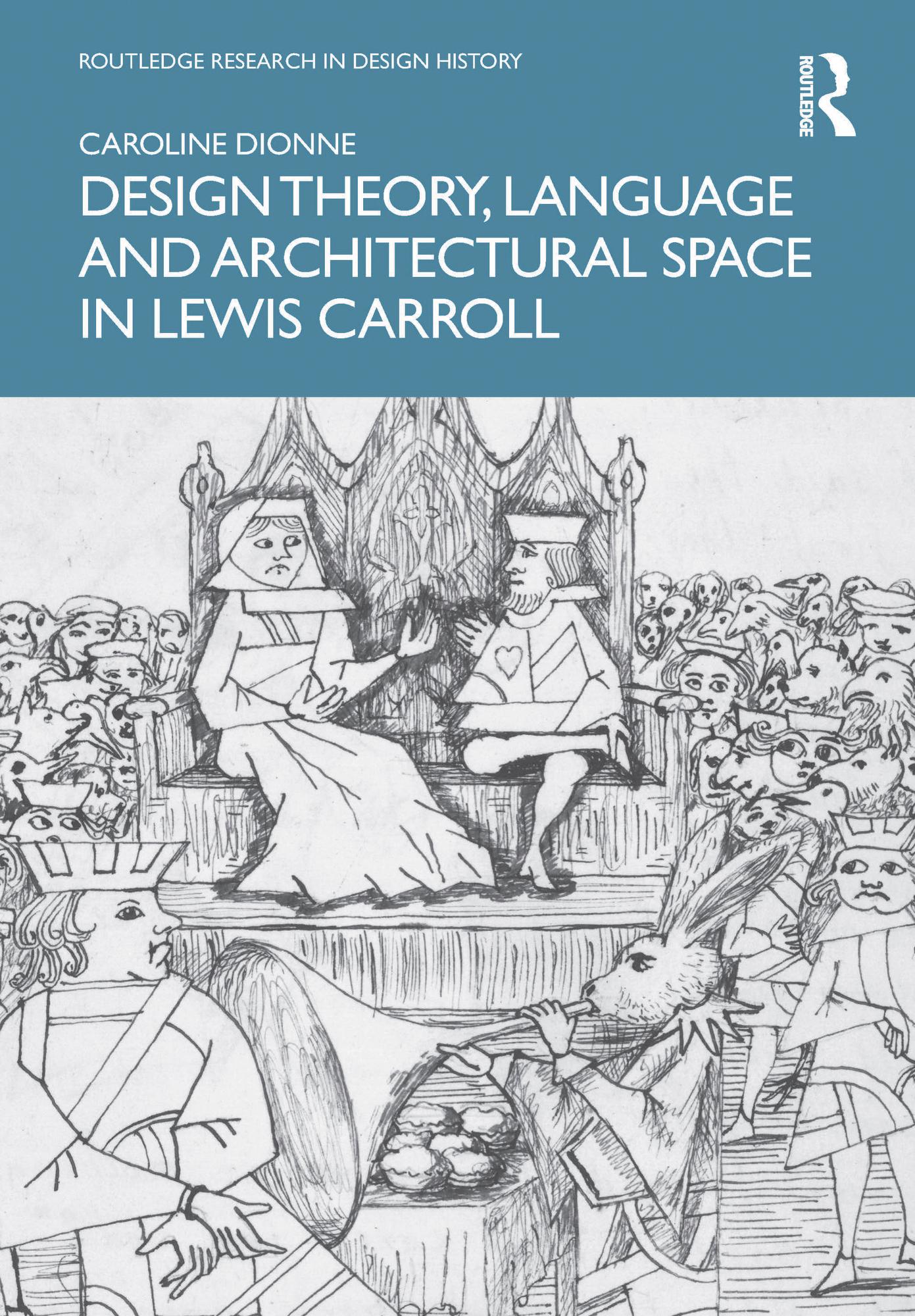
This volume offers spatial theories of the emergent based on a careful close reading of the complete works of nineteenth-century writer and mathematician Lewis Carroll—from his nonsense fiction, to his work on logic and geometry, including his two short pamphlets on architecture.
Drawing on selected key moments in our philosophical tradition, including phenomenology and sociospatial theories, Caroline Dionne interrogates the relationship between words and spaces, highlighting the crucial role of language in processes of placemaking. Through an interdisciplinary method that relates literary and language theories to theories of space and placemaking, with emphasis on the social and political experience of architectural spaces, Dionne investigates Carroll’s most famous children’s books, Alice’s Adventures in Wonderland and Through the Looking-Glass and What Alice Found There, in relation to his lesser-known publications on geometry and architecture.
The book will be of interest to scholars working in design theory, design history, architecture, and literary theory and criticism.
Betala smidigt med kort, Klarna, Apple Pay eller Google Pay. Är du inte nöjd har du alltid 14 dagars ångerrätt. Läs mer i våra villkor. Har du några frågor, mejla oss på hello@memmo.org.
Memmo gör det enklare att plugga – var du än är i världen. Hos oss samlar du kursböcker och smarta studieverktyg på ett och samma ställe: sammanfattningar, quiz, poddar och flashcards. Och så Ted, din studiekompis som svarar på allt du undrar. Över 75 000 studenter pluggar redan här – byggt för att du ska lära dig snabbare och stressa mindre.