
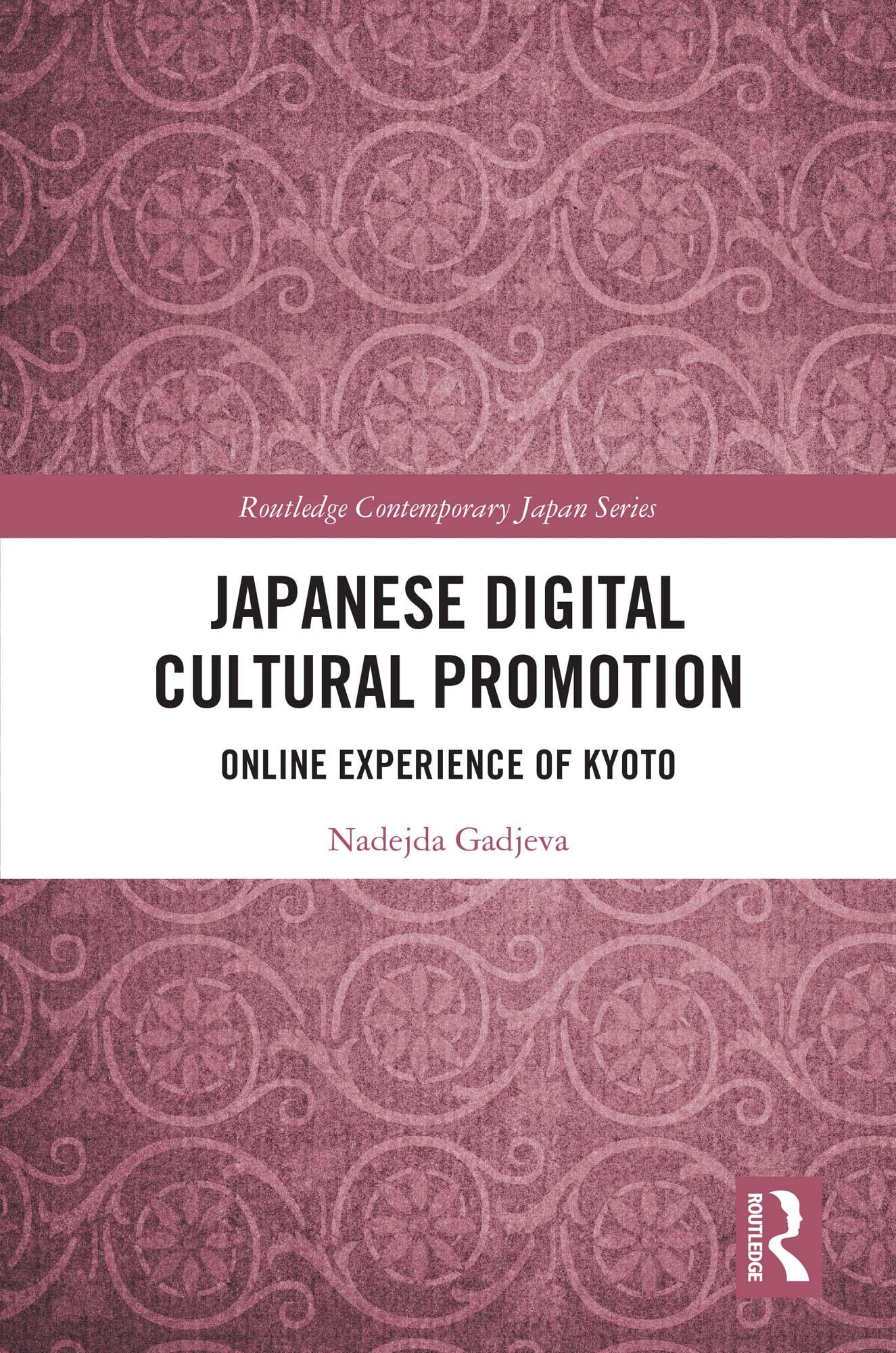
Gadjeva uses Kyoto as a case study to explore the innovative mechanisms being used to promote Japanese culture and cultural properties since the outbreak of COVID-19.
Beginning by setting out the main initiatives and actors involved in preserving, introducing, and utilizing Kyoto’s cultural heritage, Gadjeva proceeds to discuss alternative approaches using digital technologies. These tools include remote access virtual reality, augmented reality, augmented virtuality, and mixed reality. She looks at how such approaches have been applied to Kyoto’s digital museums, real-time online experiences, and other virtual projects presenting tangible, intangible, and folk heritage. In doing so she draws on a wide range of interviews with experts from the Japan Foundation, the Kyoto Art Center, and other related institutions to investigate the limitations and possible strategies for further development of these practices. She also interviews scholars, government officials, and experts from Europe about the prospects for further remote online experiences, applied both specifically to Kyoto and more broadly to cultural tourism. Based on the findings, the book discusses particular future challenges and suggests specific policies and project proposals for further remote online experiences of Kyoto’s cultural properties.
A valuable read for professionals and scholars of cultural and tourism studies, that will be of particular interest to those specializing in Japan.
Betala smidigt med kort, Klarna, Apple Pay eller Google Pay. Är du inte nöjd har du alltid 14 dagars ångerrätt. Läs mer i våra villkor. Har du några frågor, mejla oss på hello@memmo.org.
Memmo gör det enklare att plugga – var du än är i världen. Hos oss samlar du kursböcker och smarta studieverktyg på ett och samma ställe: sammanfattningar, quiz, poddar och flashcards. Och så Ted, din studiekompis som svarar på allt du undrar. Över 50 000 studenter pluggar redan här – byggt för att du ska lära dig snabbare och stressa mindre.