
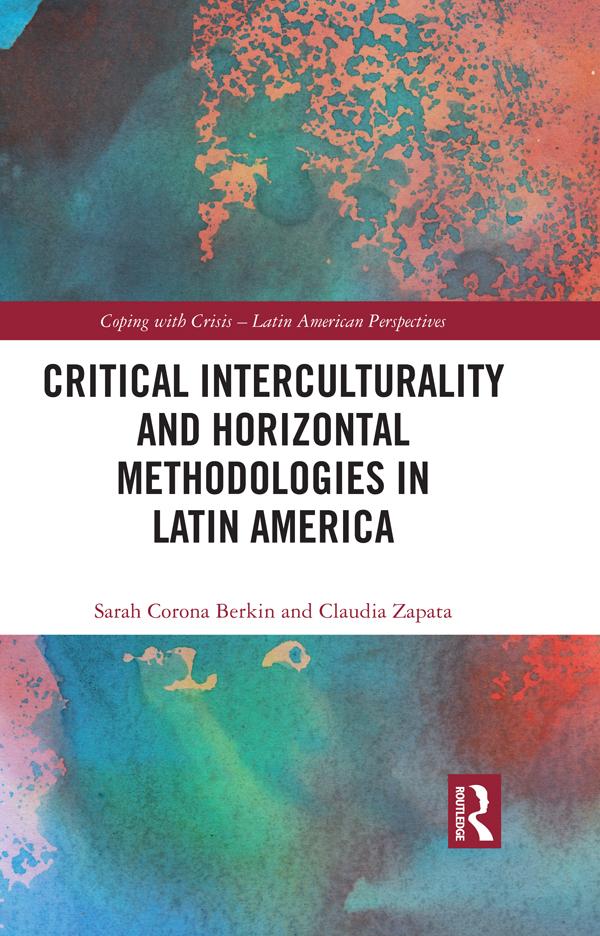
In this edifying volume Sarah Corona and Claudia Zapata extrapolate the causes for the divisions between groups in Latin American society, bringing their years of experience investigating the conditions and consequences of heterogeneity in the region.
First, Corona approaches the problem of difference and heterogeneity epistemologically, asking about the possible benefits of horizontal modes of knowledge production between academics and the "social other." She demands reification for those without access to institutions who experience social ills and theorizes a trans-disciplinary dialogue to discover a horizontal construction of knowledge. Zapata evaluates and questions whether indigenous people throughout the continent have had their quality of life improved by the recognition of their collective rights as peoples. These two works provide overviews of a Latin American multiculturalism that connects to parallel movements in North America and Europe. Combined they offer a guide that could be vital to future activism and social work whether in the classroom or on the streets.
Critical Interculturality and Horizontal Methodology in Latin America will appeal to scholars and students who are in need of new ways to comprehend the current strain of multiculturalism and plurality. It offers reflections on how social research can be not only sensitive to the epistemologies and interests of the "cultural other," but approach parity and horizontality in dialogue.
Betala smidigt med kort, Klarna, Apple Pay eller Google Pay. Är du inte nöjd har du alltid 14 dagars ångerrätt. Läs mer i våra villkor. Har du några frågor, mejla oss på hello@memmo.org.
Memmo gör det enklare att plugga – var du än är i världen. Hos oss samlar du kursböcker och smarta studieverktyg på ett och samma ställe: sammanfattningar, quiz, poddar och flashcards. Och så Ted, din studiekompis som svarar på allt du undrar. Över 50 000 studenter pluggar redan här – byggt för att du ska lära dig snabbare och stressa mindre.