
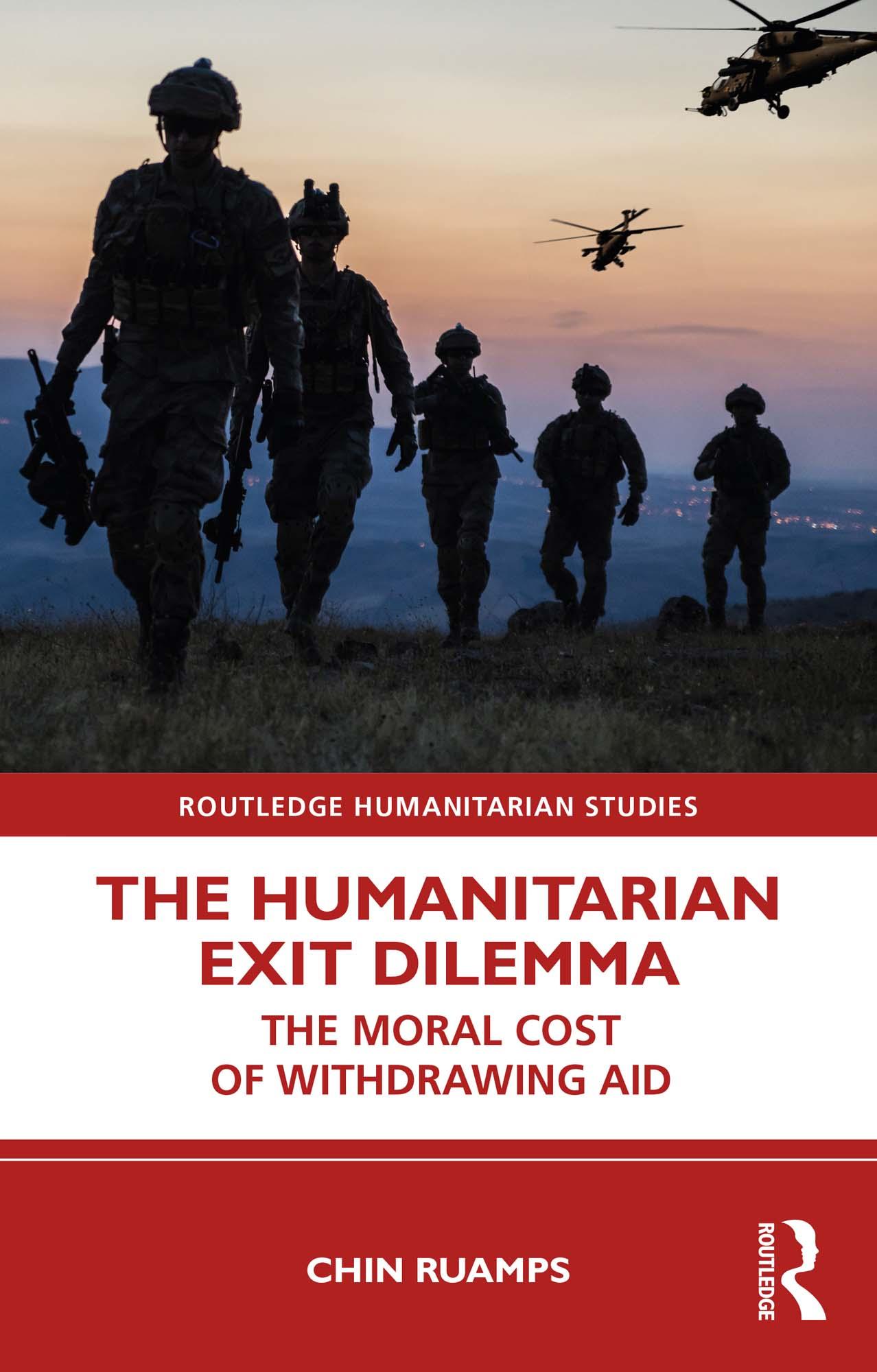
How should humanitarian organisations respond when their aid goes awry? Should they stay and remain engaged with the needy, or should they withdraw and leave? Investigating the choices involved and the judgements required when tackling these questions, this book explores the unique ‘Humanitarian Exit Dilemma’ that confronts humanitarian organisations.
Humanitarian practitioners often are too concerned with the outcome of action but fail to recognise that there are other equally weighty moral considerations they should consider. Focusing simply on the results of projects, such as the number of lives saved alone, is inadequate. To address this problem, this book highlights three value-based normative considerations, namely humanitarian aid workers’ special relationships with those whom they are assisting, humanitarian organisations’ causal responsibility to assist those they have made vulnerable, and humanitarian organisations’ obligations to fulfil reasonable expectations of those assisted. Together, these three non-instrumental reasonings serve as the main arguments of the author's value-based normative account, the ‘Non-Consequentialist Approach’, to address the Humanitarian Exit Dilemma.
Offering a unique perspective on how humanitarian organisations should navigate the Humanitarian Exit Dilemma, this book will be of interest to scholars and practitioners in the field of Humanitarian Studies, African Studies, Refugee Studies, political philosophy, humanitarian action, and human rights.
Betala smidigt med kort, Klarna, Apple Pay eller Google Pay. Är du inte nöjd har du alltid 14 dagars ångerrätt. Läs mer i våra villkor. Har du några frågor, mejla oss på hello@memmo.org.
Memmo gör det enklare att plugga – var du än är i världen. Hos oss samlar du kursböcker och smarta studieverktyg på ett och samma ställe: sammanfattningar, quiz, poddar och flashcards. Och så Ted, din studiekompis som svarar på allt du undrar. Över 50 000 studenter pluggar redan här – byggt för att du ska lära dig snabbare och stressa mindre.