
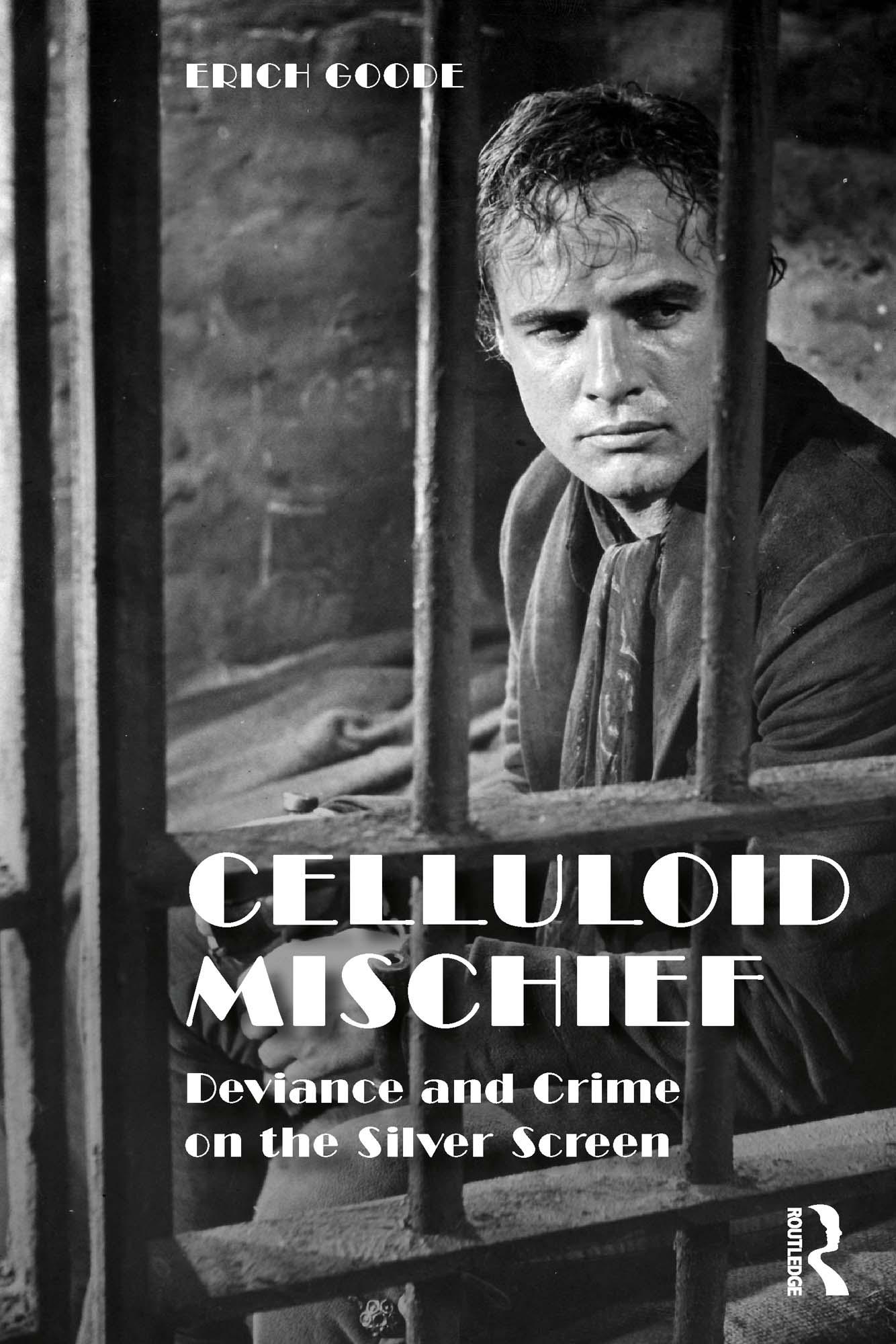
Celluloid Mischief examines the portrayal of wrongdoing and “deviant” behavior in film. The premise is that films are material products of both individual and collective imagination that reflect the values and norms of the society that produce them. On this basis, it is possible to perceive how society understands and classifies particular kinds of behavior and assigns or designates classes of people and actions as “good” or “bad.” So-called “wrongdoing” in movies, then, tells us about real-life norms, the violation of those norms, and the efforts to punish and control the perpetrators of those violators.
Motion pictures embody information about the social world; they constitute a universe of raw particulars that await excavation and analysis. By applying the appropriate approach, what happens on the screen can guide us to an understanding of society and culture. Films are commercial products; the people who make them are members of a society, influenced by that society, who attempt to appeal to lots of other members of that society by producing something that they want to see. A society's films tell us a great deal about the taste and proclivities of the society that produce and consume them. Using postwar and contemporary Hollywood cinema as case studies, this book demonstrates the complex and evolving nature of modern America's social, economic, and political values.
Betala smidigt med kort, Klarna, Apple Pay eller Google Pay. Är du inte nöjd har du alltid 14 dagars ångerrätt. Läs mer i våra villkor. Har du några frågor, mejla oss på hello@memmo.org.
Memmo gör det enklare att plugga – var du än är i världen. Hos oss samlar du kursböcker och smarta studieverktyg på ett och samma ställe: sammanfattningar, quiz, poddar och flashcards. Och så Ted, din studiekompis som svarar på allt du undrar. Över 50 000 studenter pluggar redan här – byggt för att du ska lära dig snabbare och stressa mindre.