
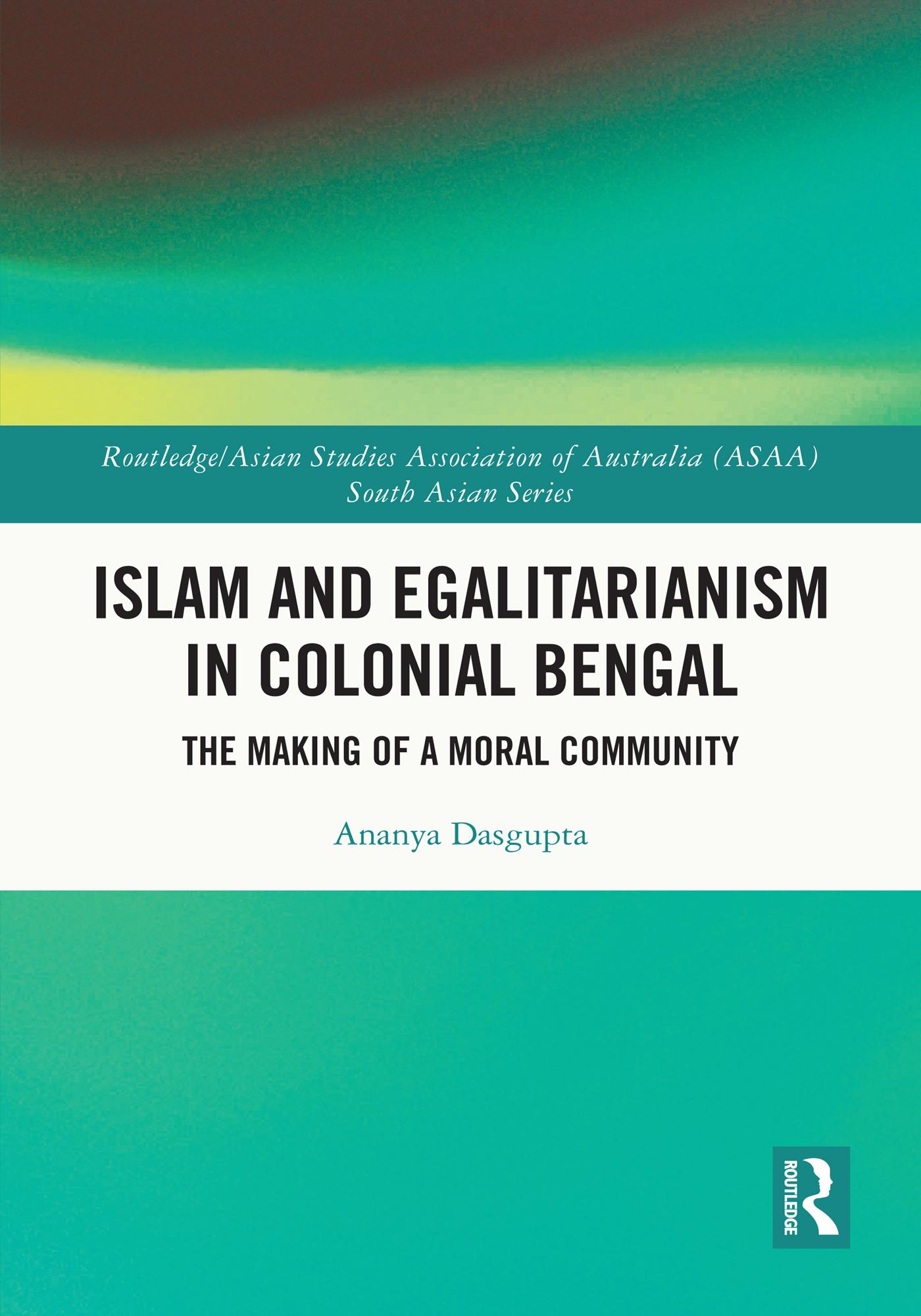
This book is a historical exploration of the social and cultural processes that led to the rise of the ideology of labor as a touchstone of Bengali Muslim politics in late colonial India.
The book argues that the tremendous popularity of the Pakistan movement in Bengal is to be understood not just in terms of "communalization" of class politics, or even "separatist" demands of a religious minority living out anxieties of Hindu political majoritarianism, but in terms of a distinctively modern idea of Muslim self and culture which gave primacy to production/labor as the site where religious, moral, ethical, as well as economic value would be anchored. In telling the story of the formation of a modern Muslim identity, the book presents the conceptual congruence between Islam and egalitarianism as a distinctively early twentieth-century phenomenon, and the approach can be viewed as key to explaining the mass appeal of the desire for Pakistan.
A novel contribution to the study of Bengal and Pakistan’s origins, the book will be of interest to researchers studying South Asian history, the history of colonialism and end of empire, South Asian studies, including labor studies, Islamic Studies, and Muslim social and cultural history.
Betala smidigt med kort, Klarna, Apple Pay eller Google Pay. Är du inte nöjd har du alltid 14 dagars ångerrätt. Läs mer i våra villkor. Har du några frågor, mejla oss på hello@memmo.org.
Memmo gör det enklare att plugga – var du än är i världen. Hos oss samlar du kursböcker och smarta studieverktyg på ett och samma ställe: sammanfattningar, quiz, poddar och flashcards. Och så Ted, din studiekompis som svarar på allt du undrar. Över 50 000 studenter pluggar redan här – byggt för att du ska lära dig snabbare och stressa mindre.