
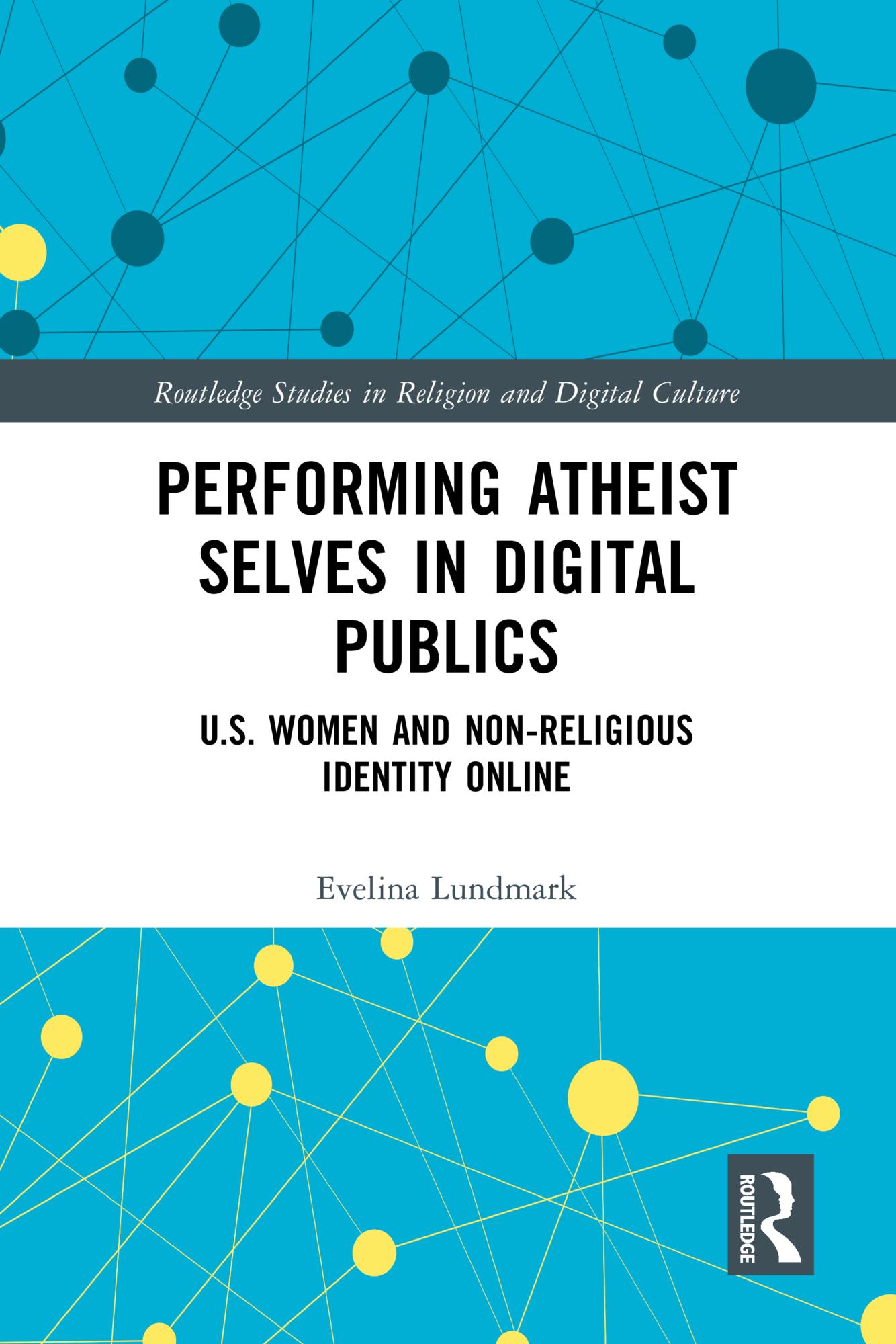
This book considers how the non-religious self is performed publicly online, and how digital culture and technology shapes this process. Building on a YouTube case study with women vloggers, it presents unique empirical data on non-organized atheism in the United States. Lundmark suggests that the atheist self as performed online exists in tension between a perception of atheism as sinful and amoral in relation to hegemonical Christianity in the U.S., and the hyperrational, male-centered discourse that has characterized the atheist movement. She argues that women atheist vloggers co-effect third spaces of emotive resonance that enable a precarious counterpublicness of performing atheist visibility. The volume offers a valuable contribution to the discussion of how the public, the private, and areas in-between are understood within digital religion, and opens up new space for engaging with the increased visibility of atheist identity in a mediatized society.
Betala smidigt med kort, Klarna, Apple Pay eller Google Pay. Är du inte nöjd har du alltid 14 dagars ångerrätt. Läs mer i våra villkor. Har du några frågor, mejla oss på hello@memmo.org.
Memmo gör det enklare att plugga – var du än är i världen. Hos oss samlar du kursböcker och smarta studieverktyg på ett och samma ställe: sammanfattningar, quiz, poddar och flashcards. Och så Ted, din studiekompis som svarar på allt du undrar. Över 50 000 studenter pluggar redan här – byggt för att du ska lära dig snabbare och stressa mindre.