
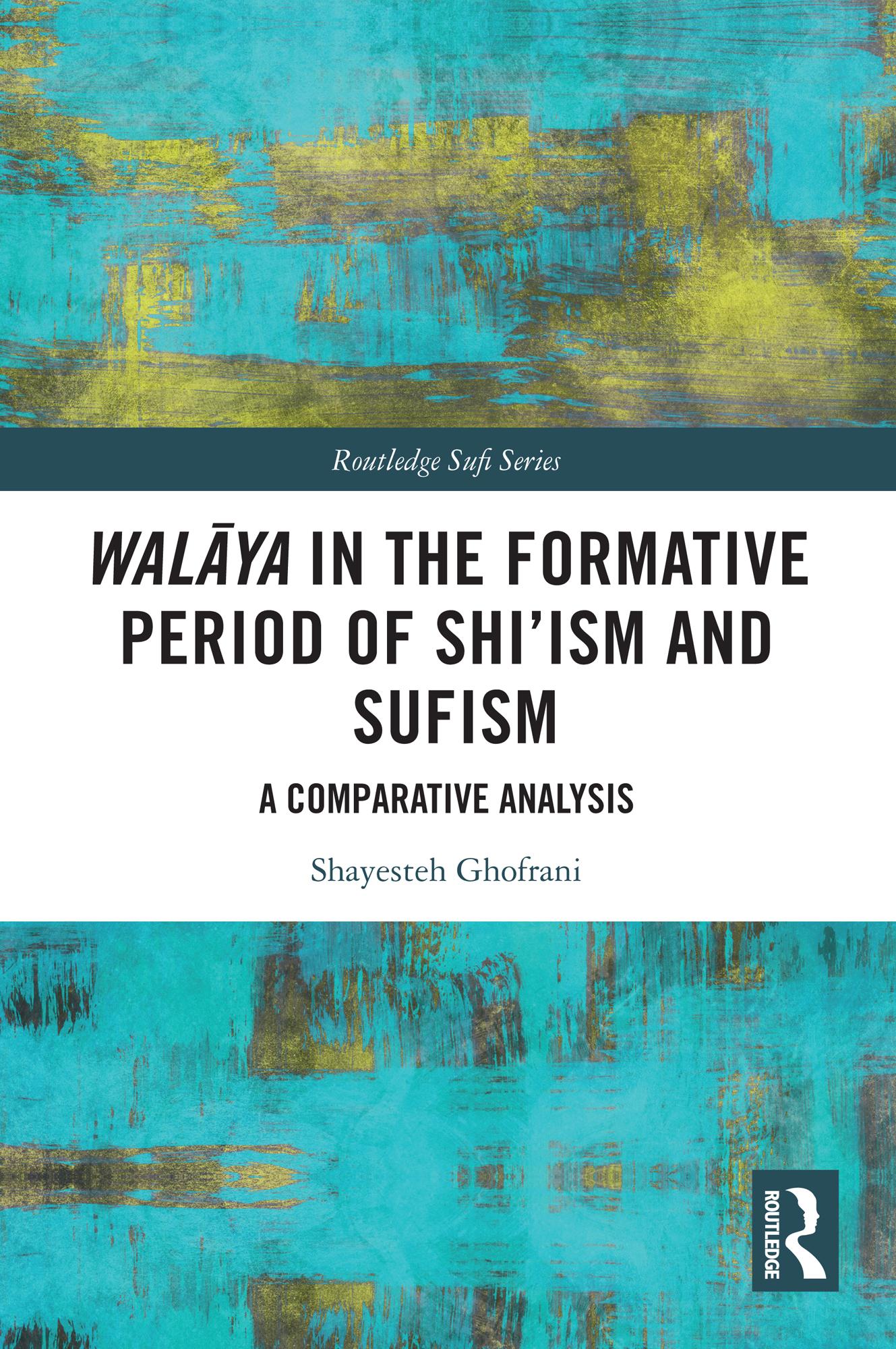
Focused on Shi’ism and Sufism in the formative period of Islam, this book examines the development of the concept of walāya, a complex term that has, over time, acquired a wide range of relationships with other theological ideas, chiefly in relation to the notion of authority.
The book offers a textual and comparative analysis of walāya based on primary sources in the ninth and tenth centuries, from both Shi’i and Sufi circles. The starting point is one of the oldest surviving Shi’i sources, Kitāb Sulaym. Alongside this, the author analyses al-Īḍāḥ of Faḍl Shādhān al-Nishābūrī, Kitāb al-Maḥāsin of al-Barqī and Kitāb al-Kāfī of al-Kulaynī. Three major texts in Sufism are considered: Kitāb al-Ṣidq by Abū Saʿīd al-Kharrāz, Tafsīr al-Qurʾan al-ʿAẓīm by Sahl al-Tustarī, and Al-Tirmidhī’s Kitāb Sīrat al-Awliyāʾ. Together, these sources highlight the doctrinal aspects of walāya, exploring the identity, function, appointment, and description of those considered 'walī'. The author ultimately argues that walāya is a cluster of rich, deep-rooted responses to the question of authority, developed within both Shi’ism and Sufism after the death of the Prophet.
The book is much-needed reading for students and scholars interested in Shi’i and Sufi studies and Islamic philosophy.
Betala smidigt med kort, Klarna, Apple Pay eller Google Pay. Är du inte nöjd har du alltid 14 dagars ångerrätt. Läs mer i våra villkor. Har du några frågor, mejla oss på hello@memmo.org.
Memmo gör det enklare att plugga – var du än är i världen. Hos oss samlar du kursböcker och smarta studieverktyg på ett och samma ställe: sammanfattningar, quiz, poddar och flashcards. Och så Ted, din studiekompis som svarar på allt du undrar. Över 50 000 studenter pluggar redan här – byggt för att du ska lära dig snabbare och stressa mindre.