
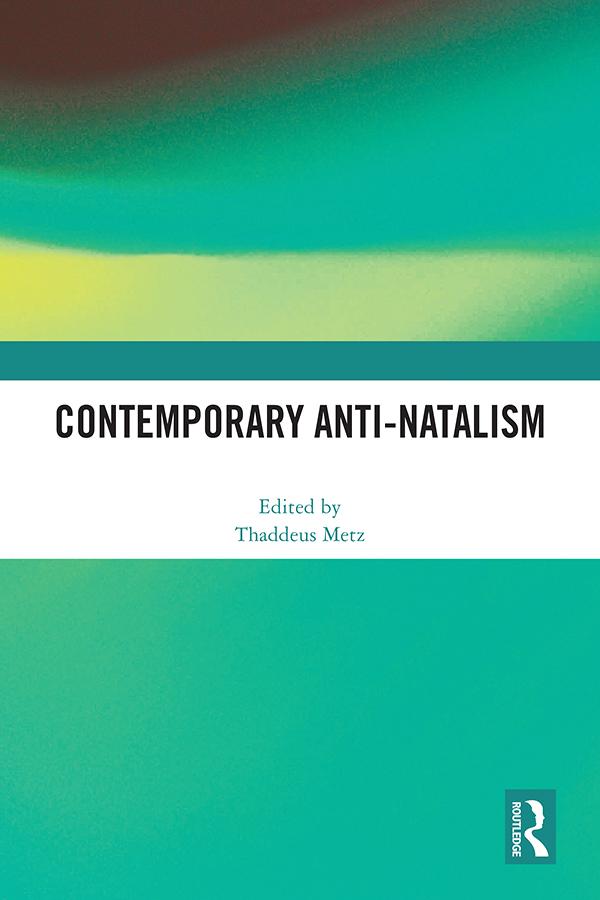
Given the pain, discomfort, anxiety, heartbreak, and boredom that most humans experience in their lives, is it morally permissible to create them? Some philosophers lately have answered ‘No’, contending that it is wrong to create a new human life when one could avoid doing so, because it would be bad for the one created. This view is known as ‘anti-natalism’. Some contributors to this volume argue that anti-natalism is true because: agents have a prima facie duty to prevent suffering; it is immoral to violate another’s right not to be harmed without having consented to it; and it is a serious wrong to exploit the weakness of a poorly off being to become a biological parent. Others here argue against anti-natalism on the ground, for instance, that many of our lives are not so bad and in fact are quite good and that the logic of anti-natalism absurdly entails pro-mortalism, the view that we should kill off as many people as possible. This book explores these and related issues concerning the evaluative question of how to judge the worthwhileness of lives and the normative question of what basic duties entail for the creation of new lives. Excepting one, all the chapters in this book were originally published in the South African Journal of Philosophy.
Betala smidigt med kort, Klarna, Apple Pay eller Google Pay. Är du inte nöjd har du alltid 14 dagars ångerrätt. Läs mer i våra villkor. Har du några frågor, mejla oss på hello@memmo.org.
Memmo gör det enklare att plugga – var du än är i världen. Hos oss samlar du kursböcker och smarta studieverktyg på ett och samma ställe: sammanfattningar, quiz, poddar och flashcards. Och så Ted, din studiekompis som svarar på allt du undrar. Över 50 000 studenter pluggar redan här – byggt för att du ska lära dig snabbare och stressa mindre.