
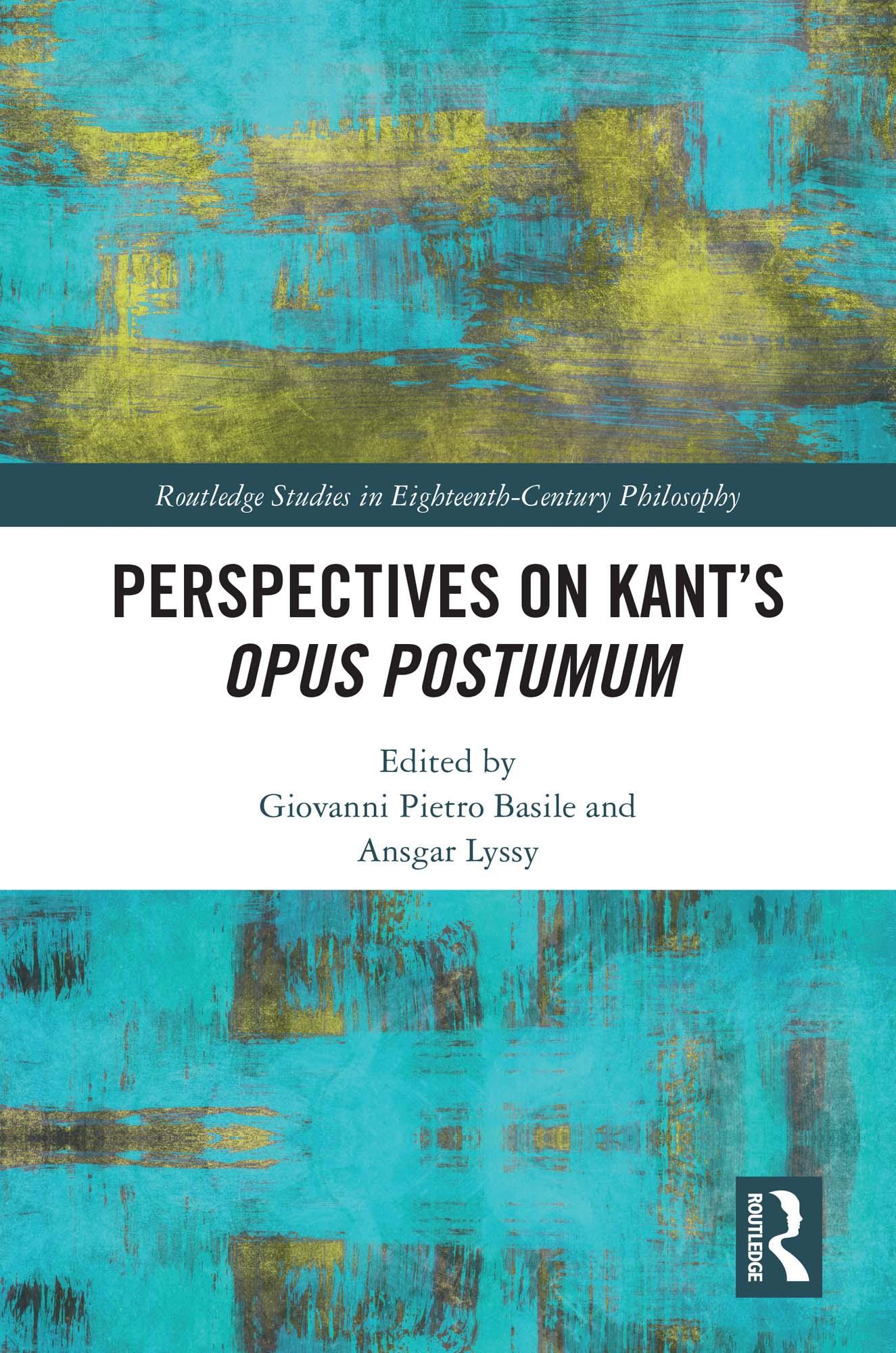
This book offers new perspectives on the theoretical elements of the Opus postumum (OP), Kant’s project of a final work which remained unknown until eighty years after his death. The contributors read the OP as a central work in establishing the relation between Kant’s transcendental philosophy, his natural philosophy, practical philosophy, philosophy of religion, metaphysics, and his broader epistemology.
Interpreting the OP is an important task because it helps reveal how Kant himself tried to correct and develop his critical philosophy. It also sheds light on the foundational role of the three Critiques for other philosophical inquiries, as well as the unified philosophical system that Kant sought to establish. The chapters in this volume address a range of topics relevant to the epistemological and theoretical problems raised in the OP, including the transition from the Metaphysical Foundations of Natural Science to physics as an answer to a deficiency in critical thought; the notion of ether and, more specifically, its transcendental deduction; self-affection and the self-positing of the subject; and the idea of God and the system of ideas in the highest standpoint of transcendental philosophy.
Perspectives on Kant’s Opus postumum will be of interest to upper-level students and scholars working on Kant.
Betala smidigt med kort, Klarna, Apple Pay eller Google Pay. Är du inte nöjd har du alltid 14 dagars ångerrätt. Läs mer i våra villkor. Har du några frågor, mejla oss på hello@memmo.org.
Memmo gör det enklare att plugga – var du än är i världen. Hos oss samlar du kursböcker och smarta studieverktyg på ett och samma ställe: sammanfattningar, quiz, poddar och flashcards. Och så Ted, din studiekompis som svarar på allt du undrar. Över 50 000 studenter pluggar redan här – byggt för att du ska lära dig snabbare och stressa mindre.