
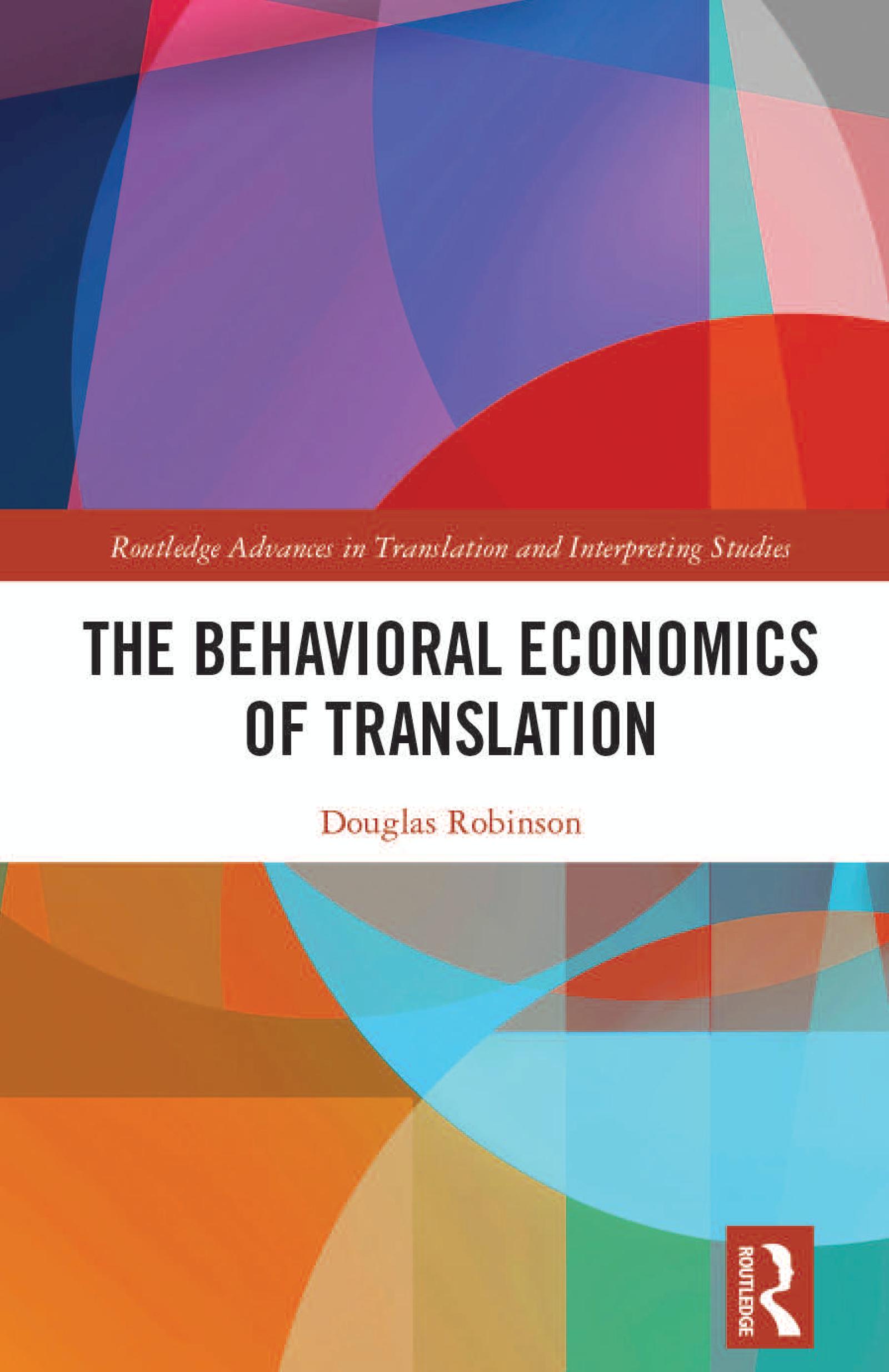
This book applies frameworks from behavioral economics to Western thinking about translation, mapping four approaches to eight keywords in translation studies to bring together divergent perspectives on the study of translation and interpreting.
The volume takes its points of departure from the tensions between the concerns of behavioral and neoclassical economists. The book considers on one side behavioral economists’ interest in the predictable irrationality of “Humans” and its nuances as they unfold in terms of gender, here organized around Masculine Human, Feminine Human, and Queer perspectives, and on the other side neoclassical economists’ chief concerns with the unfailing rationality of the “Econs.” Robinson applies these four approaches across eight chapters, each representing a keyword in the study of translation—agency; difference; Eurocentrism; hermeneutics; language; norms; rhetoric; and world literature—with case studies that problematize the different categories.
Taken together, the book offers a comprehensive treatment of the behavioral economics of translation and promotes new ways of thinking in the study of translation and interpreting, making it of interest to scholars in the discipline as well as those working along interdisciplinary lines in related fields such as philosophy, literature, and political science.
Betala smidigt med kort, Klarna, Apple Pay eller Google Pay. Är du inte nöjd har du alltid 14 dagars ångerrätt. Läs mer i våra villkor. Har du några frågor, mejla oss på hello@memmo.org.
Memmo gör det enklare att plugga – var du än är i världen. Hos oss samlar du kursböcker och smarta studieverktyg på ett och samma ställe: sammanfattningar, quiz, poddar och flashcards. Och så Ted, din studiekompis som svarar på allt du undrar. Över 75 000 studenter pluggar redan här – byggt för att du ska lära dig snabbare och stressa mindre.