
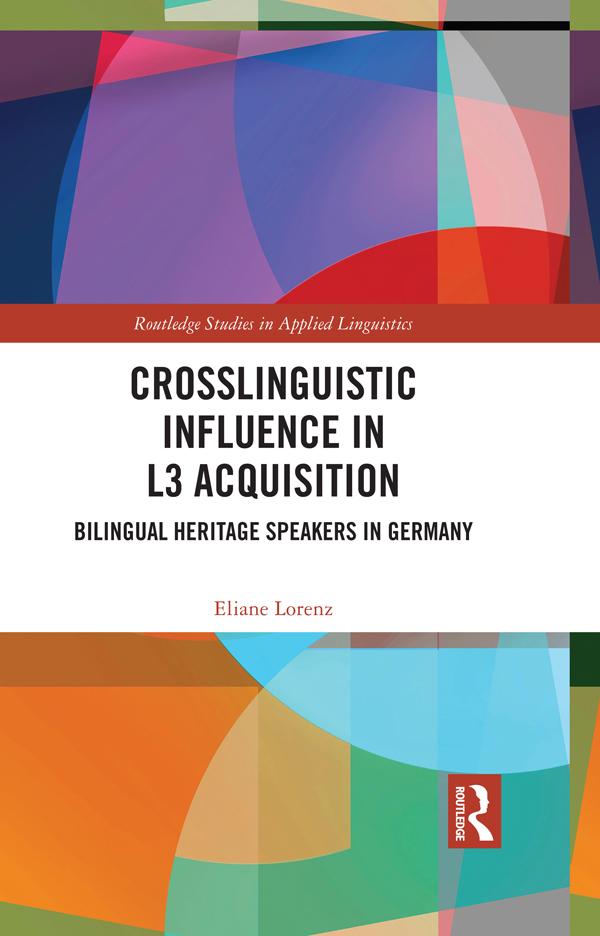
This book explores crosslinguistic influence in third language acquisition, drawing insights from a study of young bilingual secondary school students in Germany to unpack the importance of different variables in the acquisition and use of English as an additional language.
Lorenz draws on data from a learner corpus of written and spoken picture descriptions toward analyzing sources of crosslinguistic influence in L3 acquisition in bilingual heritage speakers with unbalanced proficiency in heritage versus majority languages as compared with their monolingual German peers. This unique approach allows for a clearer understanding of the extent of influence of access to heritage languages, the impact of being a "balanced" vs "unbalanced" bilingual speaker, and the importance of extra-linguistic variables, such as age, gender, socio-economic status, and type of school. The final two chapters highlight practical considerations for the English language classroom and the implications of the study for future directions for research on third language acquisition.
With its detailed overview of L2 and L3 acquisition and contribution toward ongoing debates on the advantages of being bilingual and multilingual, this book will be of interest to students and scholars in applied linguistics, foreign language acquisition, foreign language teaching, and learner corpus research.
Betala smidigt med kort, Klarna, Apple Pay eller Google Pay. Är du inte nöjd har du alltid 14 dagars ångerrätt. Läs mer i våra villkor. Har du några frågor, mejla oss på hello@memmo.org.
Memmo gör det enklare att plugga – var du än är i världen. Hos oss samlar du kursböcker och smarta studieverktyg på ett och samma ställe: sammanfattningar, quiz, poddar och flashcards. Och så Ted, din studiekompis som svarar på allt du undrar. Över 75 000 studenter pluggar redan här – byggt för att du ska lära dig snabbare och stressa mindre.