
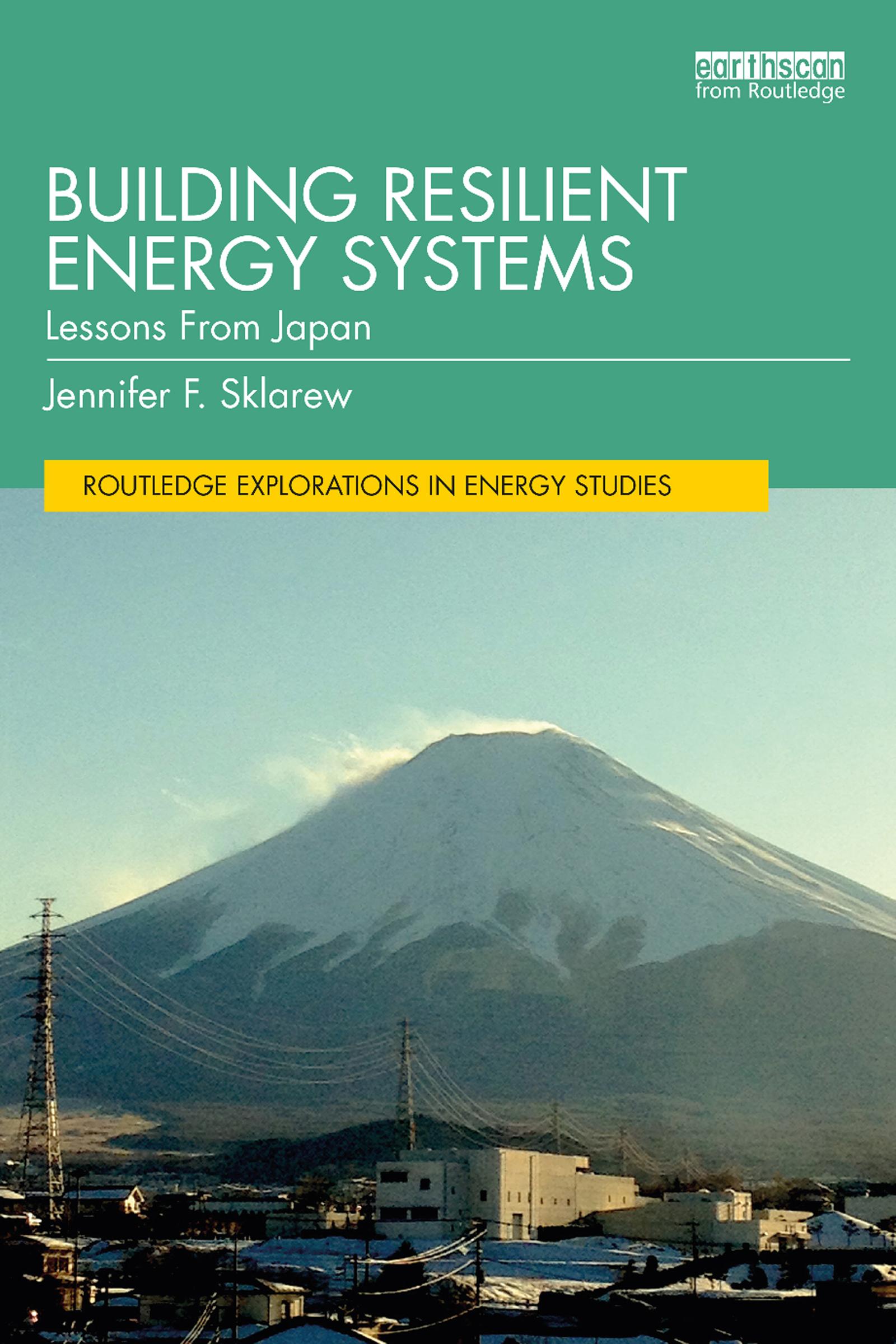
This book explores an ongoing puzzle: why don’t catastrophic events, such as oil shocks and nuclear meltdowns, always trigger transitions away from the energy technologies involved?
Jennifer F. Sklarew examines how two key factors – shocks and stakeholder relationships - combine to influence energy system transitions, applying a case study of Japan’s trajectory from the time of the 1970s oil crises through the period following the 2011 Fukushima Daiichi nuclear disaster. Examining the role of diverse stakeholders’ resilience priorities, she focuses on how changes in stakeholder cooperation and clout respond to and are affected by these shocks, and how this combination of shocks and relationship changes shapes energy policies and policymaking. From Japan’s narrative, the book derives unique and universal lessons for cooperation on innovation and energy system resilience applicable to communities and nations around the globe, including implications for transitions in the context of the COVID-19 pandemic. The book also places energy system resilience and innovation in the broader context of the food-energy-water-climate nexus.
Building Resilient Energy Systems: Lessons from Japan will appeal to all levels of readers with an interest in energy policy, energy technologies and energy transitions: experts and specialists; academics and students; practitioners and policymakers.
Betala smidigt med kort, Klarna, Apple Pay eller Google Pay. Är du inte nöjd har du alltid 14 dagars ångerrätt. Läs mer i våra villkor. Har du några frågor, mejla oss på hello@memmo.org.
Memmo gör det enklare att plugga – var du än är i världen. Hos oss samlar du kursböcker och smarta studieverktyg på ett och samma ställe: sammanfattningar, quiz, poddar och flashcards. Och så Ted, din studiekompis som svarar på allt du undrar. Över 50 000 studenter pluggar redan här – byggt för att du ska lära dig snabbare och stressa mindre.