
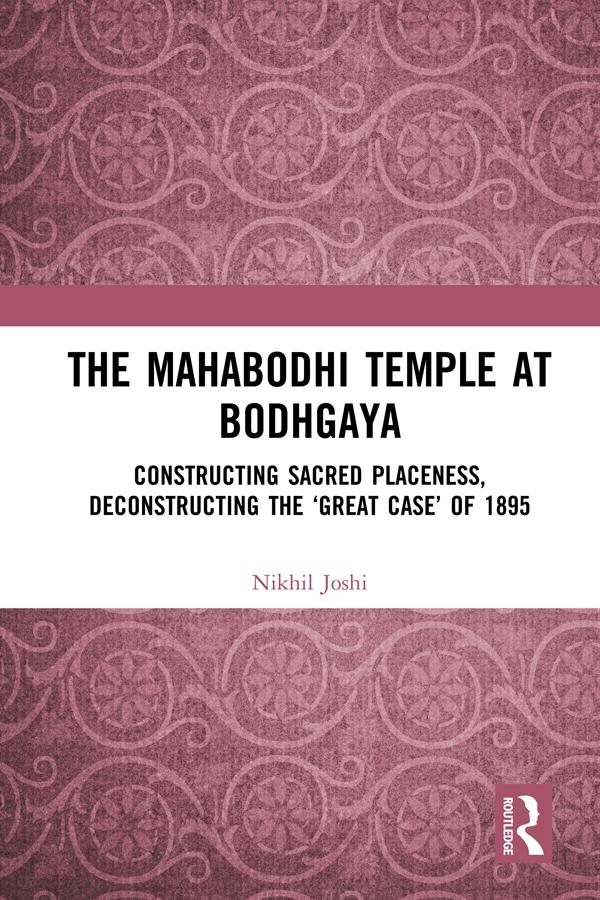
This volume investigates the historic and ethnographic accounts of the ongoing religious contestations over the status of the Mahābodhi Temple complex in Bodhgayā (a UNESCO World Heritage Site since 2002) and its surrounding landscape to critically analyse the working and construction of sacredness. It endeavours to make a ground-up assessment of ways in which human participants in the past and present respond to and interact with the Mahābodhi Temple and its surroundings.
The volume argues that sacredness goes beyond scriptural texts and archaeological remains. The Mahābodhi Temple is complex and its surrounding landscape is a ‘living’ heritage, which has been produced socially and constitutes differential densities of human involvement, attachment, and experience. Its significance lies mainly in the active interaction between religious architecture within its dynamic ritual settings. This endless contestation of sacredness and its meaning should not be seen as the ‘death’ of the Mahābodhi Temple; on the contrary, it illustrates the vitality of the ongoing debate on the meaning, understanding, and use of the sacred in the Indian context.
Please note: Taylor & Francis does not sell or distribute the Hardback in India, Pakistan, Nepal, Bhutan, Bangladesh and Sri Lanka
Betala smidigt med kort, Klarna, Apple Pay eller Google Pay. Är du inte nöjd har du alltid 14 dagars ångerrätt. Läs mer i våra villkor. Har du några frågor, mejla oss på hello@memmo.org.
Memmo gör det enklare att plugga – var du än är i världen. Hos oss samlar du kursböcker och smarta studieverktyg på ett och samma ställe: sammanfattningar, quiz, poddar och flashcards. Och så Ted, din studiekompis som svarar på allt du undrar. Över 50 000 studenter pluggar redan här – byggt för att du ska lära dig snabbare och stressa mindre.