
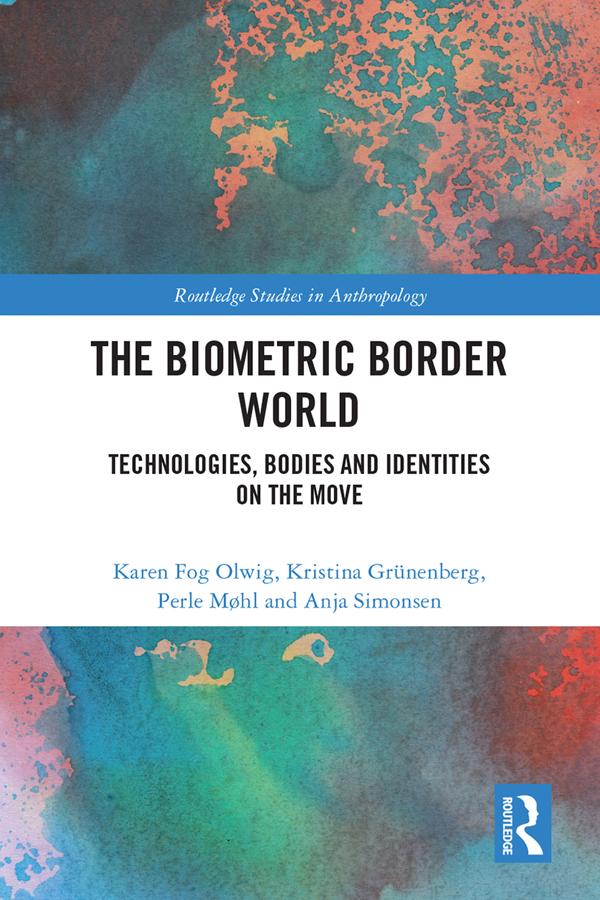
Since the 1990s, biometric border control has attained key importance throughout Europe. Employing digital images of, for example, fingerprints, DNA, bones, faces or irises, biometric technologies use bodies to identify, categorize and regulate individuals’ cross-border movements.
Based on innovative collaborative fieldwork, this book examines how biometrics are developed, put to use and negotiated in key European border sites. It analyses the disparate ways in which the technologies are applied, perceived and experienced by border control agents and others managing the cross-border flow of people, by scientists and developers engaged in making the technologies, and by migrants and non-government organizations attempting to manoeuvre in the complicated and often-unpredictable systems of technological control.
Biometric technologies are promoted by national and supranational authorities and industry as scientifically exact and neutral methods of identification and verification, and as an infallible solution to security threats. The ethnographic case studies in this volume demonstrate, however, that the technologies are, in fact, characterized by considerable ambiguity and uncertainty and subject to substantial subjective interpretation, translation and brokering with different implications for migrants, border guards, researchers and other actors engaged in the border world.
Betala smidigt med kort, Klarna, Apple Pay eller Google Pay. Är du inte nöjd har du alltid 14 dagars ångerrätt. Läs mer i våra villkor. Har du några frågor, mejla oss på hello@memmo.org.
Memmo gör det enklare att plugga – var du än är i världen. Hos oss samlar du kursböcker och smarta studieverktyg på ett och samma ställe: sammanfattningar, quiz, poddar och flashcards. Och så Ted, din studiekompis som svarar på allt du undrar. Över 50 000 studenter pluggar redan här – byggt för att du ska lära dig snabbare och stressa mindre.