
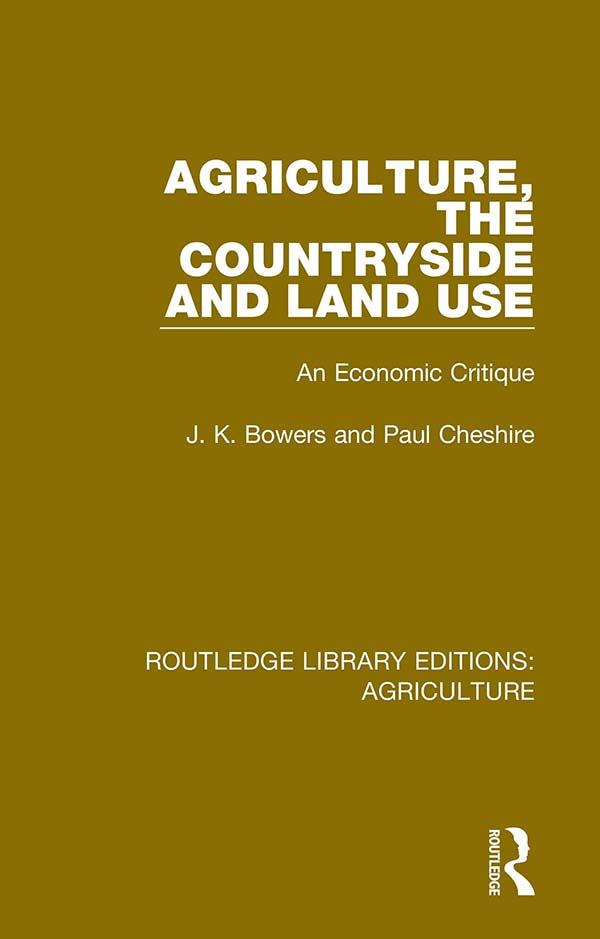
First published in 1983. How had the situation developed in which agriculture had become such a creature of state protection, where public money supported prosperous landowners while poor farmers received practically nothing? Where the value of agricultural support exceeded net farm income, and vastly exceeded the level of support available to British Steel or British Rail?
In answering these questions John Bowers and Paul Cheshire examined the real value of agricultural support in successive policy phases since the Second World War, and analysed the effects this support had on income distribution. Their thesis was that agricultural change, including the transfer of land from traditional farmers to institutions and corporations, was not the product of impersonal progress, but the direct result of agricultural support policies, resting on specious economic arguments.
The authors’ analysis of this subject has inescapable relevance for the policymaker, for the taxpayer and consumer of foodstuffs, for the urban user of the British countryside and indeed for farmers and the farming lobby. Agriculture, the Countryside and Land Use will be an important book for all these groups and also for students of agriculture, geography and economics.
Betala smidigt med kort, Klarna, Apple Pay eller Google Pay. Är du inte nöjd har du alltid 14 dagars ångerrätt. Läs mer i våra villkor. Har du några frågor, mejla oss på hello@memmo.org.
Memmo gör det enklare att plugga – var du än är i världen. Hos oss samlar du kursböcker och smarta studieverktyg på ett och samma ställe: sammanfattningar, quiz, poddar och flashcards. Och så Ted, din studiekompis som svarar på allt du undrar. Över 50 000 studenter pluggar redan här – byggt för att du ska lära dig snabbare och stressa mindre.