
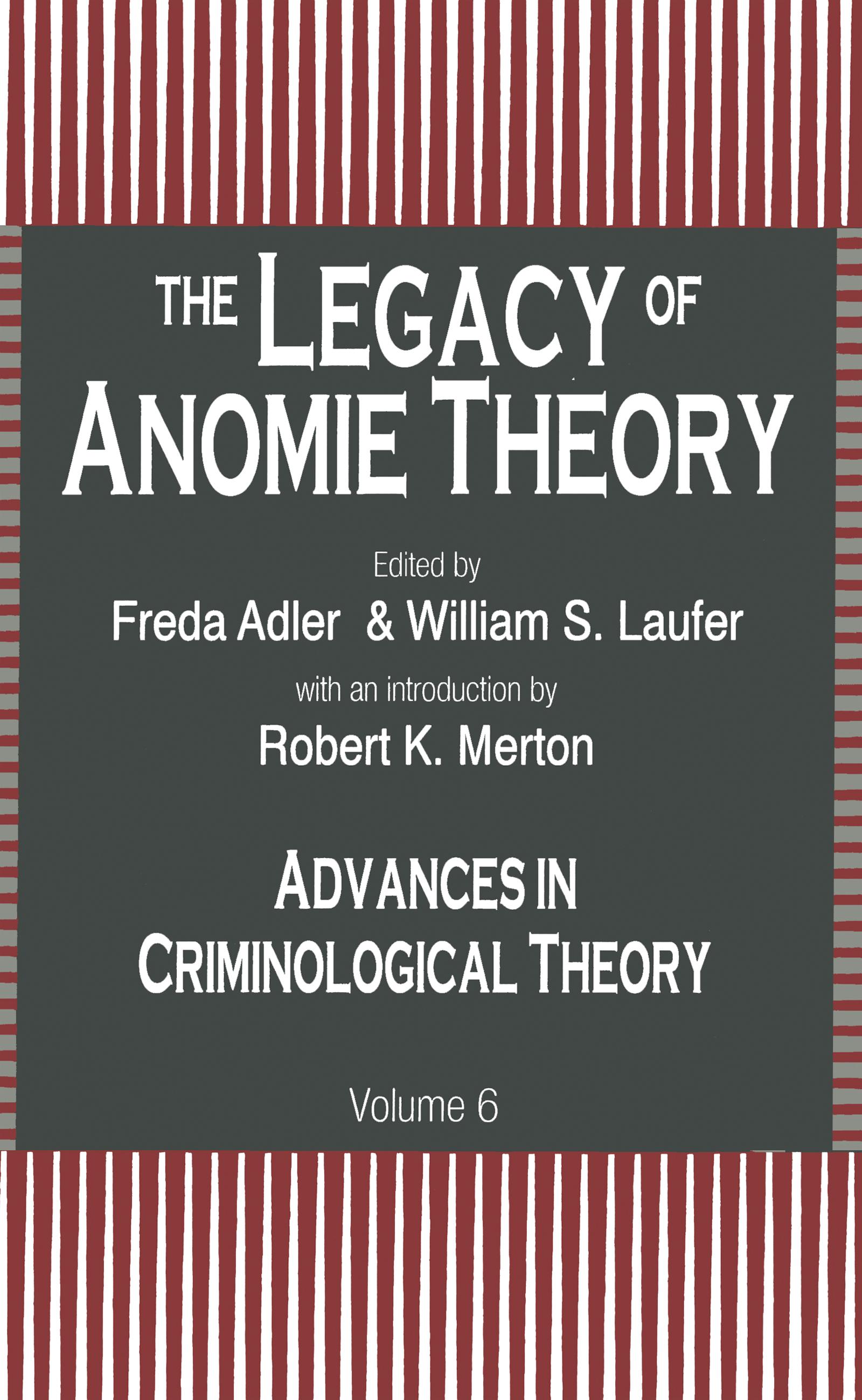
This sixth volume of Advances in Criminological Theory is testimony to a resurgent interest in anomie-strain theory, which began in the mid- 1980s and continues unabated. Contributors focus on the new body of empirical research and theorizing that has been added to the anomie tradition that extends from Durkheim to Merton. The first section is a major, 75-page statement by Robert K. Merton, examining the development of the anomie-and-opportunity-structure paradigm and its significance to criminology., The Legacy of Anomie Theoy assesses the theory's continuing usefulness, explains the relevance of Merton's concept of goals/means disparity as a psychological mechanism in the explanation of delinquency, and compares strain theory with social control theory. A macrosociological theoretical formulation is used to explain the association between societal development and crime rates. In other chapters, anomie is used to explain white-collar crime and to explore the symbiotic relationship between Chinese gangs and adult criminal organizations within the cultural, economic, and political context of the American-Chinese community.
Betala smidigt med kort, Klarna, Apple Pay eller Google Pay. Är du inte nöjd har du alltid 14 dagars ångerrätt. Läs mer i våra villkor. Har du några frågor, mejla oss på hello@memmo.org.
Memmo gör det enklare att plugga – var du än är i världen. Hos oss samlar du kursböcker och smarta studieverktyg på ett och samma ställe: sammanfattningar, quiz, poddar och flashcards. Och så Ted, din studiekompis som svarar på allt du undrar. Över 50 000 studenter pluggar redan här – byggt för att du ska lära dig snabbare och stressa mindre.