
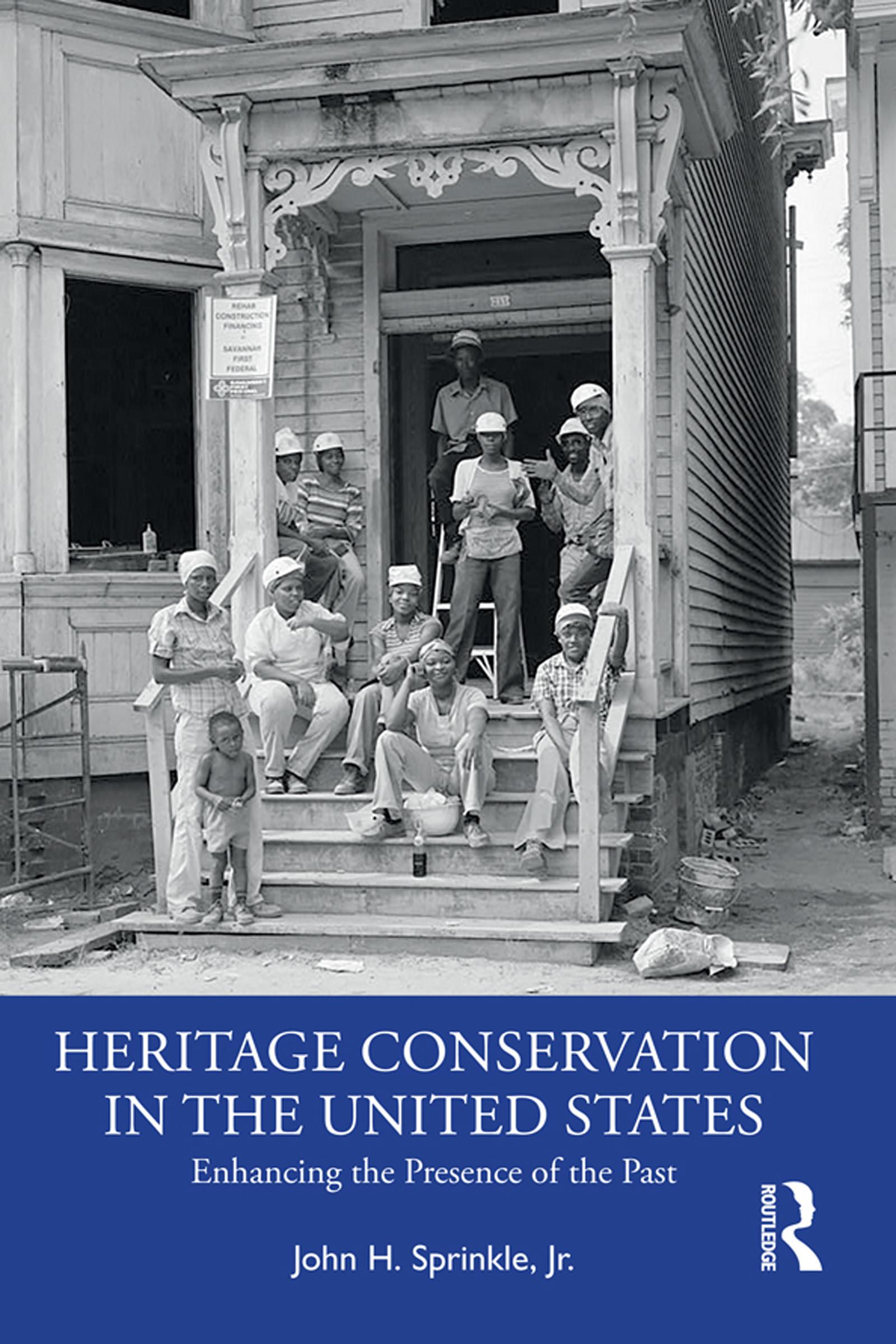
Heritage Conservation in the United States begins to trace the growth of the American historic preservation movement over the last 50 years, viewed from the context of the civil rights and environmental movements.
The first generation of the New Preservation (1966-1991) was characterized by the establishment of the bureaucratic structures that continue to shape the practice of heritage conservation in the United States. The National Register of Historic Places began with less than a thousand historic properties and grew to over 50,000 listings. Official recognition programs expanded, causing sites that would never have been considered as either significant or physically representative in 1966 now being regularly considered as part of a historic preservation planning process. The book uses the story of how sites associated with African American history came to be officially recognized and valued, and how that process challenged the conventions and criteria that governed American preservation practice.
This book is designed for the historic preservation community and students engaged in the study of historic preservation.
Betala smidigt med kort, Klarna, Apple Pay eller Google Pay. Är du inte nöjd har du alltid 14 dagars ångerrätt. Läs mer i våra villkor. Har du några frågor, mejla oss på hello@memmo.org.
Memmo gör det enklare att plugga – var du än är i världen. Hos oss samlar du kursböcker och smarta studieverktyg på ett och samma ställe: sammanfattningar, quiz, poddar och flashcards. Och så Ted, din studiekompis som svarar på allt du undrar. Över 75 000 studenter pluggar redan här – byggt för att du ska lära dig snabbare och stressa mindre.