
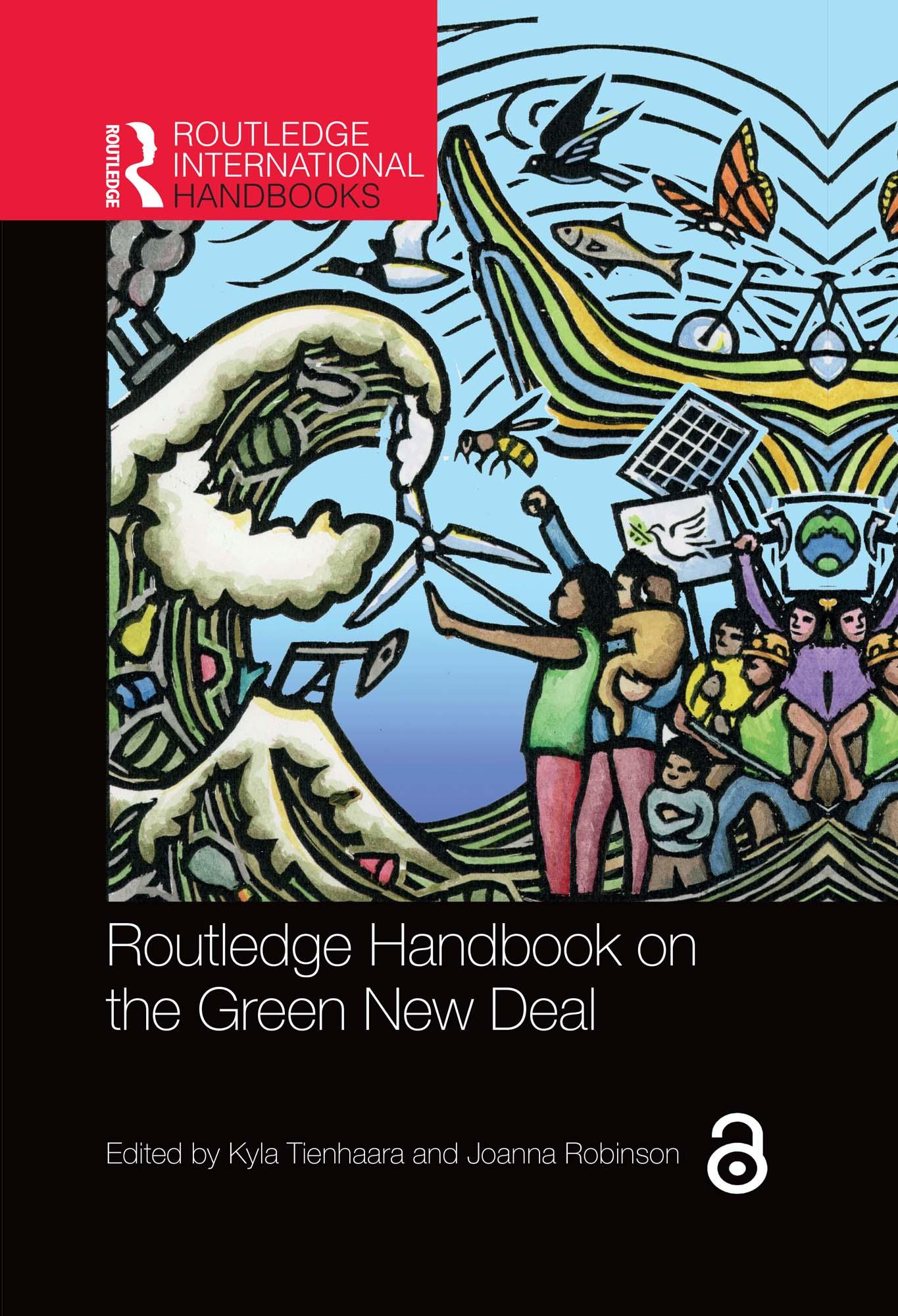
In recent years, the Green New Deal has moved from relative obscurity to front and centre of policy discussions and public debates about how to respond to the climate crisis. It has been credited with radically changing the nature of the conversation on climate change and with re-energizing the environmental movement at a critical time. All Green New Deal proposals share an emphasis on the need for governments (rather than markets) to lead the energy transition. However, they differ in other respects. This Handbook analyses the fundamentals underlying all Green New Deals as well as exploring national and regional variations.
It is divided into three parts. The first part examines the political economy of the Green New Deal focussing not just on how proposals will be costed but also on opportunities for a fundamental transformation of both national economies and the global economic system. The second part explores issues of justice, which are central to many Green New Deal proposals, including Indigenous rights, racial and gender equity, and justice for the Global South. In the third part, authors detail case studies of Green New Deal proposals and plans at the local, national, and regional level.
This book will be an invaluable research and reference volume for students and scholars in economics, politics, sociology, geography, and environmental studies. It should also be of interest to those actively involved in climate and environmental policymaking.
Betala smidigt med kort, Klarna, Apple Pay eller Google Pay. Är du inte nöjd har du alltid 14 dagars ångerrätt. Läs mer i våra villkor. Har du några frågor, mejla oss på hello@memmo.org.
Memmo gör det enklare att plugga – var du än är i världen. Hos oss samlar du kursböcker och smarta studieverktyg på ett och samma ställe: sammanfattningar, quiz, poddar och flashcards. Och så Ted, din studiekompis som svarar på allt du undrar. Över 50 000 studenter pluggar redan här – byggt för att du ska lära dig snabbare och stressa mindre.