
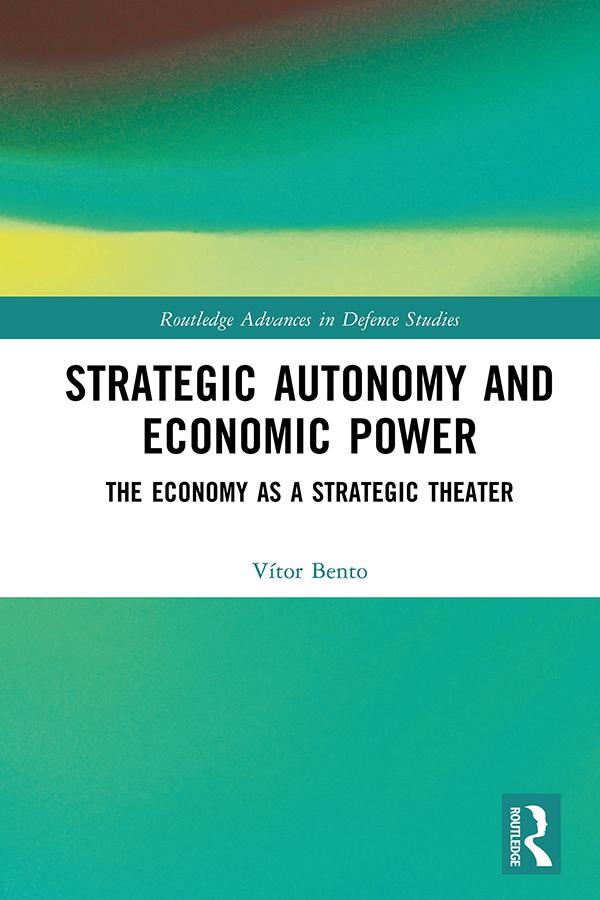
This book examines the effect of economic power on a state’s strategic autonomy.
Strategic autonomy is a fundamental condition for the availability of strategic options in the interaction of states. This book provides the first clear operational definition of the concept and offers an analysis of the relevance of the national economy to strategic autonomy. The main sources of economic power – size of the economy, position in trade and technological networks, savings, wealth, and finance – and their impact on strategic autonomy are analyzed in depth. The strategic governance of the national economy is also addressed as a way of ensuring that national economic power can work as strategic power for a country, providing it with strategic autonomy. The strategies pursued by China – which in under four decades has gone from an underdeveloped state to the main challenger of the dominant world power – and Germany – which, despite being defeated in World War II, having no nuclear weapons and having chosen to be a "civilian power", became the dominant power in Europe – are analyzed in depth, as two paradigmatic examples of the theory developed by the book.
This book will be of much interest to students of strategic studies, economics, foreign policy and International Relations.
Betala smidigt med kort, Klarna, Apple Pay eller Google Pay. Är du inte nöjd har du alltid 14 dagars ångerrätt. Läs mer i våra villkor. Har du några frågor, mejla oss på hello@memmo.org.
Memmo gör det enklare att plugga – var du än är i världen. Hos oss samlar du kursböcker och smarta studieverktyg på ett och samma ställe: sammanfattningar, quiz, poddar och flashcards. Och så Ted, din studiekompis som svarar på allt du undrar. Över 50 000 studenter pluggar redan här – byggt för att du ska lära dig snabbare och stressa mindre.