
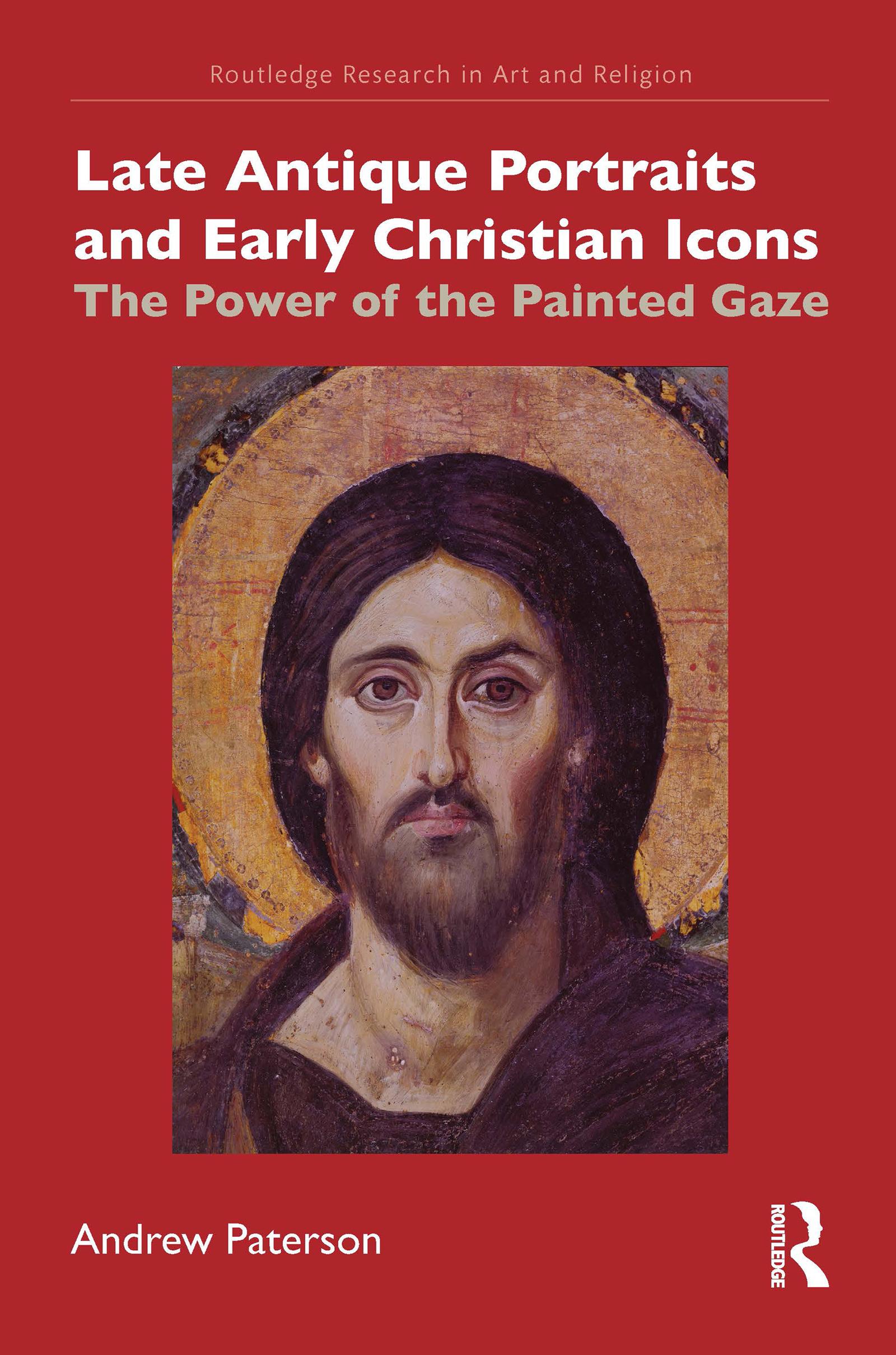
This book focuses on the earliest surviving Christian icons, dated to the sixth and seventh centuries, which bear many resemblances to three other well-established genres of ‘sacred portrait’ also produced during late antiquity, namely Roman imperial portraiture, Graeco-Egyptian funerary portraiture and panel paintings depicting non-Christian deities.
Andrew Paterson addresses two fundamental questions about devotional portraiture – both Christian and non-Christian – in the late antique period. Firstly, how did artists visualise and construct these images of divine or sanctified figures? And secondly, how did their intended viewers look at, respond to, and even interact with these images? Paterson argues that a key factor of many of these portrait images is the emphasis given to the depicted gaze, which invites an intensified form of personal encounter with the portrait’s subject.
The book will be of interest to scholars working in art history, theology, religion and classical studies.
Betala smidigt med kort, Klarna, Apple Pay eller Google Pay. Är du inte nöjd har du alltid 14 dagars ångerrätt. Läs mer i våra villkor. Har du några frågor, mejla oss på hello@memmo.org.
Memmo gör det enklare att plugga – var du än är i världen. Hos oss samlar du kursböcker och smarta studieverktyg på ett och samma ställe: sammanfattningar, quiz, poddar och flashcards. Och så Ted, din studiekompis som svarar på allt du undrar. Över 75 000 studenter pluggar redan här – byggt för att du ska lära dig snabbare och stressa mindre.