
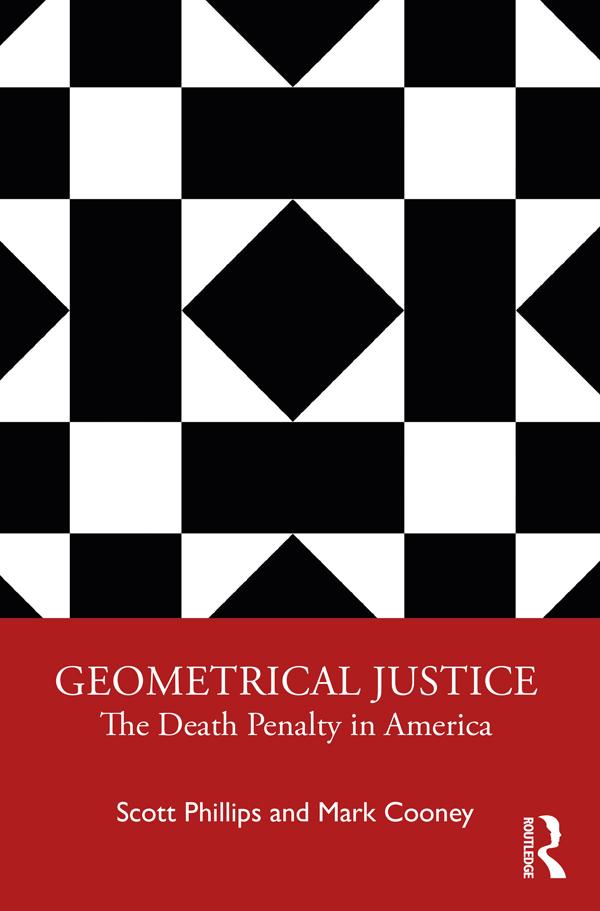
Legal decisions continue to mystify: why was this person sentenced to 20 years in prison, but that person to just 10 years for the same crime? Why did one person sue for civil damages, but another let the matter drop? Legal rules are supposed to answer these questions, but their answers are radically incomplete. Wouldn’t it be wonderful to have a theory that predicted and explained legal decisions?
Drawing on Donald Black’s theoretical ideas, Geometrical Justice: The Death Penalty in America addresses these issues, focusing specifi cally on who is sentenced to death and executed in the United States. The book explains why some murders are more serious than others and how the social characteristics of defendants, victims, and jurors aff ect case outcomes. Building on the most rigorous data in the field, the authors reveal wide discrepancies in capital punishment – why one person lives, but another person dies.
Geometrical Justice will be of interest to those engaged in criminal justice, criminology, and socio- legal studies, as well as students taking courses on sentencing, corrections, and capital punishment.
Betala smidigt med kort, Klarna, Apple Pay eller Google Pay. Är du inte nöjd har du alltid 14 dagars ångerrätt. Läs mer i våra villkor. Har du några frågor, mejla oss på hello@memmo.org.
Memmo gör det enklare att plugga – var du än är i världen. Hos oss samlar du kursböcker och smarta studieverktyg på ett och samma ställe: sammanfattningar, quiz, poddar och flashcards. Och så Ted, din studiekompis som svarar på allt du undrar. Över 50 000 studenter pluggar redan här – byggt för att du ska lära dig snabbare och stressa mindre.