
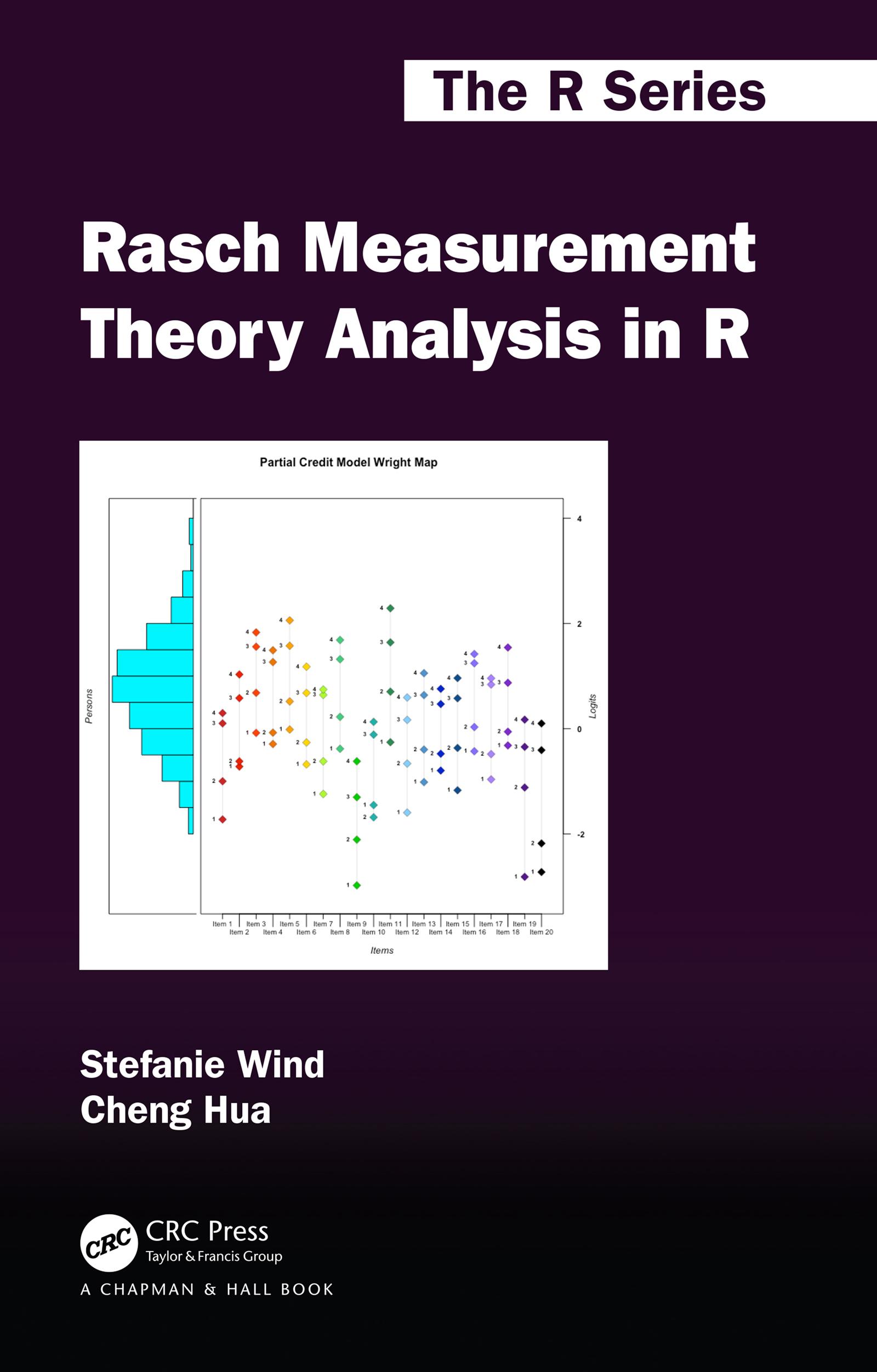
Rasch Measurement Theory Analysis in R provides researchers and practitioners with a step-by-step guide for conducting Rasch measurement theory analyses using R. It includes theoretical introductions to major Rasch measurement principles and techniques, demonstrations of analyses using several R packages that contain Rasch measurement functions, and sample interpretations of results.
Features:
- Accessible to users with relatively little experience with R programming
- Reproducible data analysis examples that can be modified to accommodate users’ own data
- Accompanying book website with links to additional resources and R code updates as needed
- Features dichotomous and polytomous (rating scale) Rasch models that can be applied to data from a wide range of disciplines
This book is designed for graduate students, researchers, and practitioners across the social, health, and behavioral sciences who have a basic familiarity with Rasch measurement theory and with R. Readers will learn how to use existing R packages to conduct a variety of analyses related to Rasch measurement theory, including evaluating data for adherence to measurement requirements, applying the dichotomous, Rating Scale, Partial Credit, and Many-Facet Rasch models, examining data for evidence of differential item functioning, and considering potential interpretations of results from such analyses.
Betala smidigt med kort, Klarna, Apple Pay eller Google Pay. Är du inte nöjd har du alltid 14 dagars ångerrätt. Läs mer i våra villkor. Har du några frågor, mejla oss på hello@memmo.org.
Memmo gör det enklare att plugga – var du än är i världen. Hos oss samlar du kursböcker och smarta studieverktyg på ett och samma ställe: sammanfattningar, quiz, poddar och flashcards. Och så Ted, din studiekompis som svarar på allt du undrar. Över 50 000 studenter pluggar redan här – byggt för att du ska lära dig snabbare och stressa mindre.