
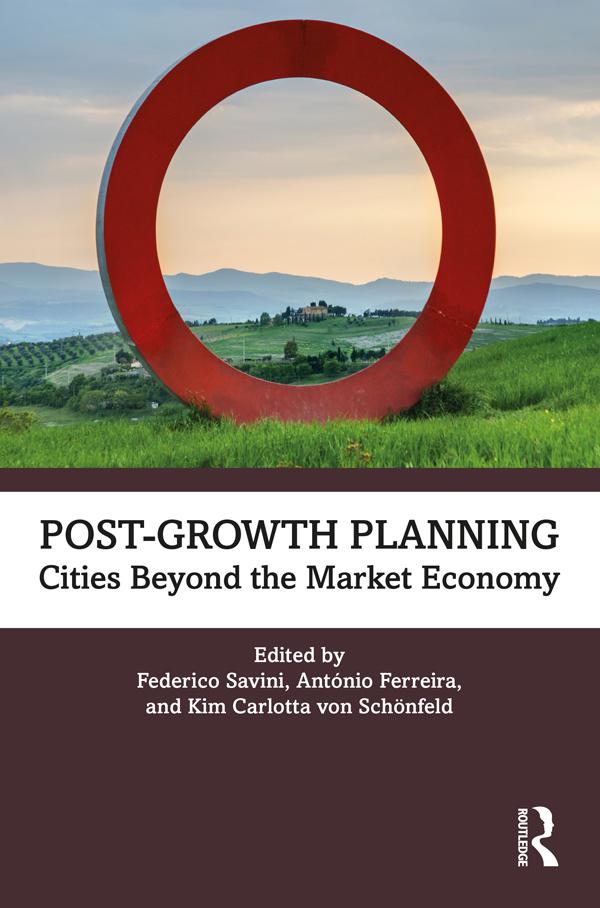
This book draws on a wide range of conceptual and empirical materials to identify and examine planning and policy approaches that move beyond the imperative of perpetual economic growth. It sketches out a path towards planning theories and practices that can break the cyclical process of urban expansion, crises, and recovery that negatively affect ecosystems and human lives.
To reduce the dramatic social and environmental impact of urbanization, this book offers both a critique of growth-led urban development and a prefiguration of ecologically regenerative and socially just ways of organizing cities and regions. It uncovers emerging possibilities for post-growth planning in the fields of collective housing, mobility, urban commoning, ecological land-use, urban–rural symbiosis, and alternative planning worldviews. It provides a toolkit of concepts and real-life examples for urban scholars, urbanists, activists, architects, and designers seeking to make cities prosper within planetary boundaries.
This book speaks to both experts and beginners in post-growth thinking. It concludes with a manifesto and glossary of key terms for urban scholars, students, and practitioners.
Betala smidigt med kort, Klarna, Apple Pay eller Google Pay. Är du inte nöjd har du alltid 14 dagars ångerrätt. Läs mer i våra villkor. Har du några frågor, mejla oss på hello@memmo.org.
Memmo gör det enklare att plugga – var du än är i världen. Hos oss samlar du kursböcker och smarta studieverktyg på ett och samma ställe: sammanfattningar, quiz, poddar och flashcards. Och så Ted, din studiekompis som svarar på allt du undrar. Över 75 000 studenter pluggar redan här – byggt för att du ska lära dig snabbare och stressa mindre.