
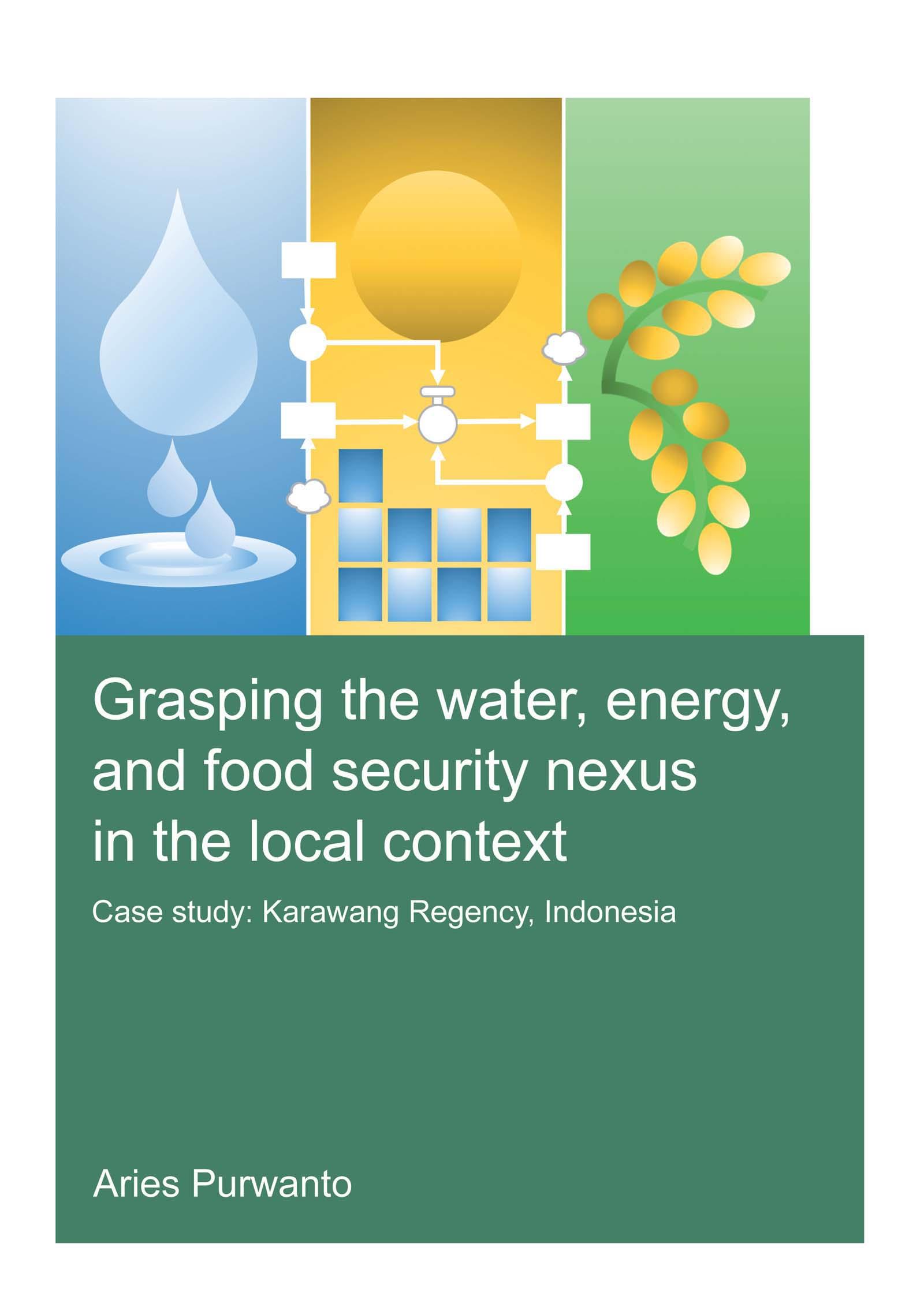
The existence of water, energy, and food (WEF) is critical for people to fulfil their basic needs, to achieve welfare, and to support the Sustainable Development Goals (SDGs). The WEF security topic is becoming widely discussed in developing and developed countries. Major components of WEF security i.e. availability, accessibility, and quality should be achieved integratedly to avoid unexpected impacts. The interconnectedness among endogenous and exogenous variables such as environmental, socio-economic, and political factors makes this issue immensely complex. The nexus approach attempts to integrate management and governance across sectors and scales to improve WEF security. This study aims to grasp WEF security in a local context and evaluate the implications of planned local interventions by developing a conceptual and quantitative analysis with local stakeholders. Karawang Regency in Indonesia is chosen as the case study. Several strategies for WEF-related sectors are formulated using location quotient (LQ) and competitive position (CP) methods. In addition, qualitative and quantitative system dynamics models are established by involving related stakeholders through group model building. Finally, a nexus-based framework for WEF security is developed to assist local policymakers in doing the evaluation and planning of WEF resources in the region.
Betala smidigt med kort, Klarna, Apple Pay eller Google Pay. Är du inte nöjd har du alltid 14 dagars ångerrätt. Läs mer i våra villkor. Har du några frågor, mejla oss på hello@memmo.org.
Memmo gör det enklare att plugga – var du än är i världen. Hos oss samlar du kursböcker och smarta studieverktyg på ett och samma ställe: sammanfattningar, quiz, poddar och flashcards. Och så Ted, din studiekompis som svarar på allt du undrar. Över 50 000 studenter pluggar redan här – byggt för att du ska lära dig snabbare och stressa mindre.