
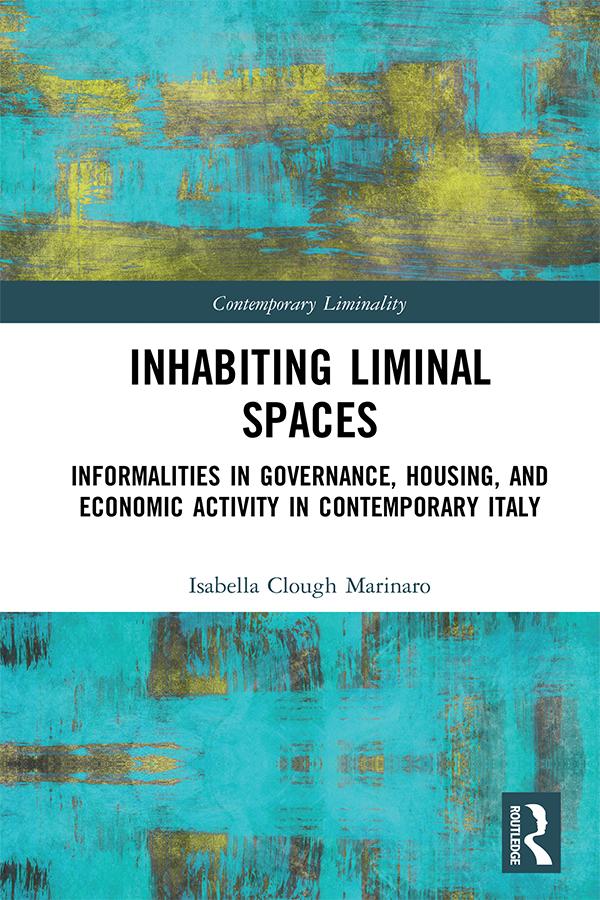
This book draws together debates from two burgeoning fields, liminality and informality studies, to analyze how dynamics of rule-bending take shape in Rome today. Adopting a multiscalar and transdisciplinary approach, it unpacks how gaps and contradictions in institutional rulemaking and application force many residents into protracted liminal states marked by intense vulnerability. By merging a political economy lens with ethnographic research in informal housing, illegal moneylending, unauthorized street-vending and waste collection, the author shows that informalities are not marginal or anomalous conditions, but an integral element of the city’s governance logics. Multiple actors together construct the local cultural norms, conventions and moral economies through which rule-negotiation occurs. However, these practices are ultimately unable to reconfigure historically rooted power dynamics and hierarchies. In fact, they often aggravate weak urbanites’ difficulties in accessing rights and services. A study that challenges assumptions that informalities are predominantly features of developing economies or limited to specific groups and sectors, this volume’s critical approach and innovative methodology will appeal to scholars of sociology and anthropology interested in social theory, urban studies and liminality.
Betala smidigt med kort, Klarna, Apple Pay eller Google Pay. Är du inte nöjd har du alltid 14 dagars ångerrätt. Läs mer i våra villkor. Har du några frågor, mejla oss på hello@memmo.org.
Memmo gör det enklare att plugga – var du än är i världen. Hos oss samlar du kursböcker och smarta studieverktyg på ett och samma ställe: sammanfattningar, quiz, poddar och flashcards. Och så Ted, din studiekompis som svarar på allt du undrar. Över 75 000 studenter pluggar redan här – byggt för att du ska lära dig snabbare och stressa mindre.