
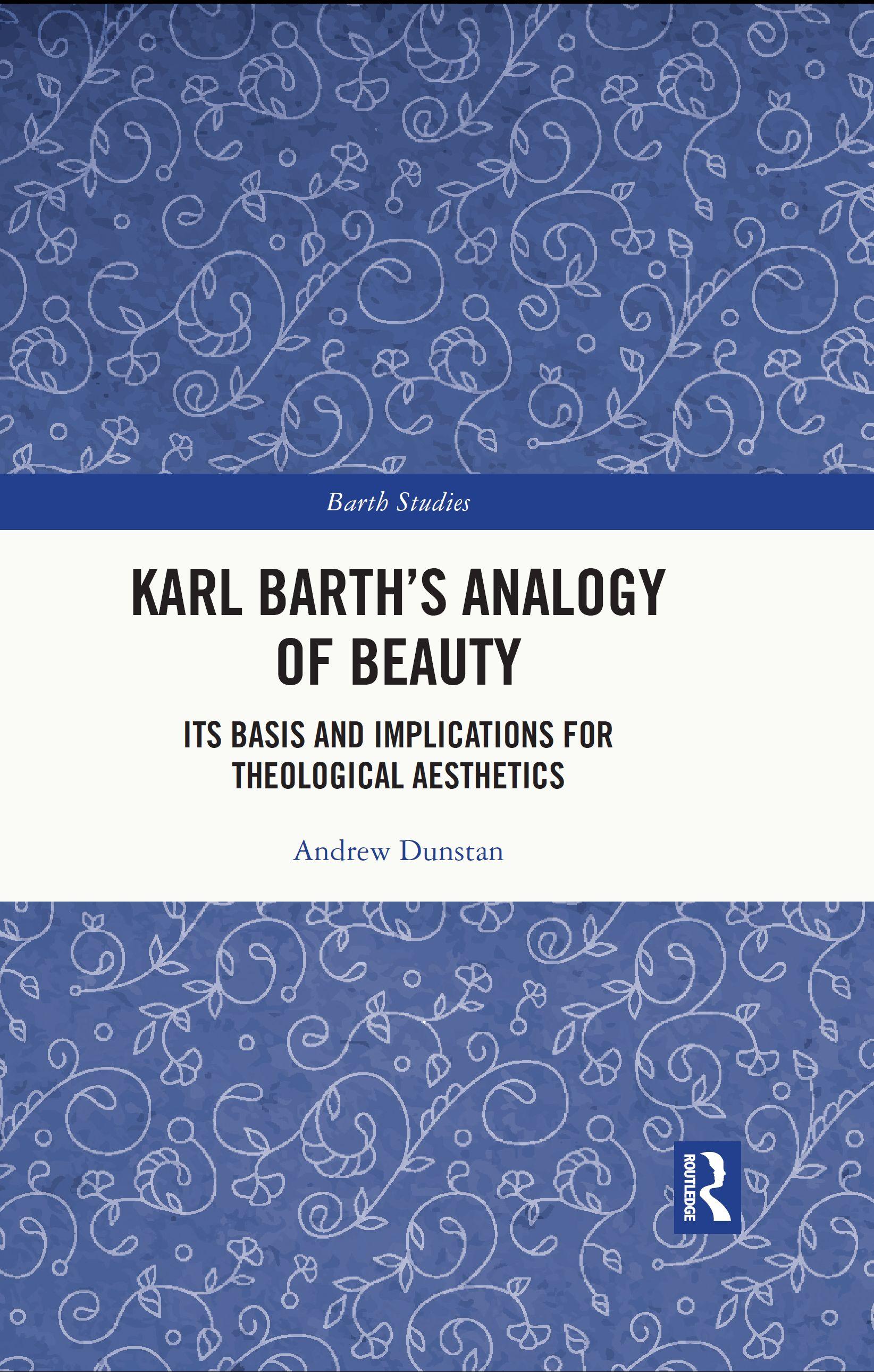
This book provides the first comprehensive examination of Karl Barth’s view of beauty. For over fifty years, scholars have assumed Barth recovered traditional belief in God’s beauty but refused to entertain any relationship between this and more familiar natural and artistic beauties. Hans Urs von Balthasar was the first to offer this interpretation, and his conclusion has been echoed ever since, rendering Barth’s view of beauty irrelevant to work in theological aesthetics. This volume continues the late-twentieth-century revision of Balthasar’s interpretation of Barth by arguing that this too is a significant misunderstanding of his theology. Andrew Dunstan demonstrates that, through an encounter with fatalistic forms of Reformed theology, Brunner’s charges that his dogmatics were irrelevant and medieval thought, Barth gradually developed an analogy of divine, ecclesial and worldly beauty with all the theological, christocentric and actualistic hallmarks of his previous forms of analogy. This not only yields valuable new insight into Barth’s view of analogy but also provides a much-needed foundation for a distinctively Protestant and post-Barthian approach to theological aesthetics.
Betala smidigt med kort, Klarna, Apple Pay eller Google Pay. Är du inte nöjd har du alltid 14 dagars ångerrätt. Läs mer i våra villkor. Har du några frågor, mejla oss på hello@memmo.org.
Memmo gör det enklare att plugga – var du än är i världen. Hos oss samlar du kursböcker och smarta studieverktyg på ett och samma ställe: sammanfattningar, quiz, poddar och flashcards. Och så Ted, din studiekompis som svarar på allt du undrar. Över 50 000 studenter pluggar redan här – byggt för att du ska lära dig snabbare och stressa mindre.
Du kanske också gillar
Köp boken0