
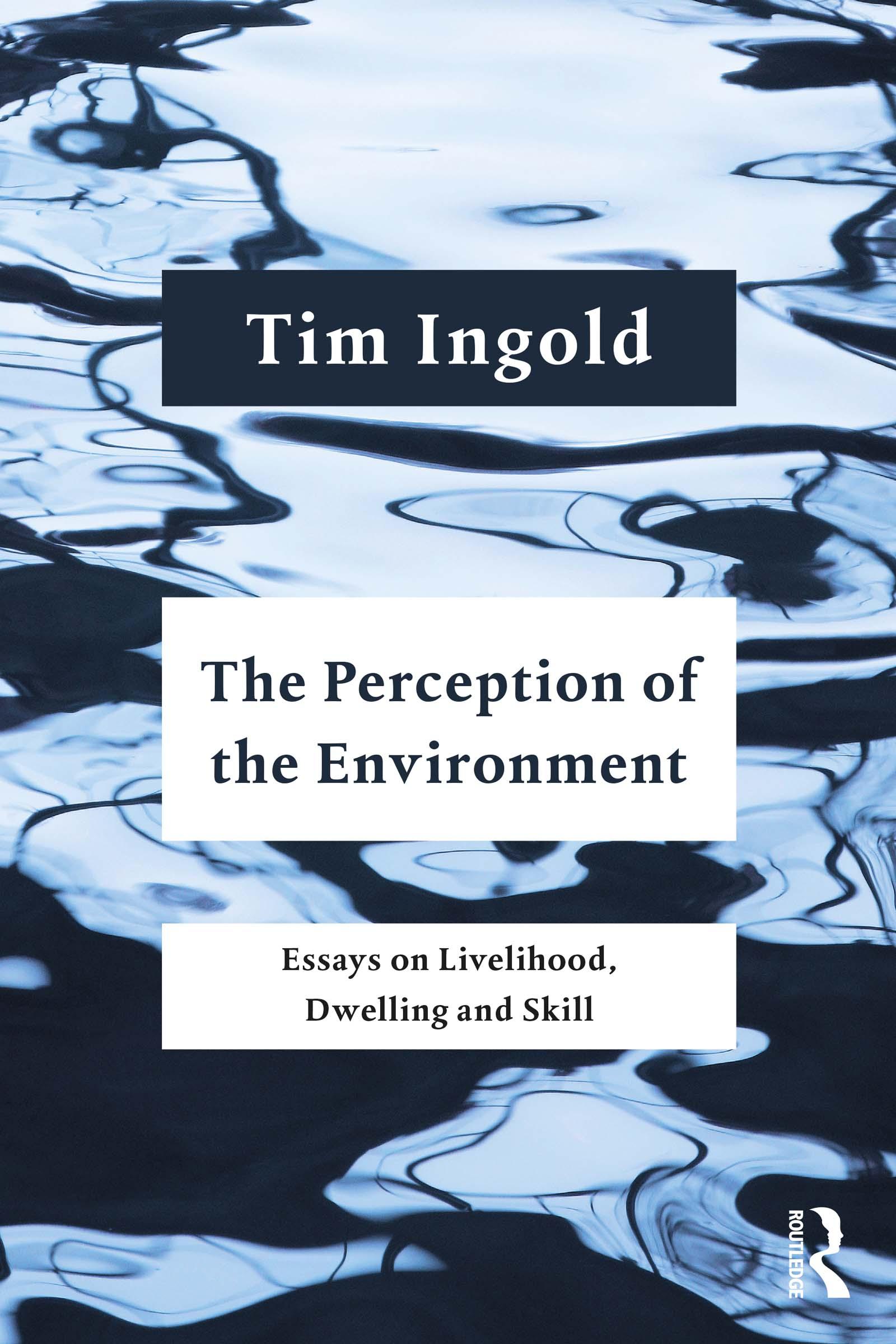
In this work Tim Ingold offers a persuasive new approach to understanding how human beings perceive their surroundings. He argues that what we are used to calling cultural variation consists, in the first place, of variations in skill. Neither innate nor acquired, skills are grown, incorporated into the human organism through practice and training in an environment. They are thus as much biological as cultural. To account for the generation of skills we have therefore to understand the dynamics of development. And this in turn calls for an ecological approach that situates practitioners in the context of an active engagement with the constituents of their surroundings.
The twenty-three essays comprising this book focus in turn on the procurement of livelihood, on what it means to ‘dwell’, and on the nature of skill, weaving together approaches from social anthropology, ecological psychology, developmental biology and phenomenology in a way that has never been attempted before. The book is set to revolutionise the way we think about what is ‘biological’ and ‘cultural’ in humans, about evolution and history, and indeed about what it means for human beings – at once organisms and persons – to inhabit an environment. The Perception of the Environment will be essential reading not only for anthropologists but also for biologists, psychologists, archaeologists, geographers and philosophers.
This edition includes a new Preface by the author.
Betala smidigt med kort, Klarna, Apple Pay eller Google Pay. Är du inte nöjd har du alltid 14 dagars ångerrätt. Läs mer i våra villkor. Har du några frågor, mejla oss på hello@memmo.org.
Memmo gör det enklare att plugga – var du än är i världen. Hos oss samlar du kursböcker och smarta studieverktyg på ett och samma ställe: sammanfattningar, quiz, poddar och flashcards. Och så Ted, din studiekompis som svarar på allt du undrar. Över 50 000 studenter pluggar redan här – byggt för att du ska lära dig snabbare och stressa mindre.