
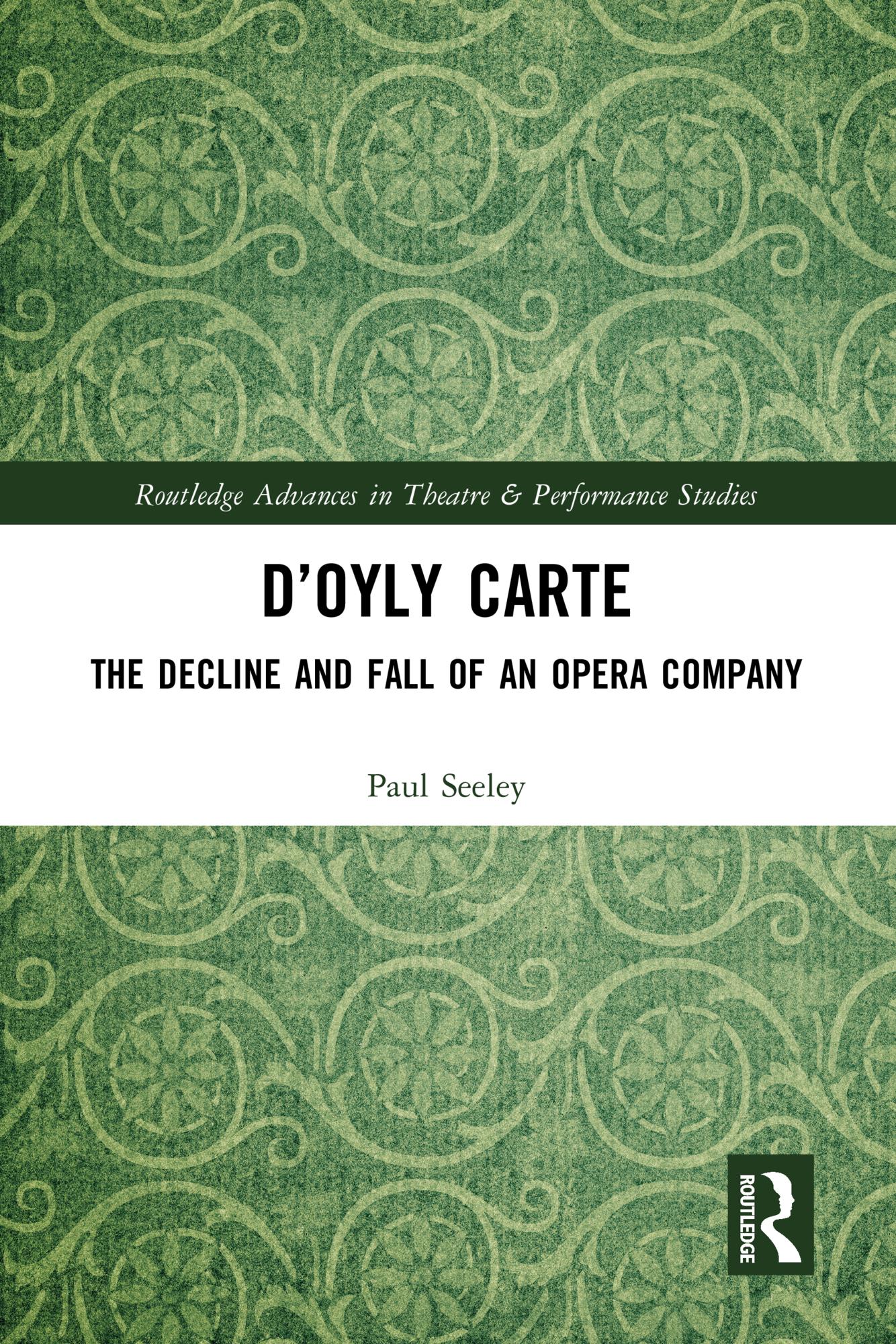
This book considers and discusses aspects of the management of the D’Oyly Carte Opera Company in the twentieth century since the death of its founder Richard D’Oyly Carte, and concentrates on key events that contributed to its demise in 1982.
In this book, Paul Seeley follows the analytical model that proposes no single factor triggered the collapse, but rather several, both external and internal. In the case of an opera company the external factors may include public taste and market forces, but more significant are the internal factors such as the management decisions taken in response to external factors and how these compare with the original artistic aims, aspirations and business models of the founder. This is a study by someone with close observation of the administration; at the 1982 demise, Seeley was assistant to the company manager, having earlier served on the music staff.
The book is a must-read for music historians, theatre historians and arts-management professionals; as an uncompromisingly critical history of the D'Oyly Carte Opera Company it is designed to serve a wider public, not just the Gilbert and Sullivan opera specialist, but anyone keen to debate the desirability of private or public sponsorship of the performing arts.
Betala smidigt med kort, Klarna, Apple Pay eller Google Pay. Är du inte nöjd har du alltid 14 dagars ångerrätt. Läs mer i våra villkor. Har du några frågor, mejla oss på hello@memmo.org.
Memmo gör det enklare att plugga – var du än är i världen. Hos oss samlar du kursböcker och smarta studieverktyg på ett och samma ställe: sammanfattningar, quiz, poddar och flashcards. Och så Ted, din studiekompis som svarar på allt du undrar. Över 50 000 studenter pluggar redan här – byggt för att du ska lära dig snabbare och stressa mindre.