
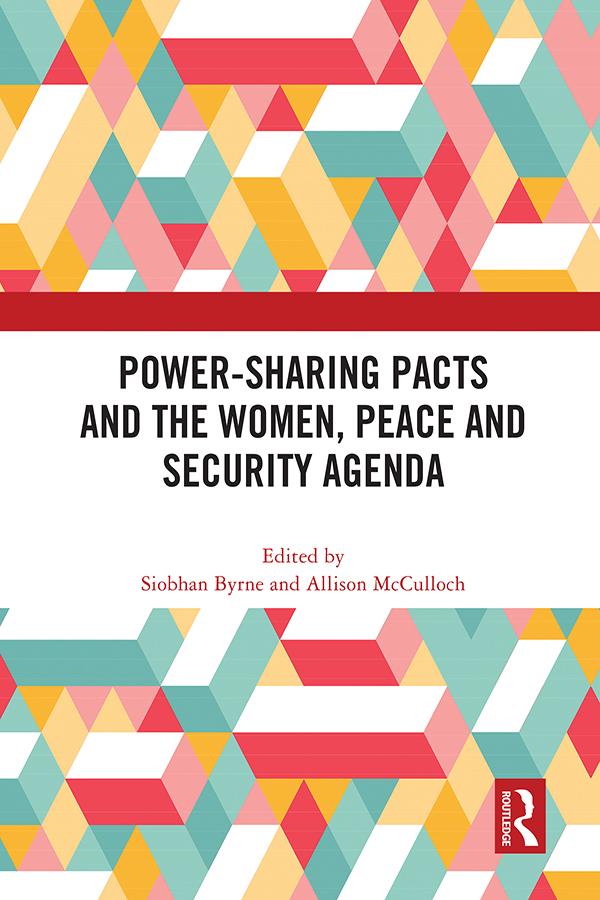
This book offers a comparative lens on the contested relationship between two leading conflict resolution norms: ethnopolitical power-sharing pacts and the women, peace and security (WPS) agenda.
Championed by national governments and international organizations over the last two decades, power-sharing and feminist scholars and practitioners tend to view them as opposing norms. Critics charge that power-sharing scholars cast gender as an inconsequential political identity that does not motivate people like ethnonationalism. From a feminist perspective, such thinking serves the interests of ethnicized elites while excluding women and other marginalized communities from key sites of political power. This edited volume takes a different tack: while recognizing the gender gaps that still exist in power-sharing theory and practice, contributors also emphasize the constructive engagements that can be built between ethnopolitical power-sharing and gender inclusion.
Three main themes are highlighted:
- The ‘gender silences’ of existing power-sharing arrangements
- The impact of gender activism and advocacy on the negotiation and implementation of power-sharing pacts in divided societies
- The opportunities for linkages between power-sharing and the women, peace and security agenda.
The chapters in this book were originally published as a special issue of the journal Nationalism and Ethnic Politics.
Betala smidigt med kort, Klarna, Apple Pay eller Google Pay. Är du inte nöjd har du alltid 14 dagars ångerrätt. Läs mer i våra villkor. Har du några frågor, mejla oss på hello@memmo.org.
Memmo gör det enklare att plugga – var du än är i världen. Hos oss samlar du kursböcker och smarta studieverktyg på ett och samma ställe: sammanfattningar, quiz, poddar och flashcards. Och så Ted, din studiekompis som svarar på allt du undrar. Över 50 000 studenter pluggar redan här – byggt för att du ska lära dig snabbare och stressa mindre.