
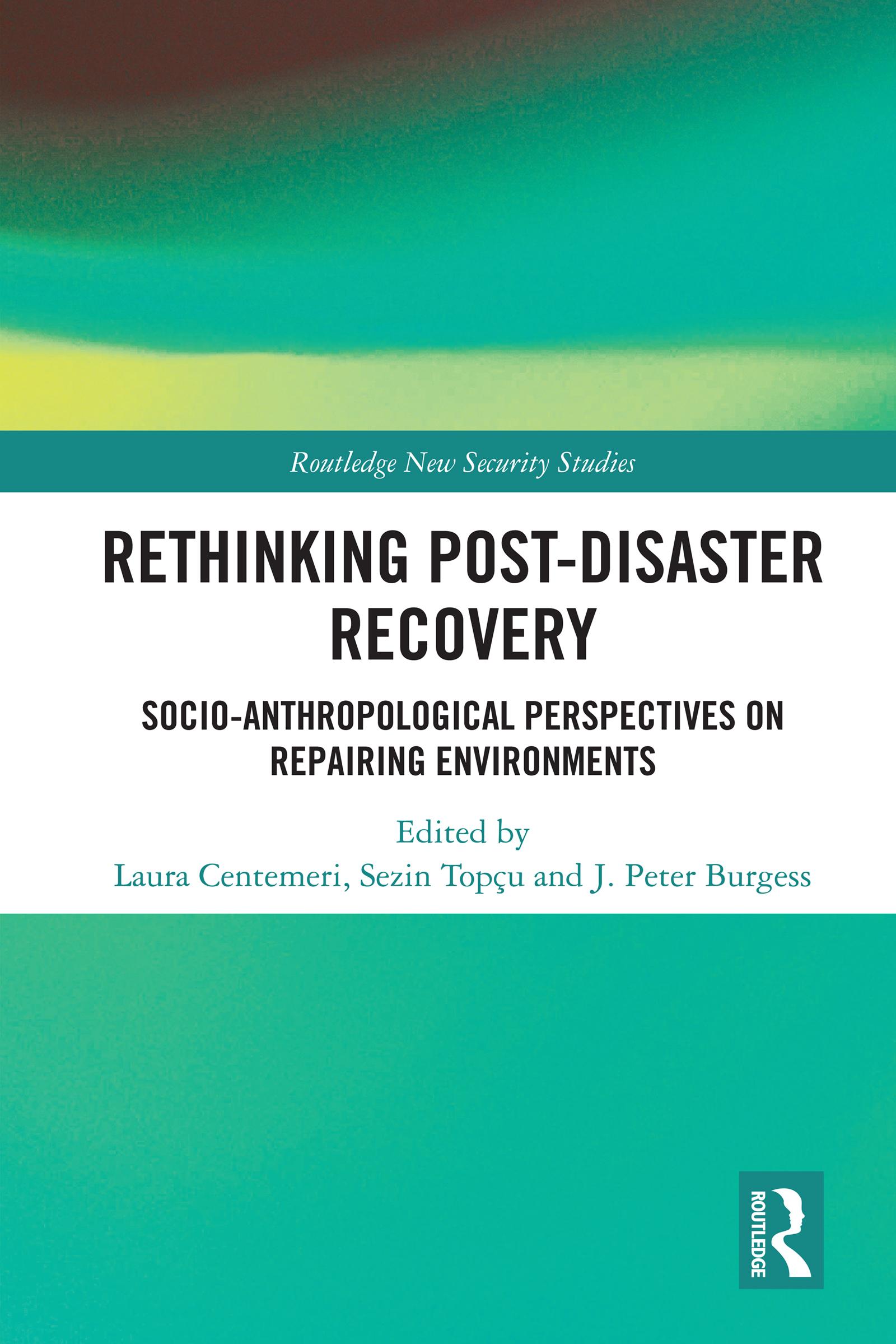
This book presents an original interdisciplinary approach to the study of the so-called ‘recovery phase’ in disaster management, centred on the notion of repairing.
The volume advances thinking on disaster recovery that goes beyond institutional and managerial challenges, descriptions and analyses. It encourages socially, politically and ethically engaged questioning of what it means to recover after disaster. At the centre of this analysis, contributions examine the diversity of processes of repairing through which recovery can take place, and the varied meanings actors attribute to repair at different times and scales of such processes. It also analyses the multiple arenas (juridical, expert, political) in which actors struggle to make sense of the "what-ness" of a disaster and the paths for recovery. These struggles are interlinked with interest-based and power-based struggles which maintain structural inequality and exploitation, existing social hierarchies and established forms of marginality. The work uses case studies from all over the world, cutting-edge theoretical discussions and original empirical research to put critical and interpretative approaches in social sciences into dialogue, opening the venue for innovative approaches in the study of environmental disasters.
This book will be of much interest to students of disaster management, sociology, anthropology, law and philosophy.
Betala smidigt med kort, Klarna, Apple Pay eller Google Pay. Är du inte nöjd har du alltid 14 dagars ångerrätt. Läs mer i våra villkor. Har du några frågor, mejla oss på hello@memmo.org.
Memmo gör det enklare att plugga – var du än är i världen. Hos oss samlar du kursböcker och smarta studieverktyg på ett och samma ställe: sammanfattningar, quiz, poddar och flashcards. Och så Ted, din studiekompis som svarar på allt du undrar. Över 50 000 studenter pluggar redan här – byggt för att du ska lära dig snabbare och stressa mindre.