
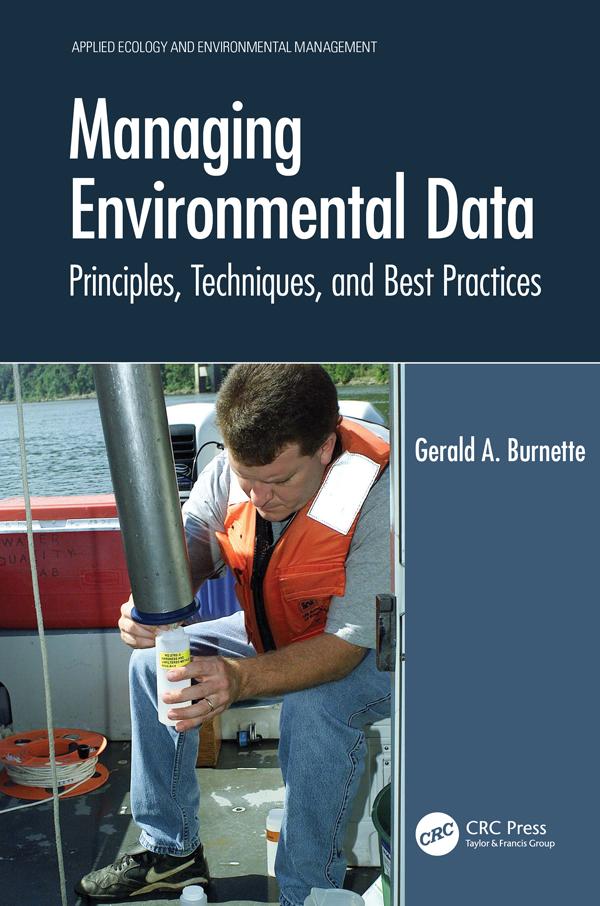
Focused on the mechanics of managing environmental data, this book provides guidelines on how to evaluate data requirements, assess tools and techniques, and implement an effective system. Moving beyond the hypothetical, Gerald Burnette illustrates the decision-making processes and the compromises required when applying environmental principles and practices to actual data.
Managing Environmental Data explains the basic principles of relational databases, discusses database design, explores user interface options, and examines the process of implementation. Best practices are identified during each portion of the process. The discussion is summarized via the development of a hypothetical environmental data management system. Details of the design help establish a common framework that bridges the gap between data managers, users, and software developers.
It is an ideal text for environmental professionals and students. The growth in both volume and complexity of environmental data presents challenges to environmental professionals. Developing better data management skills offers an excellent opportunity to meet these challenges. Gaining knowledge of and experience with data management best practices complements students’ more traditional science education, providing them with the skills required to address complex data requirements.
Betala smidigt med kort, Klarna, Apple Pay eller Google Pay. Är du inte nöjd har du alltid 14 dagars ångerrätt. Läs mer i våra villkor. Har du några frågor, mejla oss på hello@memmo.org.
Memmo gör det enklare att plugga – var du än är i världen. Hos oss samlar du kursböcker och smarta studieverktyg på ett och samma ställe: sammanfattningar, quiz, poddar och flashcards. Och så Ted, din studiekompis som svarar på allt du undrar. Över 50 000 studenter pluggar redan här – byggt för att du ska lära dig snabbare och stressa mindre.