
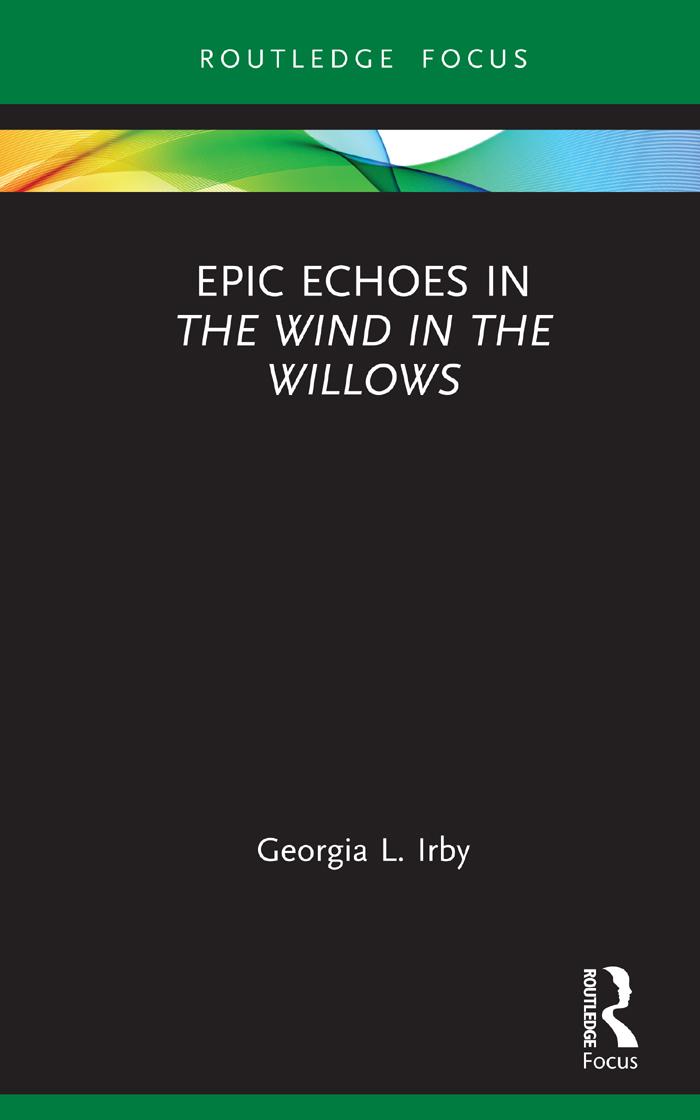
This book explores Grahame’s engagements with classical antiquity in The Wind in the Willows, including ancient epic, parody (Batrachomyomachia), and pastoral imagery.
Irby demonstrates how subtle echoes – such as the structure into 12 books, arming scenes, epic catalogues, anabases and katabases, lying tales, Toad’s "cleverness"—cumulatively suggest a link between The Wind in the Willows and classical literature. This study offers the first sustained treatment of classical allusions in The Wind in the Willows, considering the entire novel, not isolated scenes, building on existing scholarship to yield an interpretation through the lens of classical literature and its reception in Victorian and Edwardian England.
This volume will provide a unique resource for students and scholars of classical reception and literature, as well as comparative literature, English literature, children’s literature, gender studies, and Grahame’s writing.
Betala smidigt med kort, Klarna, Apple Pay eller Google Pay. Är du inte nöjd har du alltid 14 dagars ångerrätt. Läs mer i våra villkor. Har du några frågor, mejla oss på hello@memmo.org.
Memmo gör det enklare att plugga – var du än är i världen. Hos oss samlar du kursböcker och smarta studieverktyg på ett och samma ställe: sammanfattningar, quiz, poddar och flashcards. Och så Ted, din studiekompis som svarar på allt du undrar. Över 50 000 studenter pluggar redan här – byggt för att du ska lära dig snabbare och stressa mindre.