
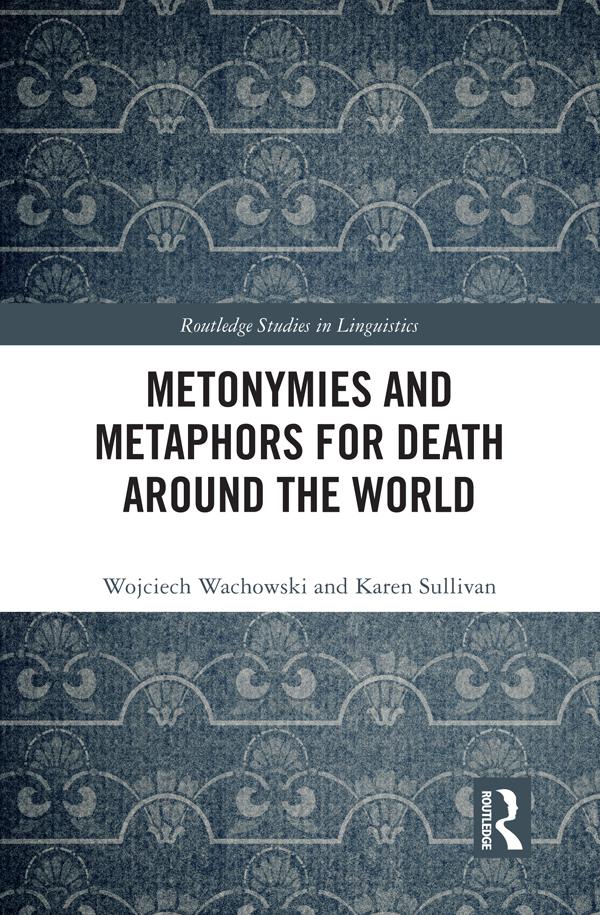
This book reflects on the ways in which metonymy and metaphor are used conceptually and linguistically to mitigate the more difficult dimensions of death and dying, setting out a unique line of research within Conceptual Metaphor Theory.
The volume argues that metonymic and metaphoric descriptions of death and dying reflect taboos, concealment, and other considerations not found in figurative descriptions of life, producing distinct forms of euphemism, frames, and mental spaces particular to conceptualizations of death.
The first part takes a closer look at metonymy to illuminate the ways in which it allows a person to zoom in on death’s more inoffensive dimensions or zoom out from its more troubling aspects. The second part focuses on the more palatable concepts which metaphorically structure and help to better understand death.
A wide range of classical and modern examples from European, Asian, Australian, and African languages and cultures showcase points of overlap and divergence.
Opening up new lines of inquiry into research on death and dying and offering a linguistically focused complement to anthropological and religious studies on the topic, this book will be of interest to scholars in cognitive linguistics, sociolinguistics, cross-cultural communication, and cultural studies.
Betala smidigt med kort, Klarna, Apple Pay eller Google Pay. Är du inte nöjd har du alltid 14 dagars ångerrätt. Läs mer i våra villkor. Har du några frågor, mejla oss på hello@memmo.org.
Memmo gör det enklare att plugga – var du än är i världen. Hos oss samlar du kursböcker och smarta studieverktyg på ett och samma ställe: sammanfattningar, quiz, poddar och flashcards. Och så Ted, din studiekompis som svarar på allt du undrar. Över 75 000 studenter pluggar redan här – byggt för att du ska lära dig snabbare och stressa mindre.