
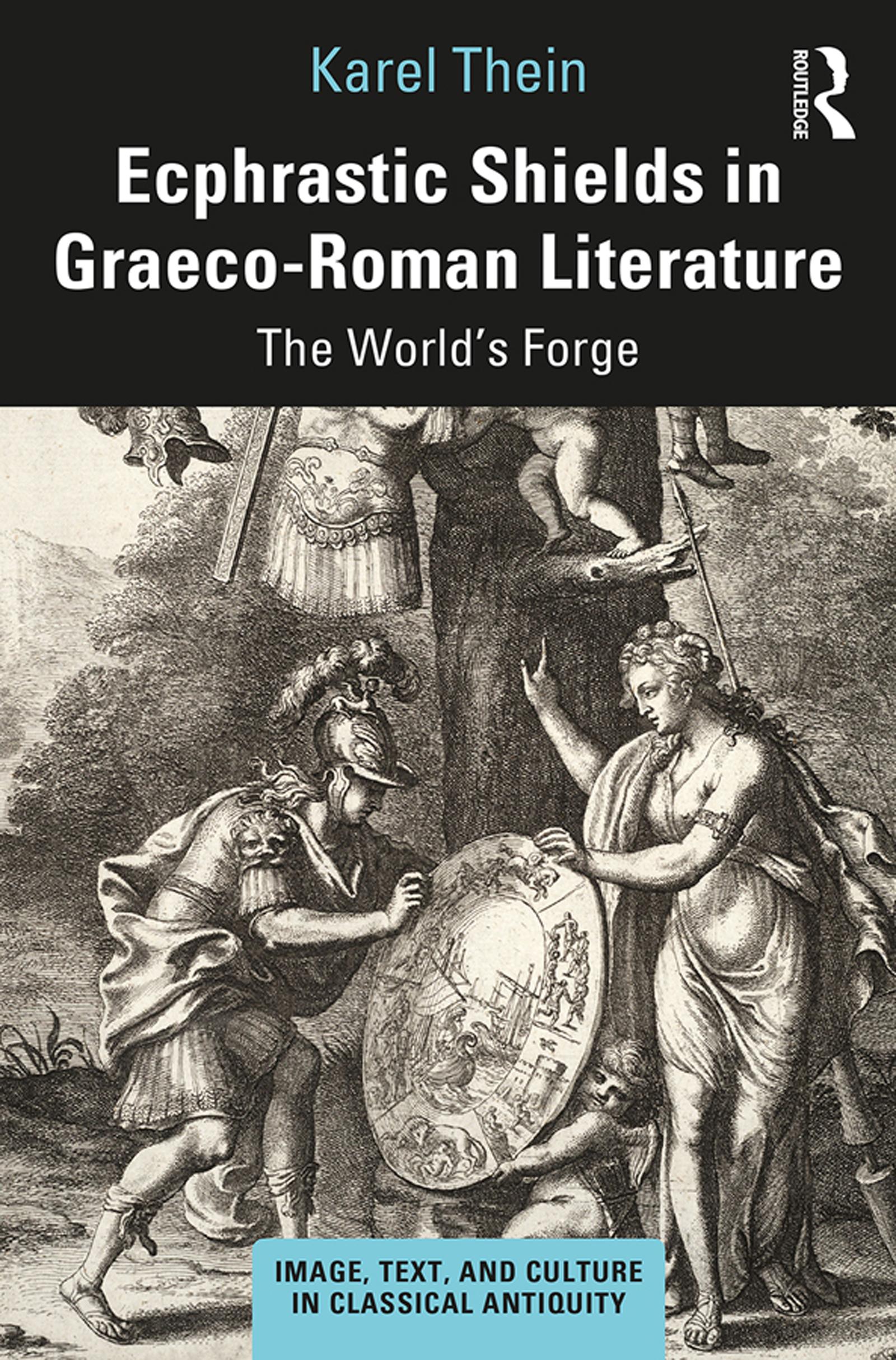
This volume takes a fresh look at ekphrasis as a textual practice closely connected to our embodied imagination and its verbal dimension; it offers the first detailed study of a large family of ancient ecphrastic shields, often studied separately, but never as an ensemble with its own development.
The main objective consists of establishing a theoretical and historical framework that is applied to a series of famous ecphrastic shields starting with the Homeric shield of Achilles. The latter is reinterpreted as a paradigmatic "thing" whose echoing down the centuries is reinforced by the fundamental connection between ekphrasis and artefacts as its primary objects. The book demonstrates that although the ancient sources do not limit ekphrasis to artificial creations, the latter are most efficient in bringing out the intimate affinity between artefacts and vivid mental images as two kind of entities that lack a natural scale and are rightly understood as ontologically unstable.
Ecphrastic Shields in Graeco-Roman Literature: The World’s Forge should be read by those interested in ancient culture, art and philosophy, but also by those fascinated by the broader issue of imagination and by the interplay between the natural and the artificial.
Betala smidigt med kort, Klarna, Apple Pay eller Google Pay. Är du inte nöjd har du alltid 14 dagars ångerrätt. Läs mer i våra villkor. Har du några frågor, mejla oss på hello@memmo.org.
Memmo gör det enklare att plugga – var du än är i världen. Hos oss samlar du kursböcker och smarta studieverktyg på ett och samma ställe: sammanfattningar, quiz, poddar och flashcards. Och så Ted, din studiekompis som svarar på allt du undrar. Över 50 000 studenter pluggar redan här – byggt för att du ska lära dig snabbare och stressa mindre.