
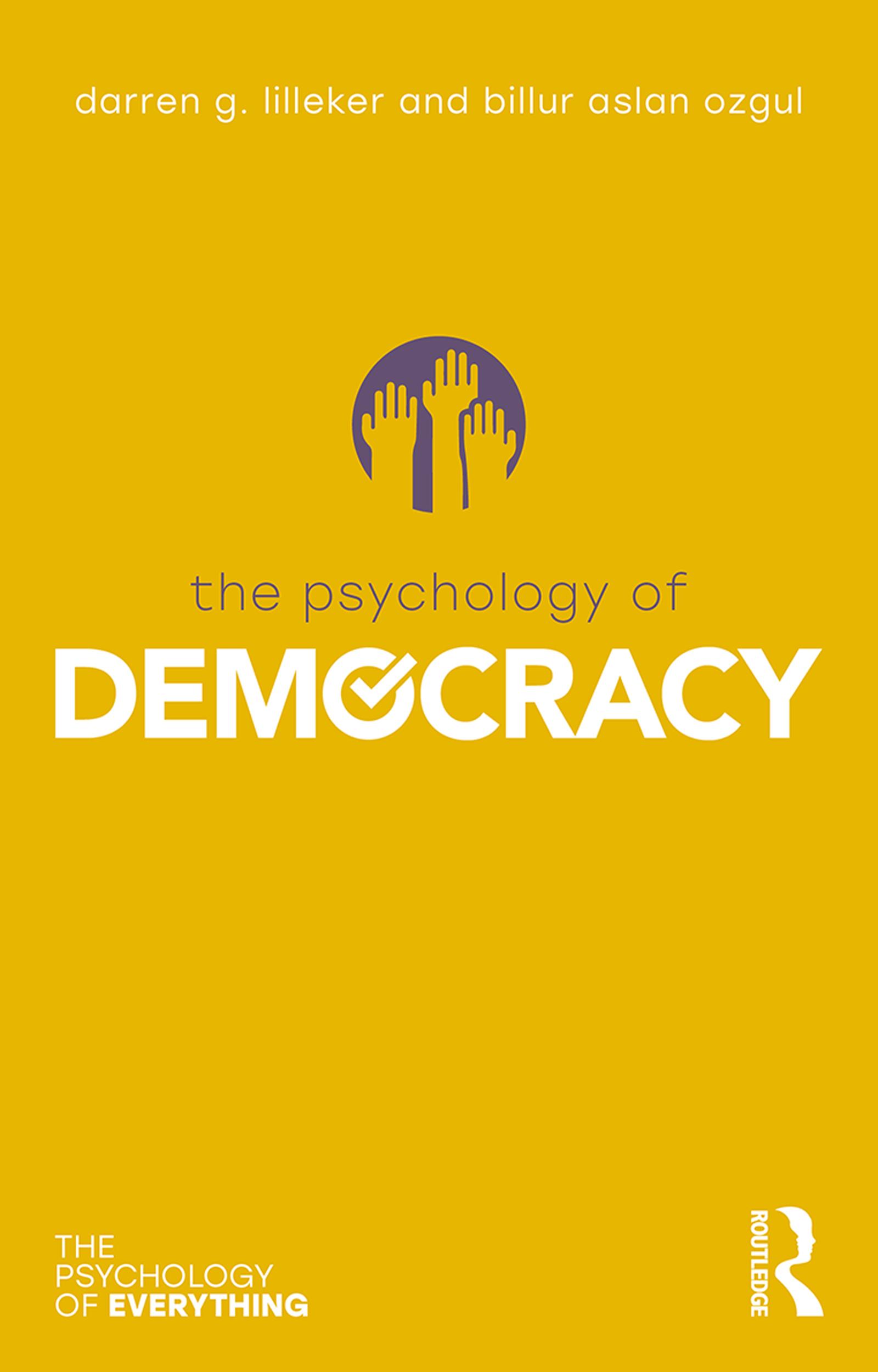
What is a democracy? Why do we form democratic systems? Can democracy survive in an age of distrust and polarisation?
The Psychology of Democracy explains the psychological underpinnings behind why people engage with and participate in politics. Covering the influence that political campaigns and media play, the book analyses topical and real-world political events including the Arab Spring, Brexit, Black Lives Matter, the US 2020 elections and the Covidd-19 pandemic. Lilleker and Ozgul take the reader on a journey to explore the cognitive processes at play when engaging with a political news item all the way through to taking to the streets to protest government policy and action.
In an age of post-truth and populism, The Psychology of Democracy shows us how a strong and healthy democracy depends upon the feelings and emotions of its citizens, including trust, belonging, empowerment and representation, as much as on electoral processes.
Betala smidigt med kort, Klarna, Apple Pay eller Google Pay. Är du inte nöjd har du alltid 14 dagars ångerrätt. Läs mer i våra villkor. Har du några frågor, mejla oss på hello@memmo.org.
Memmo gör det enklare att plugga – var du än är i världen. Hos oss samlar du kursböcker och smarta studieverktyg på ett och samma ställe: sammanfattningar, quiz, poddar och flashcards. Och så Ted, din studiekompis som svarar på allt du undrar. Över 50 000 studenter pluggar redan här – byggt för att du ska lära dig snabbare och stressa mindre.